
Key Takeaways
Transfer case trouble rarely begins with a dramatic failure. More often, noise, binding, a leak, or a change in shifting gives you an earlier chance to investigate.
- Pay attention to new noises, vibrations, binding, warning lights, and shifting changes.
- Low or contaminated fluid can accelerate wear in gears, chains, bearings, and shafts.
- Electronic actuators and sensors can create symptoms that feel mechanical.
- Diagnosis should separate transfer case faults from transmission, differential, axle, and driveshaft problems.
- Correct fluid, matched tires, prompt leak repairs, and appropriate four-wheel-drive use reduce future stress.
Recognizing the symptoms of transfer case problems
Land Rover transfer case problems can appear as a small drivetrain hesitation or as a loss of drive that leaves the vehicle unable to move normally. The same symptom may have several possible causes, so a single noise is not enough to condemn the transfer case. Note when the problem occurs, whether the vehicle is warm or cold, and whether it changes with acceleration, turning, or a selected drive mode.
Warning signs during acceleration and shifting
A jolt when accelerating, a hesitation during gear changes, or a delay when selecting drive can point to a driveline problem. The transfer case may be involved, but the transmission, driveshafts, differentials, and mounts can produce similar sensations. Difficulty shifting between available four-wheel-drive modes is especially useful information for a technician because it may indicate an engagement or control issue rather than worn internal gears.
Pay attention to whether the vehicle clunks when taking up drive, slips under load, or feels as though power is being interrupted. A symptom that occurs only while turning tightly may suggest driveline wind-up or binding, while a symptom that follows engine speed may have a different source. Record the conditions instead of repeatedly testing the vehicle aggressively.
Unusual noises, vibrations, and binding
Whining, grinding, humming, or rhythmic knocking from beneath the center of the vehicle deserves attention. A noise that rises with road speed can come from rotating transfer case parts, although wheel bearings and differentials must also be considered. Vibration through the floor or seat may come from a worn driveshaft, universal joint, mount, or transfer case bearing.
Binding is often felt as resistance or hopping during a slow, tight turn. It can be caused by mismatched tire rolling circumference, a problem with the center differential, or a mechanical fault inside the transfer box. Do not assume that every tight-turn shudder means the same repair is needed; the inspection should reproduce the symptom safely and compare it with the vehicle’s normal behavior.
Fluid leaks and burning odors
Look for fresh oil around the transfer case, its seals, drain and fill plugs, and nearby connections. A leak may begin as a damp film rather than a visible drip, and fluid can travel along a housing before falling to the ground. A burning smell after driving can indicate fluid contacting a hot surface or internal parts operating with inadequate lubrication.
The color and smell of the fluid are clues, not a complete diagnosis. Metallic particles, an unusually dark appearance, or an incorrect level should lead to further inspection. Avoid topping up with an unverified lubricant simply because it appears similar; the correct specification matters to both mechanical and electronically controlled systems.
When a vehicle enters limp mode or loses drive
A warning message, reduced performance, or limp mode may reflect a control system protecting the drivetrain. It does not automatically prove that the transfer case has suffered internal damage. Fault codes, system data, and a physical inspection are needed to determine whether the trigger is an actuator, sensor, wiring fault, low voltage, transmission issue, or mechanical failure.
Complete loss of drive is more urgent. Stop in a safe place and avoid repeated attempts to force the vehicle to move, especially if there is grinding, a strong odor, or visible leakage. Continued operation can turn a repairable control or fluid problem into more extensive internal damage.
Understanding common causes of transfer case failure
A transfer case works under repeated torque and speed changes, even when the vehicle is used mostly on paved roads. Wear develops gradually, but poor lubrication, incorrect tire sizes, impact damage, and neglected driveline faults can speed it up. Finding the cause matters because replacing the unit without correcting the underlying stress may simply repeat the failure.
Worn gears, chains, bearings, and shafts
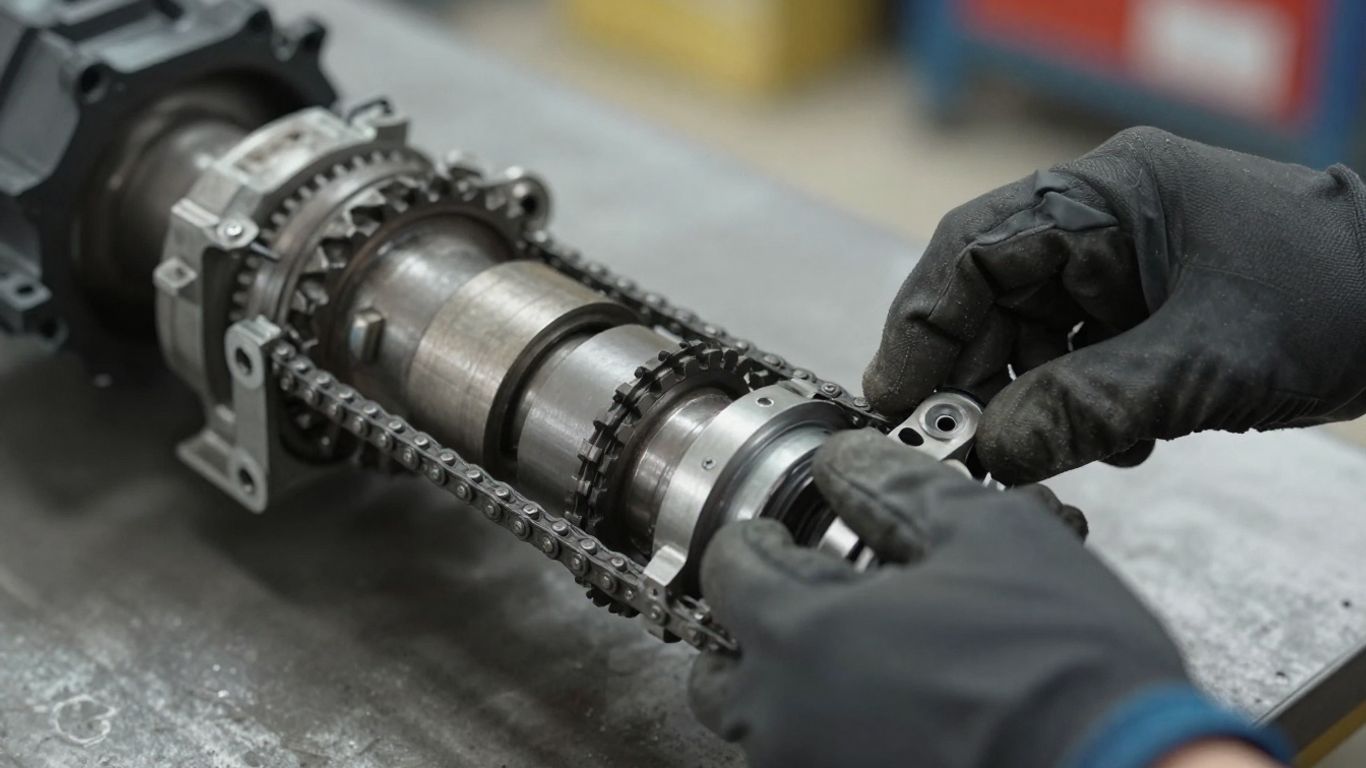
Gears, chains, bearings, and shafts can wear from mileage, high loads, inadequate lubrication, or contamination. A stretched chain may produce slack, rattling, or a clunk under changing load. Bearing wear may create a steady whine or vibration, while damaged gears can cause grinding or inconsistent power transfer.
The pattern of wear often tells a story. Pitting on gear teeth, blueing from heat, or excessive metal in the lubricant suggests that the problem has progressed beyond a simple adjustment. A technician may need to measure clearances and inspect the housing rather than relying only on an external noise check.
Low, contaminated, or incorrect transfer case fluid
Fluid protects moving parts by reducing friction and carrying heat away. When the level is low, the cause may be a seal, housing, plug, or connection leak. Old fluid can lose useful properties, while contamination or metal debris can circulate through the unit and damage surfaces.
Using the wrong fluid can also create trouble. Transfer cases do not all use the same lubricant, and a fluid that seems suitable for a conventional gearbox may not meet the requirements of a particular unit. Correct fluid specification should therefore be confirmed from the vehicle’s service information before service begins.
Faulty actuators, sensors, and electronic controls
Modern four-wheel-drive systems may use an electric actuator, position sensor, control module, or wiring network to select a range or manage engagement. A failed actuator can leave the mechanism partly engaged or unable to move. A sensor can report an implausible position even when the mechanical components are intact.
These failures may produce warning lights, stored codes, delayed engagement, or a vehicle that remains in one mode. Water intrusion, corrosion, damaged wiring, low battery voltage, and software-related faults should be considered alongside internal transfer case wear. Replacing an actuator without checking its power, ground, communication, and mechanical travel can waste time and money.
Driveline wear that places extra stress on the transfer case
A transfer case is connected to the rest of the driveline, so it can be affected by worn mounts, universal joints, constant-velocity joints, differentials, axles, or driveshafts. Excessive play can create impact loads every time torque changes. A bent shaft or failing joint can add vibration that feels as though it originates inside the transfer case.
Driving conditions matter too. Heavy loads, repeated high-torque launches, deep mud, rock-crawling, and impacts can place more stress on the system than ordinary commuting. That does not make those uses inherently wrong, but it does make inspection and service history more significant.
Identifying which Land Rover systems may be affected
The transfer case is part of a connected system rather than an isolated box. It sits between the transmission and the front and rear driveline paths, and its behavior depends on the vehicle’s four-wheel-drive design and controls. Understanding that relationship helps explain why a fault can affect traction, steering feel, shifting, warning messages, or vehicle movement.
Differences between full-time and selectable four-wheel drive
Full-time four-wheel drive sends power through the four-wheel-drive system during normal operation, so its components experience ongoing use. Selectable systems allow the driver or vehicle controls to choose among different drive arrangements or ranges. The exact operation varies by model and equipment, making the owner’s manual and service information important references.
A selectable mode that refuses to engage may indicate an actuator or control issue. A full-time system that binds or shudders may point toward tire circumference differences, differential behavior, or mechanical wear. The operating design changes the diagnostic path, even when the driver’s complaint sounds similar.
How the center differential and transfer box work together
The center differential allows the front and rear driveline paths to accommodate differences in speed during a turn. The transfer box houses or works with components that distribute engine torque toward those paths, depending on the vehicle design. If the differential, gears, bearings, or engagement mechanism develops a fault, the result may be noise, binding, uneven power delivery, or loss of drive.
Some older transfer-box designs also include a mechanical differential-lock arrangement, while other vehicles use electronic controls or different mechanisms. This is one reason model year and drivetrain configuration should be recorded before parts are ordered. A repair description that is accurate for one system may be wrong for another.
The role of terrain response and electronic controls
Terrain modes can change throttle response, transmission behavior, traction-control activity, and four-wheel-drive operation. When a selected mode does not behave as expected, the fault may be in the transfer case, but it may also be in a sensor, controller, wiring circuit, or another part of the vehicle network.
A warning message should be treated as a starting point. The technician should identify which module set the message, confirm the operating conditions, and test whether the requested range or engagement actually occurred. Clearing the code without checking the cause can make an intermittent fault harder to trace.
Why symptoms can resemble transmission or differential problems
The transfer case shares torque paths, mounts, shafts, and operating conditions with the transmission and differentials. A transmission fault may cause delayed engagement or harsh shifting, while a differential can create a speed-related hum or turn-dependent noise. A driveshaft or axle issue can cause vibration under load and make the center of the vehicle feel unstable.
A useful diagnosis compares the symptom with engine speed, road speed, steering angle, selected mode, and load. A road test, scan-tool data, lift inspection, and fluid examination often provide more reliable evidence than the location where a sound seems loudest.
Diagnosing Land Rover transfer case problems
Diagnosis should move from the simplest evidence to the more invasive tests. Begin with the complaint and service history, then inspect the fluid and housing, scan relevant modules, and confirm operation under controlled conditions. This sequence reduces the risk of replacing an expensive assembly when a leak, tire mismatch, actuator, or driveshaft is the true cause.
Reviewing fault codes and vehicle history
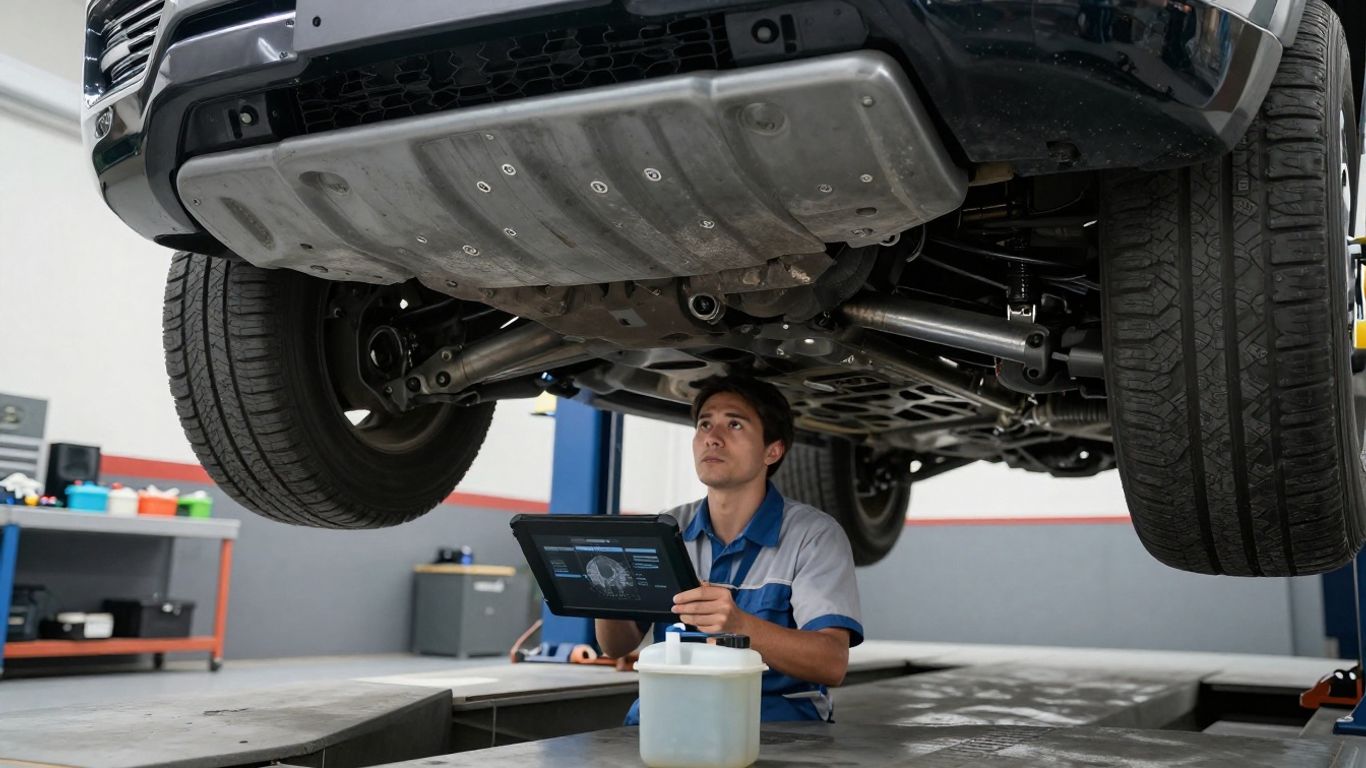
Fault codes can identify a circuit, position signal, communication problem, or operating condition, but they are not a parts-ordering instruction. Record current, pending, and history codes before clearing anything. Freeze-frame information and live data may show whether the fault occurred during engagement, acceleration, turning, or a voltage event.
Service history can be just as valuable. Note previous fluid services, tire replacements, transfer case work, off-road use, towing, collision or underbody impacts, and any earlier warning messages. If a problem began after a repair or tire change, that timing deserves attention.
Inspecting fluid condition, leaks, and physical damage
A technician should inspect the housing, seals, plugs, electrical connectors, mounts, shields, and nearby driveshafts. The fluid level must be checked using the correct procedure and vehicle position. If the fluid is drained, its appearance and debris can help determine whether internal inspection is warranted.
Physical damage may follow an impact even when the housing is not visibly cracked. Dents, loose mounts, damaged wiring, or a displaced shield can affect clearance and vibration. A clean exterior does not rule out internal wear, but an external inspection can quickly reveal several common causes.
Testing the actuator and four-wheel-drive engagement
An actuator should be tested for power, ground, communication, commanded movement, and position feedback. The mechanical mechanism must also be able to move through its intended range. If a scan tool commands engagement but the actuator does not respond, the electrical and mechanical sides should be tested separately.
The vehicle should not be forced into a range or mode when the system is resisting. A controlled test can confirm whether the selected mode engages, whether the indicator agrees with actual operation, and whether the fault returns under load. This distinction is especially useful when a warning appears intermittently.
Separating transfer case faults from driveline issues
A careful comparison of noise and vibration conditions helps narrow the source. Inspect tires for matching size and wear, check pressures, examine driveshaft joints and support bearings, and look for play in the differentials and axles. Transmission mounts and engine mounts can also transmit or amplify a normal operating noise.
For owners in the Apex or Cary area, Peak Auto is described in its related service page as offering diagnosis and repair for Land Rover models. Regardless of where the vehicle is inspected, the useful question is the same: what evidence proves the transfer case is at fault, and what evidence rules out the surrounding driveline?
A video can also help an owner understand the layout and terminology before discussing symptoms with a technician.
Choosing the right repair approach
The right repair depends on what failed, how far the damage has progressed, and whether the original cause has been corrected. A fluid service may be appropriate for a maintenance issue, while a damaged gear set or housing may require rebuilding or replacement. The estimate should identify the failed component and explain related work rather than simply naming an assembly.
When a fluid service or software update may help
A fluid service may help when the level or condition is wrong and internal damage has not developed. It will not restore badly worn gears, bearings, chains, or shafts. Before service, confirm the fluid specification, fill procedure, leak source, and whether the drained fluid contains concerning debris.
A software update or calibration procedure may help when the manufacturer has identified a control-related correction for the vehicle. That possibility should be tied to the vehicle’s documented fault and applicable service information, not used as a guess. If the actuator is physically damaged or the mechanism is binding, software alone will not solve the problem.
Replacing individual components versus rebuilding the unit
Replacing an individual actuator, seal, bearing, chain, or gear may make sense when the housing and other internal parts remain within specification. A rebuild can be appropriate when several wear items need replacement and the unit can be inspected and measured properly. The quality of the teardown, parts selection, and final setup matters as much as the name of the repair.
Ask whether the estimate includes cleaning, inspection for secondary damage, new seals, correct fluid, and any required calibration. A low initial price may change if additional worn parts are discovered after disassembly. A written explanation makes those tradeoffs easier to evaluate.
When a complete transfer case replacement is justified
A complete replacement may be justified when the housing is damaged, multiple hard parts have failed, the unit is severely contaminated, or rebuilding costs approach the value of a suitable replacement. Compatibility must be confirmed by model, year, drivetrain configuration, and part number. A used unit should not be treated as automatically equivalent to a remanufactured or new assembly.
The underlying cause also needs attention. If mismatched tires, a failed mount, a leaking seal, or a damaged driveshaft remains in place, the replacement transfer case may face the same stress. The repair is not complete until the surrounding system has been checked.
Comparing genuine, remanufactured, and aftermarket parts
Parts should be compared by fit, specification, inspection process, warranty, availability, and support rather than price alone. A genuine part may provide the specified configuration, while a remanufactured unit may offer inspected and renewed components. Aftermarket options vary widely, so the supplier’s documentation and warranty deserve close review.
The table below gives a practical framework for discussing options with a repair facility. It is not a substitute for a vehicle-specific parts check, but it can keep the conversation focused on evidence and risk.
| Repair option | Best fit | Questions to ask |
|---|---|---|
| Fluid service | Correctable level or maintenance issue without confirmed internal damage | What fluid specification and leak repair are required? |
| Component repair | Localized actuator, seal, bearing, chain, or gear fault | What measurements confirm the remaining parts are usable? |
| Rebuilt unit | Multiple worn parts with a serviceable housing | What is replaced, inspected, and covered by warranty? |
| Complete replacement | Severe damage or uneconomical rebuild | How is compatibility confirmed, and what caused the original failure? |
After comparing the choices, select the repair that addresses both the failed part and the reason it failed. A clear warranty and a documented post-repair test are useful safeguards.
Preventing future transfer case damage
Prevention is mostly consistent maintenance and early attention to small changes. The transfer case should be considered alongside tires, driveshafts, differentials, mounts, and electronic controls rather than serviced in isolation. Good records make it easier to spot patterns before a warning becomes a breakdown.
Following the correct fluid specification and service interval
Use the fluid specification and service interval assigned to the exact vehicle and transfer case. Do not infer the correct lubricant from appearance, viscosity, or another model’s recommendation. Check for leaks during routine maintenance and investigate a falling level instead of treating repeated top-ups as a repair.
Keep receipts and record the mileage, fluid used, level-check procedure, and any findings. A simple history can prevent uncertainty when symptoms appear later. It also gives a technician a better starting point than a vague recollection of the last service.
Maintaining matched tires and proper tire pressures
Tires should match in size, construction, and closely comparable tread circumference when the drivetrain requires it. A single replacement tire with substantially different wear can create ongoing speed differences between driveline paths. Maintain pressures according to the vehicle guidance and check them when the tires are cold.
This is an easy area to overlook because the vehicle may drive normally on a straight road. Tight turns, parking maneuvers, or low-speed changes can reveal the additional stress. Tire inspection belongs in any investigation of binding or shuddering.
Addressing driveline vibrations and leaks early
A new vibration should not be dismissed as a minor comfort issue. Worn joints, support bearings, mounts, or shafts can transfer damaging loads into connected components. Likewise, a small leak can become a low-fluid condition after enough driving.
A broad maintenance mindset is useful well beyond vehicles: commercial sign maintenance, off-leash dog control, Dubai company formation, Parque Arví trails, and slab leak detection each involve noticing conditions early and responding before they become more costly. The comparison is simple, but the habit applies here too: inspect, document, and correct the underlying issue.
Using four-wheel-drive modes correctly for road conditions
Use each available mode according to the vehicle instructions and the surface conditions it is intended to address. Avoid experimenting with ranges or engagement procedures while the vehicle is moving unless the manual explicitly permits it. If a mode will not disengage, a warning appears, or the vehicle binds, stop forcing the system and arrange a diagnosis.
Off-road driving, towing, and heavy loads may require more frequent checks because they increase heat, torque, and impact exposure. Correct use does not eliminate wear, but it reduces avoidable strain and gives problems less opportunity to develop unnoticed.
Conclusion
Land Rover transfer case problems can involve worn mechanical parts, poor lubrication, electronic controls, tire mismatch, or another driveline fault that only feels like a transfer case failure. Careful symptom notes, proper testing, and a repair that addresses the underlying cause offer the best chance of avoiding unnecessary expense and restoring dependable four-wheel-drive operation.
Frequently Asked Questions
What does a transfer case do?
A transfer case directs engine power through the vehicle’s four-wheel-drive system and may provide different drive ranges or engagement modes, depending on the design.
Can low fluid damage a transfer case?
Yes. Low fluid can reduce lubrication and cooling, allowing friction, heat, and wear to increase. The source of the leak should be repaired rather than repeatedly topping up the unit.
Is a whining noise always caused by the transfer case?
No. Wheel bearings, differentials, driveshafts, tires, and mounts can all create noises that seem to come from the transfer case area. Testing under different speeds and loads helps separate them.
Why does a vehicle bind during tight turns?
Binding may result from tire circumference differences, center differential problems, an engaged mode that should be disengaged, or internal mechanical wear. The drivetrain design and operating conditions must be checked.
Can an actuator fault feel like mechanical failure?
Yes. A failed actuator, position sensor, wiring circuit, or control module can prevent correct engagement and create warning messages or unusual drivability symptoms without damaged internal gears.
Should a transfer case be rebuilt or replaced?
That depends on the housing condition, the number of failed components, parts availability, labor cost, and the quality of a replacement unit. A measured inspection is more reliable than choosing based on price alone.
How can transfer case problems be prevented?
Follow the correct fluid schedule, maintain matched tires and pressures, repair leaks and vibrations promptly, and use four-wheel-drive modes as directed for the road or trail conditions.