

Key Takeaways
An electronic parking brake fault can be mechanical, electrical, or related to the vehicle’s control systems. Until the cause is clear, treat a brake that will not engage or release as a safety issue.
- Keep the vehicle stationary if the parking brake’s status is uncertain.
- Avoid forcing the switch or driving if the brake may still be engaged.
- Warning lights, unusual noises, and rolling can point to different types of trouble.
- A technician can check fault codes alongside the battery and mechanical parts.
- A reset may clear a warning temporarily, but it will not repair a failed component.
What an electronic parking brake failure means
An electronic parking brake (EPB) uses an electrical switch and powered components to apply or release the parking brake. A fault can prevent the brake from engaging, leave it stuck on, or trigger a warning even when the vehicle appears to be parked normally. The message alone does not identify the failed part, so the safest next step is to avoid assuming the problem is minor.
How the EPB system works
When the driver operates the switch, the vehicle’s control system signals the components that apply or release the parking brake. The exact arrangement varies by model, but the process depends on electrical power as well as moving mechanical parts. That combination means a symptom at the switch may have a cause elsewhere in the system.
A brake that does not respond to the switch should not be repeatedly cycled in an effort to make it work. Pay attention to whether it is stuck engaged, will not apply, or behaves inconsistently; those details can help a technician narrow down the diagnosis.
What the warning messages and lights indicate
A warning light or dashboard message means the vehicle has detected a condition that needs attention, but it does not necessarily tell you whether the cause is a weak battery, a wiring issue, or a mechanical fault. The wording and symbol can differ between models, so note the exact message rather than relying on a general description of a parking-brake warning.
If the warning appears alongside a change in braking behaviour, take it seriously and arrange an inspection. Even when the brake seems to function, a warning that remains on is worth investigating instead of repeatedly clearing it without finding the cause.
How EPB faults differ from regular brake problems
The parking brake is distinct from the service brakes used to slow the vehicle while driving. An EPB fault can affect parking security or leave the parking brake dragging, while a problem with the service brakes may affect the vehicle’s ability to slow or stop. The symptoms can overlap, so do not assume that a parking-brake message rules out a separate brake issue.
A Land Rover electronic parking brake failure should be assessed based on the vehicle’s behaviour, not just the dashboard message. If the pedal feels unusual, braking is reduced, or the vehicle does not stop normally, stop driving when it is safe and seek professional help.
Common causes of Land Rover EPB failure
An EPB depends on several parts working together, which is why a single warning can have more than one possible cause. Wear in the brake mechanism, electrical faults, low system voltage, or a control issue can all interfere with operation. The vehicle’s age, condition, and exact design matter, so symptoms alone cannot confirm which part has failed.
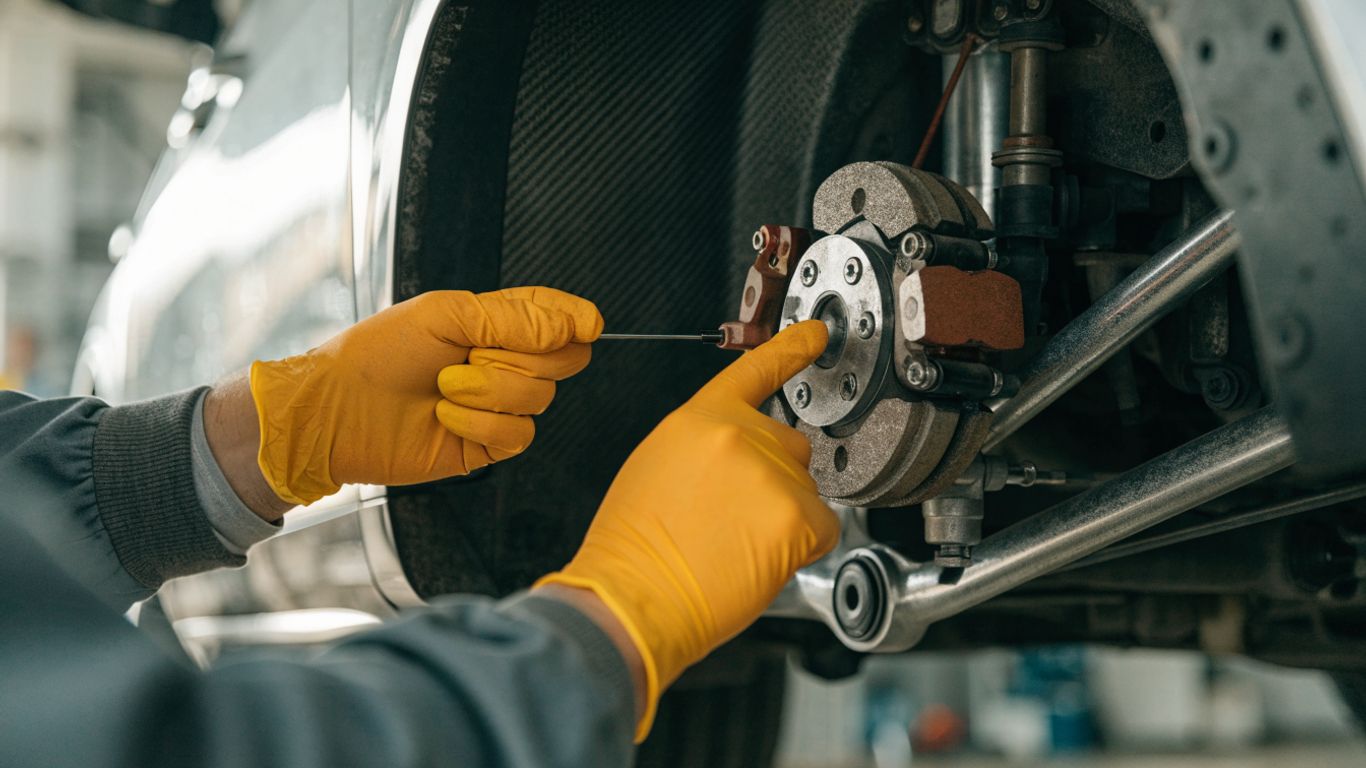
Worn or damaged parking brake shoes
On systems that use parking brake shoes, worn or damaged friction material can affect how securely the brake holds. Adjustment or other mechanical problems can also make it harder for the parking brake to apply and release smoothly. A technician needs to inspect the components rather than infer shoe condition from a warning light alone.
If the shoes are worn, replacing another part without addressing the underlying mechanical condition may not resolve the complaint. Inspection should establish whether the friction components are serviceable and whether the rest of the mechanism moves as intended.
Actuator, cable, or wiring faults
The actuator provides the force needed to operate the parking brake, while cables and wiring help transmit movement or electrical signals, depending on the vehicle’s design. A damaged cable can restrict movement, and a wiring or connector fault can interrupt communication or power. Clicking, grinding, or no response from the system may justify checking these parts, but none of those symptoms proves a particular component is at fault.
The right repair depends on what inspection finds. Replacing an actuator without checking the connected mechanism can leave the original cause in place, so a full assessment is more useful than guessing from the noise.
Low battery voltage and charging issues
The EPB needs adequate electrical power to operate. A weak battery or charging problem can contribute to warnings or unreliable operation, particularly if other electrical symptoms appear at the same time. A battery check is one part of diagnosis; it does not by itself establish that the EPB components are healthy.
When a technician evaluates a suspected voltage issue, they can compare the battery and charging-system condition with the fault records and the parking brake’s behaviour. That helps separate a power-supply concern from a fault within the brake system itself.
ABS or control-module problems
The EPB may depend on signals from other vehicle systems, so a fault elsewhere can affect its operation or produce related warnings. An ABS warning or communication fault, for example, should be assessed in context rather than treated as proof that the parking brake actuator has failed. Model-specific diagnostic information is important because systems and fault relationships vary.
A code reader that can access the relevant systems can help establish where the fault was recorded. The results still need to be interpreted alongside physical checks; a stored code is a clue, not a complete repair instruction.
Symptoms to watch for
The clearest sign of trouble is a parking brake that does not behave as expected, but the details matter. A brake that will not release creates a different immediate concern from one that fails to hold the vehicle. Make a note of when the issue occurs and whether the dashboard displays a message or warning light.
The parking brake will not engage or release
If the brake will not engage, the vehicle may not be secured when parked. If it will not release, the vehicle may be held in place or experience drag when moved. Either situation calls for caution; avoid assuming that another attempt with the switch will solve the problem.
The pattern can help with diagnosis. For example, note whether the fault happens every time or only intermittently, and whether it began after the vehicle had been sitting or after other electrical symptoms appeared.
Grinding, clicking, or unusual noises
A brief operating sound may be normal for some systems, but a new grinding noise, repeated clicking, or a sound followed by a warning deserves attention. Noise can come from a binding or worn mechanical part, an actuator struggling, or another issue. It is a useful observation, not a reliable way to identify the failed component on its own.
To help explain the problem, describe when the sound occurs: as the brake applies, as it releases, or while the vehicle is moving. Avoid repeatedly operating the brake just to reproduce the noise.
A brake warning light that stays on
A warning light that remains illuminated after the vehicle is started may indicate a persistent fault or a condition the system has not cleared. The dashboard message and any accompanying warning symbols can help a technician decide which systems to inspect. If the warning is accompanied by changed braking performance, treat it as urgent.
The following distinctions can help you describe what you notice, although they cannot replace a proper inspection:
| What you notice | Possible concern | Sensible response |
|---|---|---|
| Brake will not apply | Parking security may be reduced | Secure the vehicle and arrange an inspection |
| Brake will not release | Brake may remain engaged | Do not drive if movement feels restricted |
| New grinding or repeated clicking | A component may be binding or struggling | Stop cycling the switch and report the sound |
| Persistent warning message | A fault may still be present | Record the message and have the system checked |
These are broad signs, not a diagnosis. A technician can compare the symptom with fault codes and the condition of the mechanical and electrical components.
The vehicle rolls or feels held back
If the vehicle rolls when you expect the parking brake to hold it, secure it with another safe method and do not rely on the EPB until it has been checked. If the vehicle feels held back after the brake should have released, a dragging brake could cause additional wear or heat. Avoid driving it to see whether the sensation disappears.
A change in how the vehicle moves is more important than whether a warning clears after restarting. When the behaviour is uncertain, arrange assistance rather than testing the brake on a slope or in traffic.
What to do when the EPB fails
First consider whether the vehicle is in a safe place and whether it can be kept from rolling. A fault that prevents release can leave the vehicle immobile; one that prevents engagement can make it unsafe to leave unattended. Keep other people clear of the vehicle if its movement cannot be controlled.

Keep the vehicle stationary and secure it safely
If the vehicle is already parked, leave it where it is if moving it could create a hazard. Choose level ground when possible and follow the owner’s manual for any additional parking precautions that apply to your model. Do not put yourself in the vehicle’s path or use an improvised method that could create another risk.
When the EPB does not hold, take extra care before anyone approaches or works around the vehicle. If you are unsure whether it is secure, call for assistance rather than relying on the parking brake alone.
Avoid forcing the switch or driving with the brake engaged
Repeatedly pressing or pulling the switch can worsen a fault or make it harder to understand what happened. Driving with a parking brake that may still be applied can cause further damage, and a brake that will not apply may leave the vehicle unsecured once stopped. Do not force the control or continue driving if the vehicle feels held back.
A few simple observations are more useful than repeated attempts to operate the system:
- Record the exact dashboard message or warning symbol.
- Note whether the brake is stuck on, will not apply, or is intermittent.
- Listen for unusual sounds without repeatedly cycling the switch.
- Tell the technician about any recent battery or electrical symptoms.
This information can help guide the inspection while reducing unnecessary operation of a system that may already be struggling.
Check the owner’s manual for model-specific instructions
Parking-brake designs and emergency procedures can differ across model years and vehicle configurations. The owner’s manual is the appropriate place to check the instructions that apply to your vehicle, including any warnings about moving it or using a release procedure. Avoid relying on steps found online for a different model.
If the manual’s instructions are unclear or the vehicle remains stuck, do not improvise. A model-specific diagnostic procedure or professional assistance may be needed.
Arrange roadside assistance when the vehicle cannot be moved safely
Call roadside assistance if the brake will not release, the vehicle cannot be secured, or movement feels restricted. Explain the warning message and whether the vehicle is on a slope or in a position that could make recovery difficult. The operator can advise whether a recovery vehicle is needed.
A grinding or stuck-brake complaint should be treated as a safety concern rather than a reason to try to drive to a workshop. If you are reading a park brake reset guide, keep in mind that a reset procedure is not a substitute for diagnosing and correcting the underlying fault.
How a technician diagnoses the problem
Diagnosis usually combines electronic checks with an inspection of the parts that apply and release the parking brake. A fault code can point toward a system or condition, but it does not automatically identify a failed component. The technician will also consider the symptom, the vehicle’s design, and the results of physical checks.
Read fault codes with a compatible diagnostic tool
A compatible diagnostic tool can retrieve relevant fault information from the vehicle’s systems. The codes may help show whether the issue relates to power, communication, control, or operation, but interpretation depends on the vehicle and the accompanying evidence. Clearing a code before recording it can remove useful diagnostic context.
It is generally more helpful to identify and document the fault before attempting a reset. Similar care is useful in other diagnostic settings too: NFL injury reports distinguish reported designations and updates, while vehicle fault records need to be read in context rather than treated as a complete explanation.
Inspect the battery, wiring, and connectors
A technician may test the battery and charging system, then inspect accessible wiring and connectors for damage, loose connections, or corrosion. These checks can help rule in or out an electrical supply or communication problem. A warning that appears alongside other electrical symptoms makes this part of the process particularly relevant.
If those checks do not explain the fault, attention can shift toward the actuator, the parking brake mechanism, or related control systems. The sequence helps avoid replacing parts based only on a symptom that several faults could produce.
Check the actuator and parking brake mechanism
The actuator and the mechanical components it operates need to be assessed together. A technician can check whether the mechanism moves freely, whether parts show wear or damage, and whether the actuator responds as expected. The inspection should account for the vehicle’s particular design rather than assume every EPB uses the same layout.
This is where a noise or failure to release becomes useful information, but it still needs confirmation. A diagnosis should connect the reported symptom with a finding that explains it.
Confirm whether the fault is mechanical or electronic
A mechanical fault may involve wear, binding, or damage in the moving parts; an electronic fault may involve power, wiring, signals, or control. Some cases involve more than one issue, so the categories are not always entirely separate. The technician’s findings should explain which condition is present and what repair is needed.
Where a fault affects several systems, ask how the diagnostic results support the proposed repair. A clear explanation helps distinguish a confirmed component failure from a part being replaced simply because it is a common possibility.
Repair options and preventing repeat failures
The appropriate repair depends on what the inspection finds. It may involve correcting an electrical connection, repairing or replacing a damaged part, or addressing wear in the parking brake mechanism. A warning reset alone is not evidence that the system is repaired, particularly if the original symptom remains.
When cleaning, adjustment, or component replacement may be needed
If inspection finds contamination, restricted movement, or a part that can be adjusted within the manufacturer’s procedure, cleaning or adjustment may be appropriate. Worn or damaged components may instead need replacement. The repair should address the confirmed cause and any related wear that could affect the replacement part.
Ask the technician to explain what was found and how the proposed work addresses it. When discussing vehicle repairs more broadly, the as-is home sale guide covers a different kind of repair trade-off; here, the relevant decision should rest on the vehicle’s safety and diagnostic findings.
Why an EPB reset may not fix an underlying fault
A reset may clear a temporary warning in some circumstances, but it cannot repair a damaged cable, worn brake part, weak battery, or faulty connection. If the cause remains, the warning or operating problem may return. A reset should follow diagnosis and any necessary repair, not replace them.
Guidance on EPB fault symptoms and repairs also underscores why a recurring fault needs investigation rather than repeated code clearing. The exact steps vary by model, so a procedure that applies to one configuration may not suit another.
What can affect repair time and cost
Repair time and cost depend on the fault, the parts involved, how accessible they are, and whether related components also need attention. Diagnostic time may be needed before a repair can be quoted accurately. A simple electrical issue and a damaged mechanical assembly are not equivalent jobs.
Ask for the findings, the recommended repair, and any additional work to be explained separately. If a component is being replaced, it is reasonable to ask what test or inspection confirmed that it had failed.
How routine inspections can help prevent future problems
Routine inspections can help identify wear, damage, or electrical concerns before they become a more disruptive failure. Mention any intermittent warning, unusual sound, or change in how the parking brake operates during a service visit. Early attention does not guarantee that a fault can be prevented, but it may help surface a developing issue sooner.
The roof flashing warning signs article is about a different system, but the general value of noticing physical changes early applies here: report new symptoms rather than waiting for a complete failure. For the EPB itself, rely on the vehicle’s service guidance and a technician’s inspection.
Conclusion
An EPB warning can have several causes, and the safest response is to treat a brake that will not hold or release as a real fault until it has been checked. Secure the vehicle, avoid forcing the controls, and share the symptoms and dashboard messages with a technician. Diagnosis should establish the underlying cause before a reset or parts replacement is treated as a solution.
Frequently Asked Questions
Can I drive with an electronic parking brake warning?
It depends on how the vehicle behaves and what the warning indicates, but do not drive if the brake may be engaged, the vehicle feels held back, braking is affected, or the vehicle cannot be secured safely. Consult the owner’s manual and arrange assistance if you are uncertain.
Why will my electronic parking brake not release?
Possible causes include a mechanical restriction, an actuator or wiring fault, low voltage, or a related control-system issue. The warning alone cannot identify which one is responsible, so the system needs diagnosis.
Can a weak battery cause an EPB warning?
Low battery voltage can affect electrically operated systems, including an EPB. A battery and charging-system check can help determine whether power is involved, but it does not rule out a separate mechanical or electronic fault.
Is a clicking sound from the parking brake normal?
Some systems make an operating sound, but a new, repeated, or unusually loud clicking noise deserves attention, especially if the brake does not apply or release properly. Avoid repeatedly activating the switch to reproduce it.
Will resetting the warning repair the parking brake?
A reset may clear a warning, but it does not fix a failed or worn component. If the underlying fault remains, the warning or symptom may return, so diagnosis should come first.
What should I do if the parking brake will not hold the vehicle?
Keep the vehicle stationary and use safe precautions appropriate to the location and the owner’s manual. Do not rely on the faulty parking brake, and arrange professional or roadside assistance if the vehicle cannot be secured confidently.
How does a technician find the cause of an EPB fault?
A technician can read relevant fault codes, check battery voltage and wiring, and inspect the actuator and mechanical parking-brake parts. The findings are considered together to determine whether the problem is mechanical, electrical, or related to vehicle control systems.