

Key Takeaways
A sticking caliper can create drag, heat, and uneven braking, but similar symptoms may come from other brake faults. Treat signs of overheating as a reason to stop driving and arrange an inspection.
- A vehicle pulling to one side, a hot wheel, or a burning smell can signal brake drag.
- Caliper pistons, slide pins, brake hoses, fluid, and parking-brake parts can all be involved.
- Do not touch a hot wheel or lift a vehicle without suitable equipment and safe support.
- The right fix depends on inspection, the cause of the drag, and the vehicle’s brake configuration.
- After repair, confirm that braking is even and the wheel releases normally.
How to recognize a sticking brake caliper
A caliper that does not release properly can keep a brake pad in contact with the rotor after you lift your foot from the pedal. The result may be subtle at first, then become easier to notice as the affected brake heats up. Land Rover brake caliper sticking is one possible explanation for these symptoms, but it is not the only one, so look for a pattern rather than treating one sign as proof.
Pulling to one side or a wheel that feels resistant
If one brake is dragging more than the others, the vehicle may pull toward that side when braking or feel reluctant to roll freely. A wheel can also seem harder to turn when the vehicle is safely raised, though this check requires correct lifting points and secure stands. Similar sensations can come from tire, bearing, or other brake problems, so a pull by itself does not confirm a seized caliper.
Excessive heat, burning smells, or smoke near a wheel
A wheel that is much hotter than the others after ordinary driving can indicate that a brake is staying applied. A sharp burning odor, visible smoke, or a sudden change in how the vehicle behaves is more urgent. Heat is a warning sign, not an invitation to keep driving to see whether it goes away. Stop somewhere safe, keep clear of the wheel and brake parts, and arrange professional help if the odor or smoke persists.
Uneven brake-pad wear and changes in braking performance
During a proper inspection, one wheel’s pads may be thinner than those on the opposite side, or the pads on one caliper may wear unevenly. Braking can feel less smooth, the vehicle may slow unexpectedly, or fuel use may seem higher if a brake is dragging. These clues are useful together, but none identifies the failed component on its own; worn hardware, a hose, or another fault can produce overlapping symptoms.
Why a Land Rover brake caliper sticks
A caliper must apply pressure when you brake and release it when you let go. If a mechanical part binds or hydraulic pressure remains trapped, the pads may continue rubbing against the rotor. The cause can be straightforward, but identifying it matters: replacing a caliper without checking related parts can leave the original fault in place.
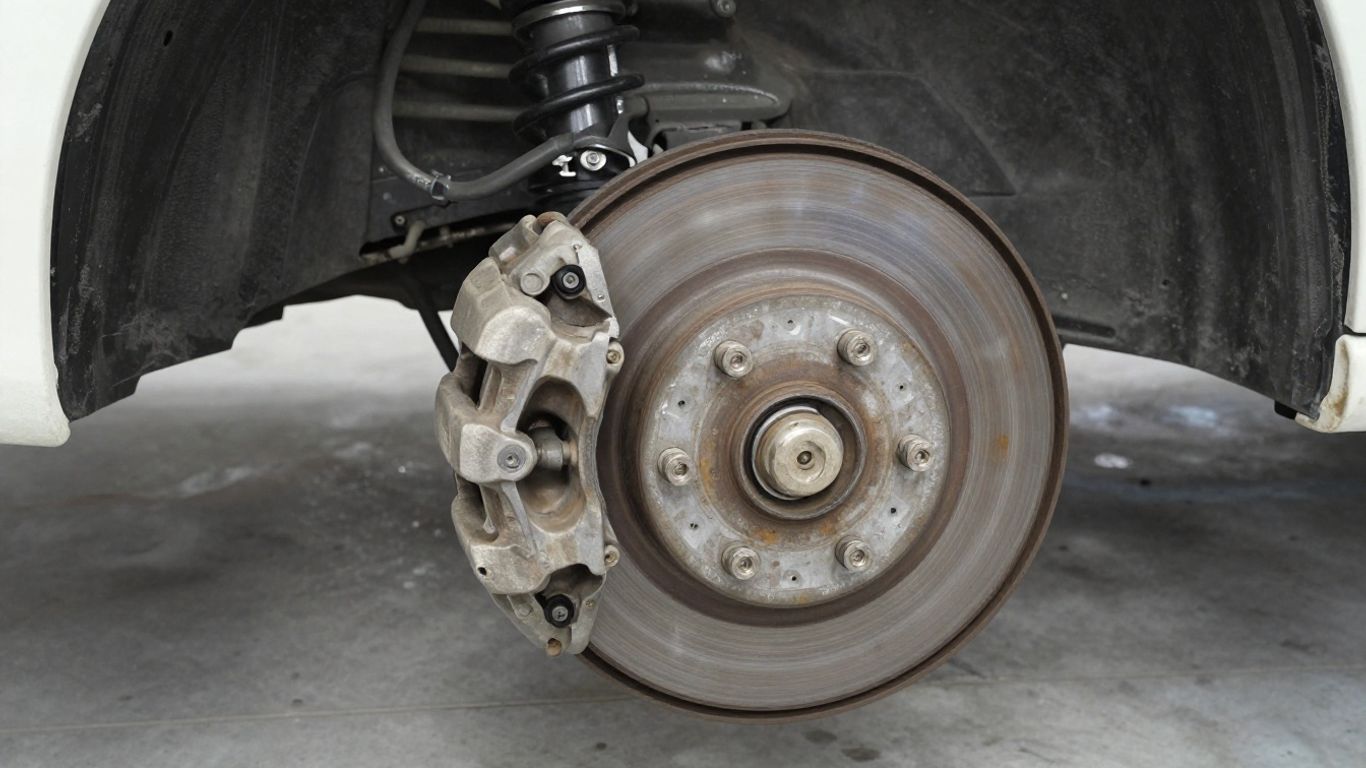
Corrosion or damage around the caliper piston
The piston moves within the caliper and presses the pad toward the rotor. Corrosion, contamination, or damage to the piston area or its protective seal can interfere with smooth movement. If the piston or bore is badly affected, cleaning the outside will not restore safe operation; the caliper may need a qualified assessment and replacement or a suitable rebuild.
Seized slide pins or worn caliper hardware
On calipers that slide, the pins and related hardware allow the caliper to move so pressure is applied evenly. Corrosion, damaged boots, dried or unsuitable lubricant, or worn components can make that motion stiff. Pads can also bind where they sit in the bracket, particularly if corrosion or incorrect fit prevents them from moving as intended. A technician should inspect the full moving assembly rather than focusing only on the piston.
A restricted brake hose or contaminated brake fluid
A damaged or internally restricted flexible hose can prevent pressure from releasing promptly, leaving a brake applied even when the caliper itself is serviceable. Old or contaminated fluid can contribute to corrosion and other brake-system problems, although fluid condition alone does not prove the cause of a sticking wheel. Diagnosis must distinguish a hydraulic restriction from a mechanical bind before parts are replaced.
Rear brake and electronic parking-brake complications
Rear brakes may have additional parking-brake components, including electronic systems, and the service procedure varies by vehicle configuration. A fault or incorrect service mode can complicate inspection and repair. Advice about a Range Rover Sport caliper can offer another model-specific discussion, but it should not be treated as a substitute for checking the year and brake setup of the vehicle being repaired.
How to diagnose the problem safely
Brake inspection involves heavy parts, hot surfaces, and a system that must work reliably once the vehicle is back on the road. If the vehicle is smoking, has a strong burning smell, or is difficult to control, do not drive it to a workshop; arrange recovery. For less dramatic symptoms, a careful inspection can help narrow the possibilities, but it cannot replace the correct service information or a competent repair.
Check for warning signs before driving or lifting the vehicle
Before any test, look for smoke, a strong odor, fluid leakage, a brake warning light, or a pedal that feels unusually soft or firm. If any of these appear, stop and seek professional assistance rather than attempting a road test. Never work beneath a vehicle supported only by a jack, and do not touch a wheel or rotor to judge its temperature.
For a basic safety decision, separate observations that call for stopping from those that may permit a cautious assessment by a professional:
- Smoke, flames, or a strong burning smell: stop in a safe place and arrange recovery.
- A soft, sinking, or unexpectedly hard pedal: do not continue driving; request an inspection.
- A mild pull or drag without heat or odor: avoid unnecessary trips and arrange prompt diagnosis.
- Any uncertainty about lifting or securing the vehicle: leave the inspection to a qualified technician.
These are conservative thresholds, not a diagnostic test. If the vehicle’s behavior changes or any warning becomes more severe, stop using it and get help.
Compare wheel temperatures after a short, cautious test
Only when there are no severe warning signs should a professional consider a short, cautious test followed by a non-contact temperature comparison. An infrared thermometer can help compare corresponding wheels, but readings vary with driving conditions, braking, weather, and measurement distance. Never use your hand to compare wheels: brake components can remain hot enough to burn even after the vehicle stops.
A comparison is useful because it can show whether one corner is unusually warm, but it does not prove why. A mechanic may use temperature differences alongside the vehicle’s symptoms and physical inspection. If the first check reveals smoke, odor, or a large temperature difference, further driving is not a sensible way to gather evidence.
Inspect wheel movement, pad wear, and caliper components
With the vehicle correctly secured and the brakes cool, a technician can inspect wheel movement, pads, caliper hardware, protective boots, and signs of leaks or heat damage. A wheel that resists turning can point toward brake drag, but drivetrain resistance and other faults must be considered as well. A step-by-step brake diagnosis can help explain the kinds of checks involved, though safe access and model-specific procedures still matter.
The most useful finding is a pattern: drag at one corner, uneven pad wear, damaged boots, or a visibly restricted moving part. A repair shop may also inspect both sides of an axle and check whether the pads and rotors have been affected. That broader view helps avoid fixing a symptom while leaving related damage or the original cause untouched.
Distinguish a sticking caliper from a blocked brake hose
A caliper that binds mechanically and a hose that traps hydraulic pressure can feel much the same from the driver’s seat. A qualified technician can assess whether pressure is being retained and whether the caliper moves freely, using proper brake-service procedures. Do not loosen a brake line or open a bleeder valve as a casual test; brake fluid is hazardous, and opening the system can introduce air or create a leak.
The distinction guides the repair. If a hose is restricting release, replacing only the caliper may not solve the problem; if the caliper is mechanically damaged, a hose replacement alone will not help. Diagnosis should establish the source of the drag before any component is ordered.
How to fix a sticking caliper
The repair should follow the confirmed cause, not just the first symptom noticed. Some problems involve serviceable hardware; others require replacement of a caliper, hose, pads, or rotor. Brake work affects vehicle control, so use the correct repair information and have the finished system checked before normal driving resumes.
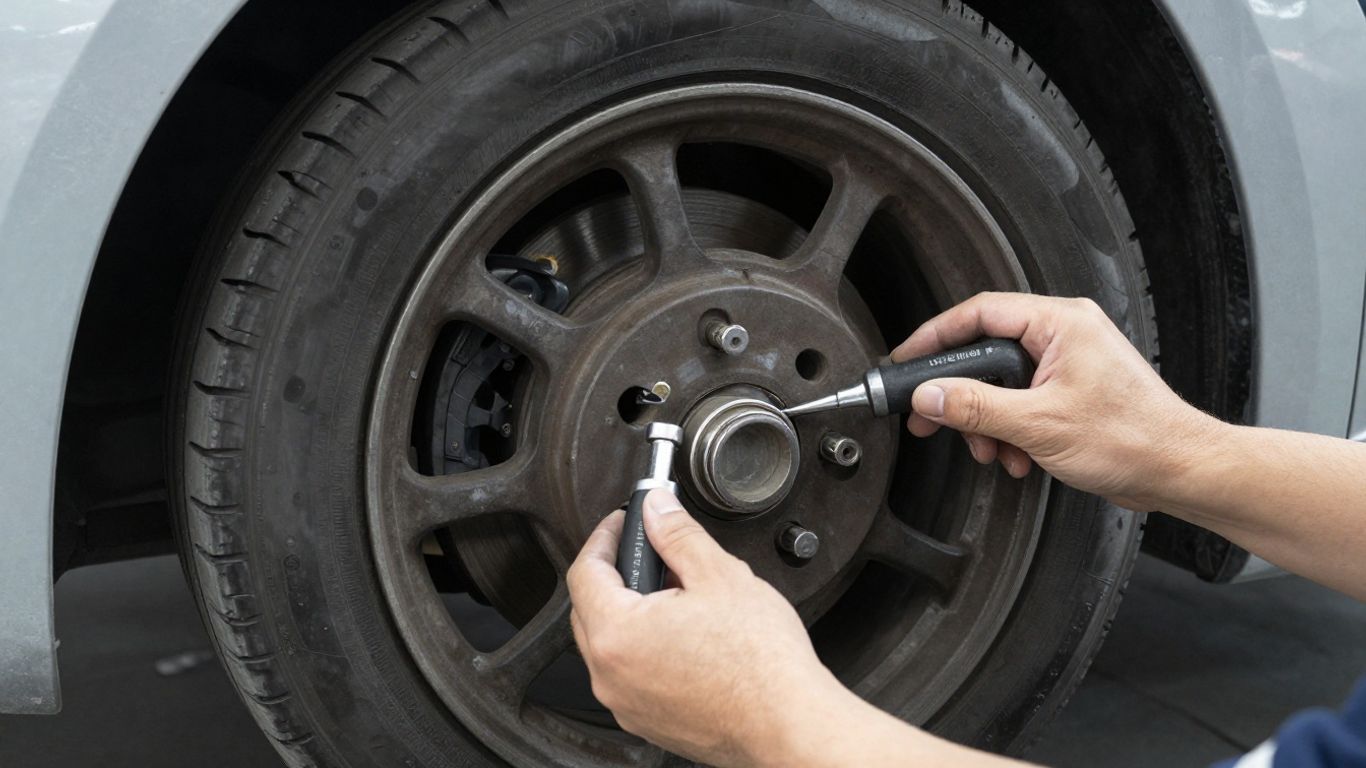
Clean and lubricate serviceable slide pins
If inspection finds that serviceable slide pins are binding but not damaged, they may be cleaned and lubricated using the specified procedure and brake-compatible lubricant. The boots and pin surfaces also need inspection; lubricant cannot repair a torn boot, severe corrosion, or a distorted component. Pads should move correctly in their supports, and the caliper should slide as intended once reassembled.
Rebuild or replace a corroded or damaged caliper
A rebuild may be suitable when the caliper body and bore are in acceptable condition and the correct service parts are available. Deep corrosion, damaged piston surfaces, leaks, or heat-related damage can make replacement the safer choice. The decision depends on the component’s actual condition, parts availability, and the repair procedure—not simply on whether the outside looks clean.
Replace a restricted hose and bleed the brake system
A hose confirmed to be restricted or damaged should be replaced with the correct part, followed by the required bleeding procedure. Bleeding removes air introduced into the hydraulic system and must be performed correctly; some configurations may require additional steps. A repair should also include checking for leaks and verifying a firm, consistent pedal before the vehicle is driven.
Follow model-specific procedures for electronic parking brakes
When a rear electronic parking brake is involved, the technician must follow the procedure for that specific system. This may include placing the system in a service mode and completing checks or calibration steps after work, depending on the vehicle. Improvised operation can damage components or leave a warning active, so use appropriate diagnostic equipment and reliable service information where required.
How to choose the right repair for your Land Rover
There is no single repair that suits every Land Rover or every sticking-brake complaint. Model year, trim, axle, brake package, and parking-brake design can affect part fitment and the work involved. Start with the vehicle’s identification details and a diagnosis, then compare the proposed repair with what the inspection actually found.
Check the model year, trim, and brake configuration
Before ordering parts, verify the vehicle identification details and the brake configuration fitted to that specific vehicle. Similar model names can cover different years or equipment, and parts that look alike may not fit or function the same way. A supplier with access to used, genuine, and aftermarket parts can help search for a suitable match, but fitment should still be confirmed against the vehicle.
Some online references address particular vehicles rather than every Land Rover. For example, an LR4 brake discussion describes one owner’s experience; it does not establish the cause or outcome for another vehicle. Treat anecdotes as context, not a diagnosis or a guarantee about parts or repair costs.
Decide when rebuilding is appropriate and when replacement is safer
A rebuild is generally considered only when the caliper can be restored within the applicable service limits and the appropriate parts and expertise are available. If there is significant corrosion, leakage, damaged threads, a compromised bore, or evidence of overheating, replacement may be more prudent. A technician should explain what was found and why the proposed option addresses it.
Owners sometimes compare repair approaches in forum discussions, such as this Discovery 2 caliper thread. Such conversations can raise useful questions, but they cannot establish whether a particular caliper is safe to reuse. The condition of the part and the correct technical procedure should decide.
Replace related pads or rotors when wear or heat damage warrants it
A dragging brake may overheat pads and rotors, and uneven wear can leave parts unsuitable for reuse. The inspection should check friction surfaces for damage and compare pad thickness and rotor condition against the relevant service limits. Replacing related parts is appropriate when inspection shows they are worn or heat-damaged, not automatically just because a caliper has been repaired.
Confirm whether diagnostic tools or specialist labor are needed
Straightforward mechanical checks may not require electronic diagnosis, but electronic parking brakes or other system warnings can call for a suitable scan tool and model-specific procedure. Ask the workshop what tests it plans to perform and whether any follow-up checks are needed after repair. When comparing suppliers or workshops, keep the questions specific to the brake fault rather than general maintenance topics such as family travel planning, propeller care, land-clearing contractors, automatic watches, or garage-door cover; those pages do not guide brake diagnosis.
How to prevent the caliper from sticking again
Prevention starts with regular inspection and correct service, not a product or shortcut that promises to eliminate every brake problem. Moisture, road debris, corrosion, worn hardware, and changing component condition can all matter. Keeping useful service records also makes it easier to spot recurring wear or a problem that returns after repair.
Keep up with brake-fluid service
Follow the maintenance schedule and fluid specification for the vehicle. Brake fluid can absorb moisture over time, so overdue service may contribute to corrosion and impaired system condition. If fluid looks contaminated or the history is unknown, ask a qualified technician to assess it and recommend the proper service rather than topping it up without investigating.
Inspect calipers, hoses, pads, and hardware regularly
Have brake components checked during routine service and whenever a wheel develops unusual heat, odor, noise, or drag. Inspection should include hoses, boots, pins, pad movement, and visible signs of leakage or corrosion. A garage door insurance guide or a travel guide is unrelated to brake maintenance; for this problem, keep attention on the vehicle’s own service records and inspection findings.
Use the correct lubricant and replacement parts
Use only lubricant specified for the relevant brake contact points; products suitable for one area may be inappropriate for another. Replacement parts must match the vehicle’s configuration and be installed according to the applicable procedure. If a supplier offers several part types, confirm fitment and suitability rather than choosing by appearance or price alone.
Verify even braking and normal wheel temperatures after repair
After repair, the brake pedal should feel consistent and the vehicle should brake without an unusual pull, odor, or noise. A technician should verify correct operation and check for leaks; temperature comparisons after an appropriate test can help identify an unresolved drag. If the symptoms return, stop driving when it is safe to do so and have the system reinspected rather than assuming the parts need time to bed in.
Conclusion
A sticking caliper is a safety issue, but its symptoms can come from several different faults. Take heat, smoke, burning odors, or changes in braking seriously, and let inspection determine whether the cause lies in the caliper, its hardware, a hose, or another part of the brake system. A correctly matched repair followed by a careful operational check is the best way to restore confidence.
Frequently Asked Questions
Can I drive with a sticking brake caliper?
It is not advisable to keep driving if a wheel is overheating, the vehicle pulls sharply, smoke appears, or there is a burning smell. Stop in a safe place and arrange professional assistance or recovery.
What does a sticking caliper feel like?
It may feel as though the vehicle is dragging, pulling to one side, or slowing more than expected. The symptoms vary, and other brake, tire, or drivetrain problems can feel similar.
Can a stuck caliper cause a burning smell?
Yes. A brake pad that remains in contact with the rotor can create excess heat and an acrid odor. Smoke or a strong smell means you should stop driving as soon as it is safe.
Is a hot wheel enough to confirm a sticking caliper?
No. A noticeably hotter wheel can be a clue, but driving conditions, recent braking, and other mechanical issues affect temperature. A proper inspection is needed to find the cause.
Can slide pins be cleaned instead of replacing the caliper?
Sometimes, if the pins are serviceable and the caliper and related parts are in good condition. Corrosion, damaged boots, wear, or a separate hydraulic fault may require a different repair.
Does a sticking caliper always mean the brake hose is bad?
No. A restricted hose is one possible cause, but mechanical binding in the caliper or its hardware can produce similar symptoms. Diagnosis should distinguish between them before parts are replaced.
Should brake pads and rotors be replaced with a caliper?
Only when inspection shows they are worn, damaged, or affected by excess heat. Their condition should be checked against the applicable service limits rather than assuming every related part must be replaced.