

Key Takeaways
A grinding manual gearbox is a symptom, not a diagnosis. The timing, temperature, gear involved, and behavior of the clutch can help narrow the cause before any parts are removed.
- Grinding during one gear change often points toward synchronizer or selector wear.
- Grinding in several gears may involve the clutch, lubricant, bearings, or broader driveline components.
- Cold-only noise can differ from damage that worsens as the gearbox warms up.
- Do not force the lever or continue driving if gears jump out, engagement fails, or metal appears in the oil.
- A specialist inspection can prevent a manageable fault from becoming a complete gearbox rebuild.
What Land Rover manual gearbox grinding sounds like
Land Rover manual gearbox grinding can be a brief rasp, a harsh metallic chatter, or a repeated crunch as the lever enters gear. The sound may happen only while moving, or it may appear as the vehicle first pulls away. Note exactly when it occurs, because the pattern is often more useful than the volume alone.
Grinding during cold starts or initial movement
A gearbox that grinds only during the first few shifts may be affected by cold, thick lubricant or clutch drag. The vehicle may feel normal after several minutes, but that does not automatically make the noise harmless. Cold symptoms should be recorded alongside the outside temperature, time parked, and whether the clutch pedal feels different.
If the noise is strongest when selecting first or reverse while stationary, the clutch may still be transferring some engine torque. A slow release of the clutch, a dragging clutch disc, or hydraulic trouble can make initial movement difficult even when the internal gears are not the primary fault.
Noise when selecting specific gears
Grinding in one gear, especially during an upshift or downshift, commonly directs attention to that gear’s synchronizer, engagement sleeve, or selector mechanism. Reverse can behave differently because many manual transmissions do not synchronize it in the same way as forward gears. The distinction between a single troublesome gear and widespread grinding matters.
A useful comparison is whether double-declutching changes the symptom. If matching engine and gearbox speed reduces the noise, synchronizer wear becomes more plausible, although this simple test cannot replace an inspection.
Grinding under acceleration or deceleration
Noise that appears after a gear is already engaged may be less about synchronization and more about bearings, gear teeth, or driveline load. Acceleration loads the transmission in one direction, while deceleration reverses that load. A change between the two can reveal backlash or a worn component.
Listen for whether the sound follows road speed, engine speed, or the selected gear. A careful technician may reproduce the condition on a lift or controlled road test, but the driver should not provoke it by holding the vehicle against a gear or forcing a shift.
Distinguishing grinding from whining, clunking, and rattling
Grinding usually has a rough, abrasive quality and is closely linked to engagement. Whining may rise with speed and suggest gear mesh or bearing noise, while a clunk can come from backlash or a mount. Rattling at idle may instead involve the clutch, release mechanism, or another loose component.
The sound can be difficult to describe from memory. A short recording made safely from inside the vehicle, together with the gear and operating condition, can help a shop understand the complaint without encouraging an unsafe test drive.
Common causes of manual gearbox grinding
Several faults can create similar sounds, so replacing the gearbox immediately is not always the sensible first move. The clutch, lubricant, internal transmission parts, transfer case, and propshaft can each alter what the driver hears. A methodical diagnosis keeps the repair focused.
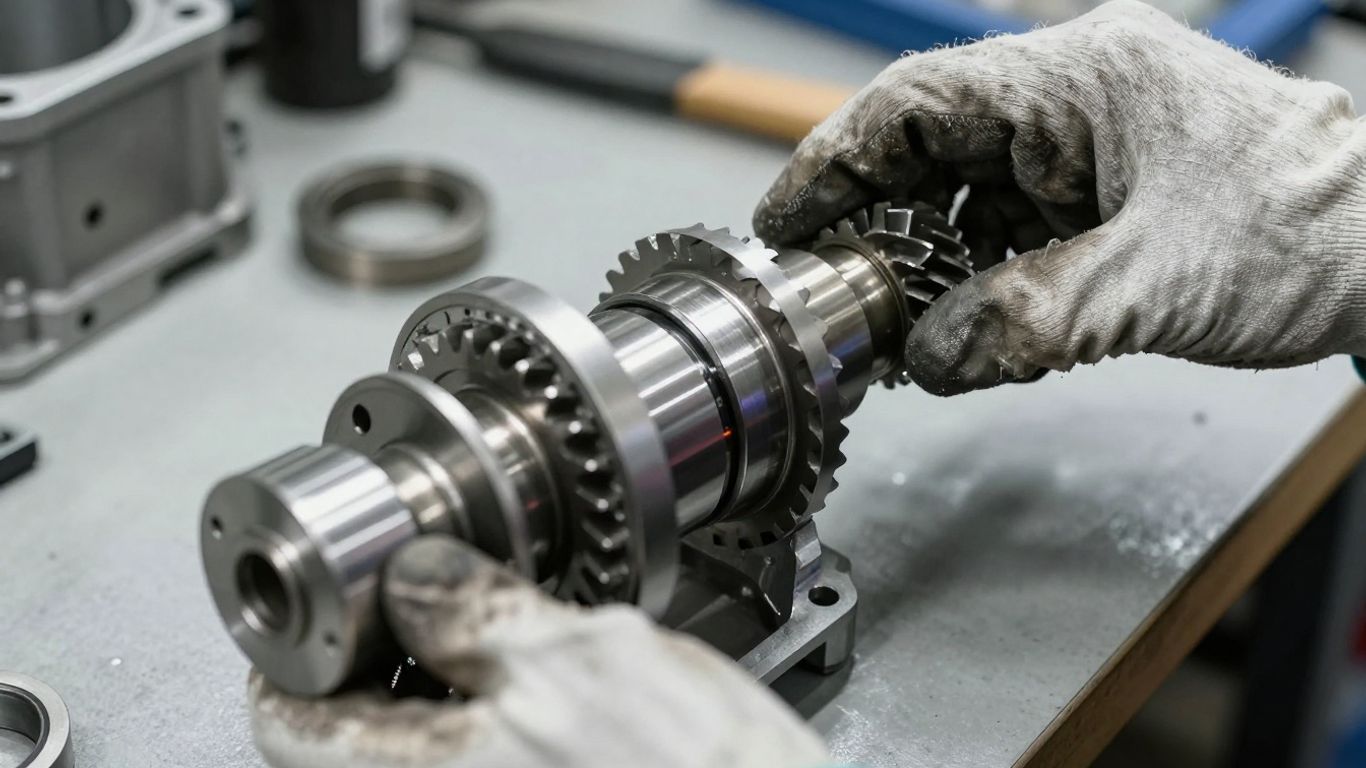
Worn or damaged synchronizers
Synchronizers help bring rotating components to compatible speeds before engagement. When their friction surfaces, rings, or related parts wear, a shift may grind even though the clutch pedal is fully depressed. The symptom often follows a particular gear and becomes more noticeable during quick shifts.
Low, contaminated, or incorrect gearbox oil
Low lubricant can increase heat and wear, while contamination can carry abrasive material through bearings and gear surfaces. The wrong fluid may also change synchronizer behavior. Fluid level should be checked using the manufacturer’s specified procedure, with the vehicle safely supported and the correct lubricant confirmed rather than guessed.
A clutch that is not fully disengaging
A clutch that drags keeps the input shaft turning when the driver presses the pedal. Common clues include difficulty selecting first or reverse while stopped, vehicle creep with the pedal down, and a bite point that has changed. Hydraulic leaks, air, adjustment problems, a warped disc, or a failing release component may all deserve attention.
Worn bearings, gears, or selector components
Bearings can produce a rising whine or roughness that changes with load, while damaged gear teeth may create noise in a specific ratio. Selector forks, hubs, sleeves, and linkages can also make engagement incomplete. These faults generally require more than an external adjustment and should not be diagnosed from sound alone.
Transfer case and driveline issues that mimic gearbox noise
A transfer case, propshaft joint, differential, or mount can transmit noise into the cabin and make its source seem obvious when it is not. Check whether the sound changes with four-wheel-drive selection, throttle position, steering angle, or vehicle speed. Separating transmission noise from driveline noise is one reason a specialist road test is valuable.
How to diagnose the problem safely
Diagnosis should begin with observations and basic checks, not aggressive testing. Park securely, keep clear of rotating components, and never work beneath a vehicle supported only by a jack. The goal is to identify patterns while avoiding the extra damage that can come from repeated forced engagement.
Checking the clutch pedal and gear engagement
With the engine off, move the lever through the gears and note stiffness, excessive free play, or unusual resistance. With the engine running and the vehicle stationary, check whether first and reverse engage cleanly without forcing the lever. Any creep with the clutch fully depressed deserves attention.
The pedal should return consistently and should not feel suddenly soft or stay near the floor. These observations do not prove a clutch fault, but they help a technician decide whether the hydraulic or release system should be checked before opening the gearbox.
Inspecting gearbox oil for level, color, and metal particles
Oil inspection can reveal leakage, neglect, or internal wear, but it should be carried out according to the vehicle’s service procedure. A low level suggests that the source of the loss must be found, not simply topped up. Dark or contaminated lubricant and visible metallic debris are reasons to stop treating the noise as a minor shift-quality issue.
When the oil is drained, a specialist can examine the plug and fluid for particles. Fine paste may have a different significance from larger chips, but either finding needs to be interpreted alongside the symptoms and service history.
Comparing symptoms when the vehicle is hot and cold
Write down whether the noise appears after an overnight stop, disappears as the vehicle warms, or becomes worse after a long drive. Temperature changes lubricant flow and component clearances, so the pattern can help separate fluid-related behavior from a fault that worsens with heat.
A simple record can include the first affected gear, clutch pedal feel, outside temperature, and whether the noise occurs during acceleration or overrun. That information is often more useful than a general description such as “the transmission sounds bad.”
Road-testing each gear without forcing the transmission
A controlled road test should use light throttle, normal shifts, and a safe route. Let the gearbox engage at its own pace and stop the test if the vehicle becomes difficult to control or a gear refuses to engage. A transmission specialist may compare shifts under load, but the driver should never grind a gear repeatedly to make the noise easier to hear.
For general background on warning signs such as delayed shifting, slipping, and unusual noises, a transmission repair guide can provide useful context. It should supplement, not replace, an inspection of the actual vehicle.
Identifying signs that require immediate inspection
Some symptoms raise the urgency considerably. Arrange prompt inspection if the gearbox jumps out of gear, loses lubricant rapidly, refuses to select a gear, or produces heavy noise accompanied by vibration. Driving on can turn damaged teeth or bearings into a much larger failure.
A useful rule is simple: if the vehicle cannot select and hold a gear reliably, do not use a road test as the next diagnostic step. Recovery and inspection are safer than experimenting in traffic.
Land Rover models and components to consider
Manual transmission layouts and driveline arrangements vary across Land Rover generations, engines, and markets. That means a symptom should be interpreted against the exact model year, gearbox code, transfer case, and service history. Model familiarity helps, but identification from the vehicle documentation and physical inspection is still necessary.
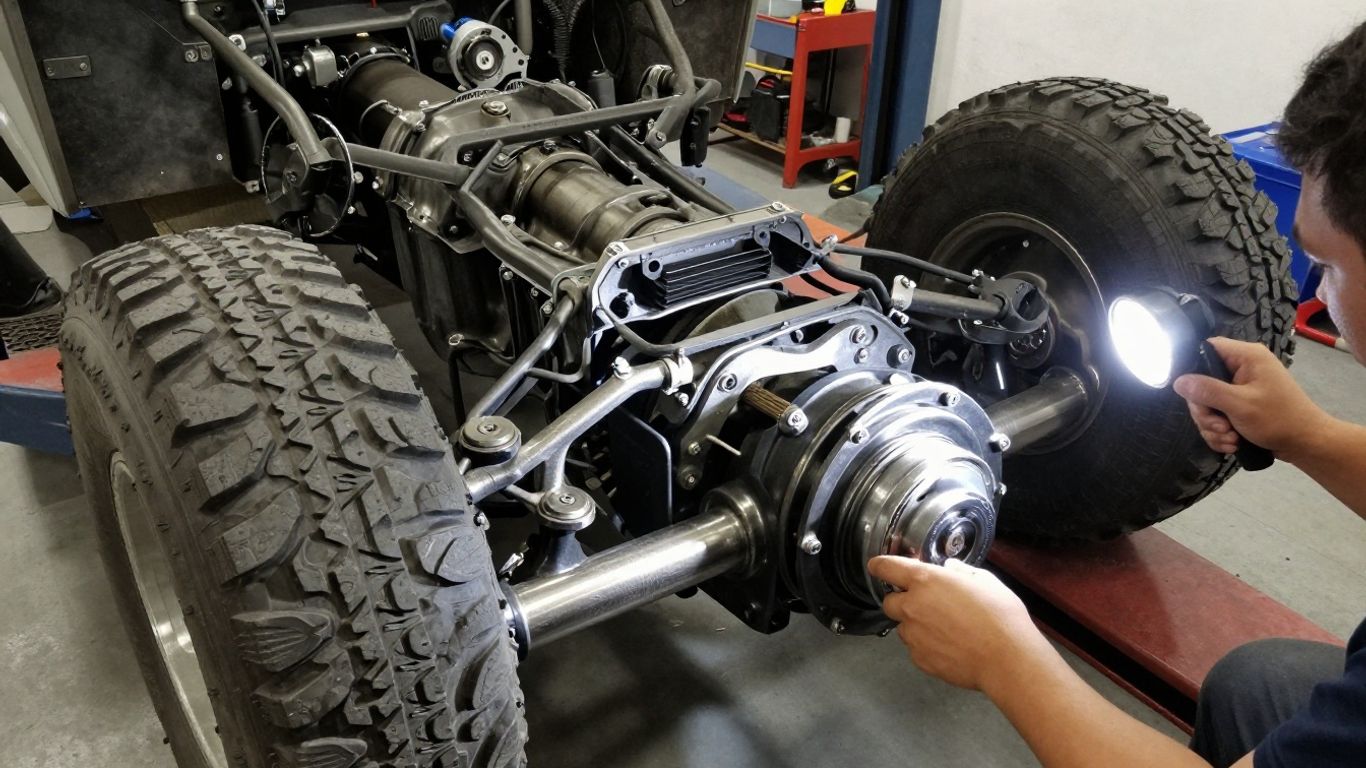
Defender manual transmission considerations
A Defender used for towing, low-speed work, or off-road driving may place different loads on its clutch and transmission than a vehicle used mainly on paved roads. Check the shift linkage, clutch operation, lubricant condition, and driveline joints as a system. A noise that appears only under low-range or heavy load should not automatically be assigned to the main gearbox.
Discovery and Discovery 2 gearbox symptoms
On a Discovery or Discovery 2, compare the noise in each gear and across the transfer-case settings relevant to the vehicle. Pay attention to vibration, propshaft play, and changes under acceleration or overrun. The history of towing, water crossings, and lubricant service can help explain why a problem developed.
Freelander manual gearbox and clutch-related faults
Freelander symptoms may overlap between clutch drag, gear-selection trouble, and noise from other driveline components. Difficulty selecting first or reverse while stationary points toward clutch disengagement, while a load-dependent sound may call for broader checks. Accurate model and engine identification is essential before parts are ordered.
Range Rover manual transmission variations
Manual Range Rover applications are not interchangeable by assumption. The gearbox, clutch arrangement, transfer case, and final drive should be identified by vehicle details rather than appearance. When researching unrelated automotive electronics, even a GWM Ora review illustrates why model-specific information matters; its subject is separate from this transmission diagnosis.
Transfer case, propshaft, and differential checks
Inspect driveline joints, mounts, flanges, and differential oil where appropriate. A worn joint can clunk as torque changes, while a bearing or differential fault may whine with road speed. Comparing two-wheel and four-wheel-drive conditions, where the vehicle permits it, can help isolate the source without dismantling the gearbox.
For broader symptom discussions, owners may also find a Land Rover gearbox forum useful for comparing observations. Forum reports are anecdotal, so they should not be treated as a vehicle-specific diagnosis.
Repair options for a grinding manual gearbox
The right repair depends on what the inspection finds. Some problems are external and relatively contained; others require removal and disassembly of the transmission. A written estimate should distinguish diagnosis, parts, labor, fluids, seals, and any related clutch work.
Adjusting or replacing clutch components
If the clutch is not releasing fully, the repair may involve hydraulic bleeding, adjustment, a master or slave cylinder, release hardware, or a complete clutch assembly. Replacing a clutch without checking the flywheel, release bearing, and hydraulic system can leave the original symptom unresolved.
Flushing and refilling the gearbox with the correct lubricant
If the lubricant is low, contaminated, or incorrect, the technician can correct the level and use the specified replacement fluid after checking for leaks. A fluid change may improve shift quality when lubricant is the cause, but it cannot restore worn synchronizers or chipped gear teeth. Metal debris should prompt further investigation rather than repeated flushing alone.
Rebuilding or replacing worn synchronizers
A synchronizer repair normally requires gearbox removal and disassembly. The shop should inspect related hubs, sleeves, shift forks, and gear teeth while the transmission is open. Replacing only the visibly worn ring may be false economy if mating components have also been damaged.
Repairing bearings, gears, and selector mechanisms
Bearing replacement, gear repair, and selector work require careful measurement, correct clearances, and clean assembly. A specialist should identify the source of the debris or noise before fitting parts. Seals and related hardware are often considered at the same time because access is already available.
Choosing between a specialist rebuild and a replacement gearbox
A rebuild keeps the original unit and allows its condition to be assessed directly, while a replacement may reduce turnaround time if a suitable unit is available and properly verified. Ask about parts quality, warranty coverage, compatibility, and what happens if additional damage is found after opening the case.
Repair costs, driving risks, and prevention
Costs vary widely because a clutch adjustment and an internal rebuild are very different jobs. Labor access, parts availability, vehicle configuration, and hidden damage all affect the final figure. Before approving work, ask for a staged diagnosis so that inexpensive checks are completed before major disassembly.
Factors that influence diagnostic and repair costs
The main variables are the time needed to reproduce the symptom, whether the gearbox must be removed, the extent of internal damage, and whether clutch or driveline parts are also worn. A replacement unit may involve shipping, setup, and core charges. A clear estimate should show which costs are confirmed and which are provisional.
When continued driving can cause further damage
Occasional mild noise does not provide a safe mileage guarantee. Continued driving can worsen damaged synchronizers, spread metal through the lubricant, or turn a bearing problem into gear or casing damage. Stop and arrange inspection when grinding becomes frequent, engagement fails, vibration increases, or the vehicle will not hold gear.
Maintenance habits that reduce gearbox wear
Use the correct lubricant and service interval for the exact transmission, and investigate leaks early. Keep the clutch and hydraulic system in good condition, especially when pedal travel or engagement changes. Regular driveline inspections are also worthwhile for vehicles that tow, travel off-road, or carry heavy loads.
Using the clutch and gear lever correctly
Press the clutch fully, pause when needed, and select the gear without pushing through resistance. Avoid resting a hand on the lever or a foot on the clutch pedal, and do not use the clutch to hold the vehicle on an incline. These small habits reduce unnecessary load on the release system and synchronizers.
A practical inspection conversation can be organized around four questions:
- Which gear or operating condition reproduces the noise?
- Was the clutch tested for complete disengagement?
- What did the lubricant and drain plug reveal?
- Which parts are confirmed damaged, and what warranty covers the repair?
Those questions keep the discussion specific and make it easier to compare a targeted repair with a replacement unit. They also help avoid approving work based only on a vague noise description.
Questions to ask a Land Rover transmission specialist
Ask whether the technician has identified the exact gearbox and transfer case, reproduced the symptom, and inspected for clutch drag. Request photos or a report when the transmission is opened, along with the reason each recommended part is being replaced. A clear diagnosis saves money when several components could create the same grinding sound.
When a transmission problem intersects with unrelated electronic work, keep the scopes separate: an ECU cloning service concerns engine-computer data, not mechanical gearbox repair. Likewise, references to luxury printed packaging, Hormone Replacement Therapy, or a conduit and irrigation glossary belong to other specialist subjects and should not be used to explain transmission faults.
A trustworthy specialist will explain what was tested, what was found, and what remains uncertain before asking for approval. That transparency is as valuable as the repair itself.
Conclusion
Land Rover manual gearbox grinding deserves attention because the same sound can come from a clutch that drags, a fluid problem, worn synchronizers, damaged bearings, or a driveline component outside the gearbox. Record when the noise occurs, avoid forcing the lever, and arrange a model-specific inspection before continued driving turns a contained fault into extensive damage.
Frequently Asked Questions
Is grinding always caused by a bad gearbox?
No. A clutch that does not fully disengage, low or incorrect lubricant, selector problems, and driveline faults can all produce grinding or similar noise. Diagnosis should separate these possibilities before the gearbox is replaced.
Why does a manual gearbox grind when cold?
Cold lubricant flows differently, and a clutch or synchronizer problem may be more noticeable before the vehicle warms. Cold-only noise still deserves investigation, particularly if it becomes more frequent or lasts longer over time.
Why does only one gear grind?
One affected gear can point toward its synchronizer, engagement sleeve, selector mechanism, or related gear teeth. A clutch problem can also affect certain selections more visibly, so the complete engagement pattern matters.
Can changing the gearbox oil stop grinding?
It may improve symptoms caused by low, contaminated, or incorrect lubricant. It will not repair worn synchronizers, bearings, or damaged teeth. Metal particles or recurring noise should lead to a deeper inspection.
Is it safe to drive with a grinding transmission?
Short, gentle travel to a repair facility may sometimes be possible, but there is no universal safe distance. Do not continue driving if a gear will not engage or hold, vibration is severe, lubricant is leaking quickly, or the noise is rapidly worsening.
What should I record before booking an inspection?
Note the gear involved, vehicle speed, engine load, temperature, clutch pedal feel, and whether the noise occurs during acceleration, deceleration, or initial movement. A safe audio recording can also help if it does not require distracting driving.
How can gearbox wear be prevented?
Use the specified lubricant, correct leaks promptly, maintain the clutch hydraulic system, and shift without forcing the lever. Avoid resting a hand on the gear lever or a foot on the clutch, and inspect the driveline when the vehicle is used for towing or off-road work.