

Key Takeaways
A suspension knock is a symptom, not a diagnosis. The sound’s timing, location, and relationship to steering or road surface can narrow the search, while a safety check determines whether the vehicle should be driven.
- Note when the knock occurs: bumps, braking, turning, or suspension height changes.
- Inspect sway bar links, bushes, ball joints, mounts, shocks, and nearby underbody parts.
- Do not work beneath a vehicle supported only by a jack.
- A workshop can confirm hidden play, loose fasteners, air-suspension faults, and drivetrain noises.
- Repair costs depend on the failed part, suspension design, vehicle model, and alignment needs.
What a Land Rover suspension knocking noise can indicate
A Land Rover suspension knocking noise may come from a worn joint, a deteriorated bush, a loose mount, or something touching the body. The same dull thud can also be caused by a shock absorber, wheel bearing, steering component, or loose underbody part. Start by describing the noise accurately rather than assuming the loudest area is the source.
How the sound’s timing helps narrow the cause
A knock over small, repeated bumps often points toward a link, bush, or mount with play. A single clunk when braking or accelerating can suggest movement in a control arm or another loaded connection. If the noise appears while turning the wheel at low speed, steering joints, ball joints, spring seats, or a component shifting under load deserve attention.
Record whether the sound occurs on compression, rebound, or both. A short phone recording can help, but a written note about speed, direction, road surface, and suspension height is often just as useful when explaining the fault to a technician.
Differences between front and rear suspension noises
Front knocks are easier to associate with steering because the front wheels, steering links, and suspension all respond to the driver’s inputs. Rear noises may seem more distant and can travel through the body, making a shock mount, rear link, exhaust hanger, or spare-wheel carrier sound as if it is inside the cabin.
Listen from both sides of the vehicle without placing yourself in a dangerous position. A knock that changes when the steering is turned is more likely to involve a front assembly, while a noise that remains during straight-line bumps may lead the inspection toward rear suspension or underbody parts.
Why speed, road surface, and steering angle matter
Low-speed driving over a sharp edge can expose looseness that stays quiet on smooth pavement. At higher speeds, a series of fine undulations may keep a worn component moving and make the noise more obvious. Steering angle changes the load on joints and bushes, so the same bump may sound different while turning left, turning right, or travelling straight.
A useful road-test record includes the direction of travel, approximate speed, whether the vehicle is braking, and whether the suspension is at normal height. This methodical approach is more reliable than replacing the first part that looks old.
When a knock suggests a safety-critical failure
Treat the noise as urgent if it is accompanied by steering wander, severe vibration, a wheel that appears out of position, uneven braking, a collapsed corner, or a tire rubbing the body. Visible separation in a ball joint or a loose wheel fastener also changes the situation from investigation to recovery.
The front-end diagnosis guide describes a partner-assisted approach for observing steering and suspension movement, but any test beneath a vehicle needs proper support and careful positioning. When control feels abnormal, arrange a tow rather than attempting a longer drive.
Common causes of front suspension knocking
The front suspension carries steering loads as well as the vehicle’s weight, so several parts can create a similar knock. Rubber bushes soften and split with age, while ball joints and links can develop measurable play. The vehicle’s model, axle design, and suspension type all affect which parts are fitted and how they should be tested.
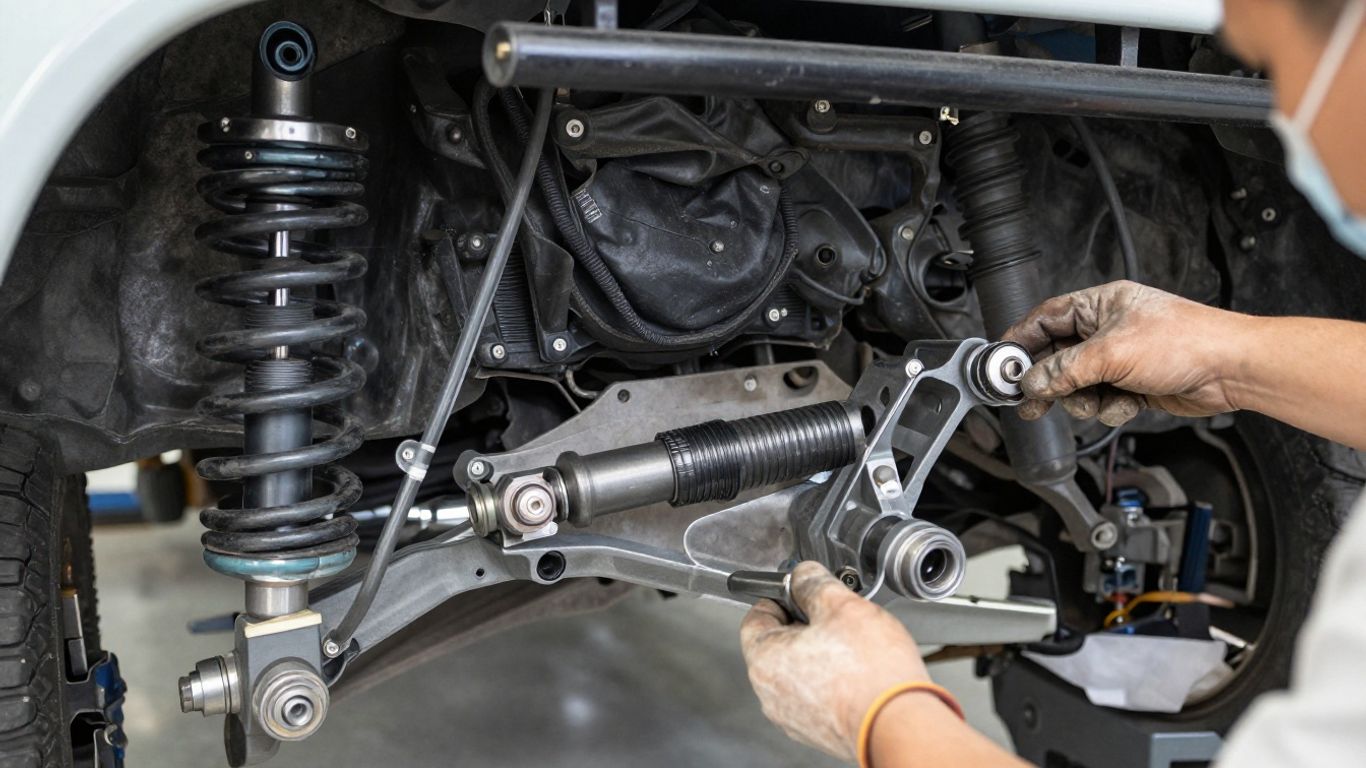
Worn sway bar links and bushings
Sway bar links and bushes commonly become noisy when one wheel moves differently from the other. A loose link may produce a light tapping over closely spaced bumps, while a tired bush can allow the bar to shift against its mount. The noise may be most noticeable when entering a driveway at an angle or crossing a speed hump with one wheel first.
An external inspection can reveal cracked rubber, a displaced washer, or a link that does not sit squarely. Appearance alone is not conclusive, though; the part needs to be checked for movement with the suspension safely supported in the correct position.
Failing control arm bushings
Control arm bushes manage movement while allowing the arm to pivot. When rubber deteriorates or separates from its sleeve, the arm may move farther than intended during braking, acceleration, or uneven-road impacts. That movement can create a heavy knock and may eventually affect alignment or tire wear.
Some vehicles use replaceable bushes, while others are commonly serviced with a complete arm assembly. The correct choice depends on the design, the condition of the ball joint, labor access, and whether the remaining components are already near the end of their service life.
Loose or damaged ball joints
A ball joint connects moving suspension parts and must control movement without excessive play. Wear can produce a clunk when steering or crossing bumps, but the more serious concern is altered wheel control. Torn boots, lost lubricant, corrosion, or visible movement should be treated as reasons for prompt professional inspection.
Do not rely on one informal wheel-rocking test to clear a joint. Load on the joint can hide looseness, and different suspension layouts require different checking methods. A workshop can support the assembly correctly and compare movement with the manufacturer’s specifications.
Strut mounts, shocks, and spring seats
A worn upper mount can knock as the suspension turns or compresses, especially when the bearing within the mount is rough or binding. Shock absorbers may also tap if their mounts or bushes loosen, while a displaced spring seat can make a sharp metallic sound over bumps. Oil on a shock body is another reason to investigate, although a small mark is not by itself a complete diagnosis.
When several front parts are aged, changing only the noisiest item may not restore the ride. Compare the condition of the mount, spring seat, shock, and fasteners before deciding whether an individual repair or a larger assembly is sensible.
Common causes of rear suspension knocking
Rear suspension noises are often mistaken for loose luggage because sound travels through the floor and side panels. Links, bushes, shocks, air-suspension fittings, exhaust hangers, and spare-wheel equipment can all move when the rear axle responds to a bump. A careful inspection should include both suspension parts and nearby components that could make contact.
Worn rear links and suspension bushes
Rear links and bushes can knock when their rubber softens, cracks, or separates from its sleeve. The sound may appear when one rear wheel drops into a pothole or when the vehicle rolls diagonally across an uneven entrance. Uneven tire wear or a less settled rear end can support the suspicion, though neither proves the cause.
Check for torn rubber, shiny contact marks, displaced sleeves, and movement at the link ends. A component can look acceptable from outside and still have play under load, so a pry-bar inspection by a trained technician is often needed for certainty.
Air suspension components and mounting points
Air suspension adds bags, lines, valves, sensors, compressors, and mounting points to the inspection. A knock may come from a loose bracket or mount rather than from the air spring itself. Changes in ride height, a corner that sinks after parking, or a compressor that runs unusually often should be reported alongside the noise.
A suspension that has settled low can also alter the angle and clearance of nearby parts. Avoid disconnecting air lines or loosening pressurized components at home; diagnosis is safer when the system is isolated and supported using the vehicle’s correct procedure.
Loose shock absorbers or upper mounts
A loose shock absorber eye, worn bush, or damaged upper mount can create a distinct knock as the rear wheel moves through its travel. The noise may be clearer on rebound than compression, particularly after a bump or dip. Missing hardware, witness marks around a mount, or a shock that moves at its attachment point needs prompt attention.
Fasteners should be tightened to the specified procedure rather than simply made as tight as possible. Some connections require the suspension to be at a particular ride height, and incorrect tightening can shorten bush life or leave the joint under unwanted stress.
Exhaust, underbody, and spare-wheel interference
Not every rear knock is a suspension fault. An exhaust hanger can allow a pipe or heat shield to touch the body, while a loose undertray, tow-bar cover, or spare-wheel assembly may rattle over the same bumps. Fresh shiny marks on metal or plastic often show where contact is occurring.
Inspect only cool components and avoid reaching near moving or hot parts. If the noise follows body movement but no suspension play is found, checking these neighboring items can prevent an unnecessary suspension repair.
How to diagnose the noise at home
Home diagnosis should gather useful observations without creating a second problem. Begin with a controlled road test, then inspect visible areas with the vehicle parked on level ground. Do not dismantle a suspension system simply to reproduce a sound; the aim is to narrow the fault for a safe inspection.
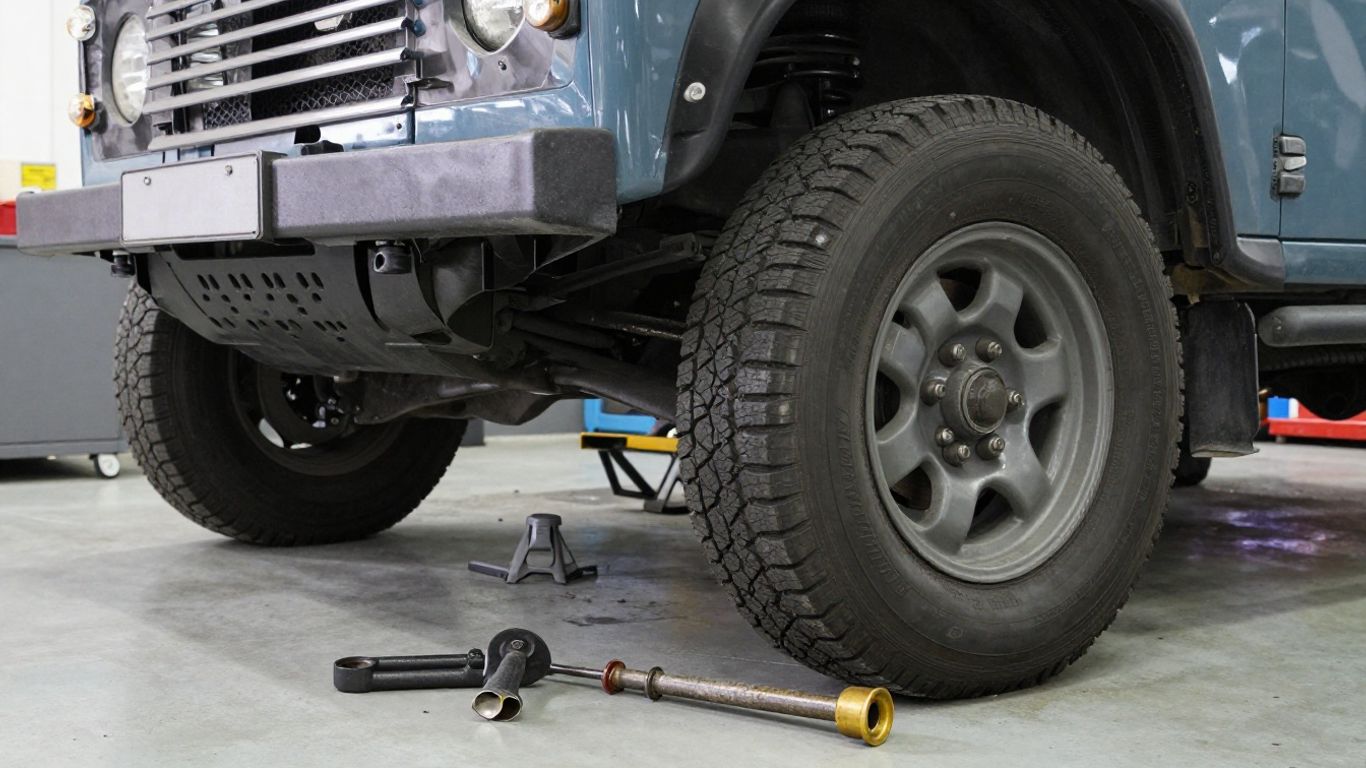
Reproducing the knock safely during a road test
Use a familiar, low-traffic route with a safe place to stop. Drive slowly over different surfaces and change only one condition at a time, such as steering angle or braking pressure. A second person can listen from inside, but nobody should stand beside the moving vehicle or lean outside it.
Before the test, check that loose items are removed from the cargo area. Note whether the sound is a single clunk, repeated rattle, scrape, or dull thud, and whether it comes from the front, rear, left, or right. The methodical knocking-noise discussion also illustrates why recording when a noise occurs is more useful than guessing at a part.
Inspecting suspension components with the vehicle parked
With the vehicle switched off and parked securely, look for leaking shock absorbers, torn bushes, broken springs, displaced clips, loose shields, and signs of contact. Compare the left and right sides, since a clear difference can be informative. Do not place hands near components that may move when the vehicle changes height.
A short inspection list helps keep the process focused:
- Check tire condition, wheel position, and obvious rubbing marks.
- Look for cracked rubber, missing hardware, or shiny impact marks.
- Compare ride height from side to side on level ground.
- Listen for loose exhaust or spare-wheel equipment only when cool.
These observations do not prove which component has failed, but they give a workshop a useful starting point. They also help separate a suspension concern from a loose object or underbody rattle.
Checking for looseness, leaks, and uneven tire wear
Uneven tire wear can indicate altered alignment, worn joints, or a tire problem that is unrelated to the knock. Check the inner and outer shoulders, tread blocks, and sidewalls without assuming the tire caused the noise. Fluid around a shock or a low corner should be photographed and reported rather than wiped away before inspection.
Do not use forceful shaking as a substitute for a proper joint test. Some faults show only when the wheel and suspension are loaded in a particular way, and excessive force can damage trim or move the vehicle unexpectedly.
When a jack and stands are appropriate
A jack is for lifting, not for supporting a person beneath a vehicle. If a wheel must be removed, use level ground, suitable stands, wheel chocks, and the vehicle maker’s lifting points. If the correct equipment or procedure is unavailable, leave the inspection to a workshop.
Never work beneath a vehicle supported only by a jack. Even a simple visual check can become dangerous if the vehicle shifts, the suspension changes height, or a component releases stored energy.
How a professional workshop confirms the fault
A workshop diagnosis is more than listening for the same noise on a short drive. A technician can reproduce the symptom, inspect components under controlled load, check fasteners and joints, and compare electronic fault information with physical evidence. That combination helps prevent replacing parts by guesswork.
Using a lift and suspension pry-bar inspection
On a suitable lift, the technician can inspect bushes, links, mounts, springs, shocks, and contact marks with better access. A pry bar may reveal movement that is not visible during a casual glance, but it must be used at the correct points and with awareness of stored spring or air-system energy.
The technician may also reproduce the knock by loading one wheel or moving the suspension through its travel. The result should be compared with the road symptom, since a stationary noise that sounds similar can still come from a different component.
Checking wheel bearings, steering joints, and fasteners
Wheel bearings, tie-rod ends, ball joints, and other steering connections can imitate suspension noise. The inspection should include wheel play, joint condition, hub fasteners, wheel bolts, and any evidence that a component has shifted. A loose wheel or steering connection is a priority regardless of whether it is the original source of the knock.
Fasteners may look tight while a bush sleeve or mounting surface is moving. That is why the inspection considers both torque and component condition rather than treating tightening as a universal repair.
Scanning electronic air suspension systems
Where electronic air suspension is fitted, a diagnostic scan can reveal stored faults involving height sensing, valve control, or related system operation. Scan data does not replace a physical inspection: a silent mechanical mount will not necessarily create a fault code, and a code does not automatically identify the source of a noise.
The technician should compare ride-height behavior, visible leaks, compressor operation, and mounting condition with the scan results. This combined approach is especially useful when the knock appears during raising or lowering.
Distinguishing suspension noise from drivetrain clunks
A drivetrain clunk may occur when shifting between drive and reverse, lifting off the throttle, or applying power, while suspension noise usually follows wheel movement or body roll. Exhaust, propshaft, differential, and engine-mount areas may need inspection if the sound follows load changes more than bumps.
A road test that includes gentle acceleration, deceleration, braking, and cornering can separate these patterns. The technician should reproduce the exact condition rather than relying on a general impression of where the sound seems to come from.
Repair decisions and expected costs
The sensible repair is the one that restores safe control and addresses the condition of related parts. A low-cost individual component may be appropriate when surrounding parts are sound, while a complete assembly can make sense when several connected items are worn or labor access is significant. Ask for the failed part, the evidence supporting the diagnosis, and any follow-up work that is recommended.
Choosing between individual components and complete assemblies
Replacing one bush, link, or mount can control the bill when the rest of the assembly is in good condition. A complete control arm or strut assembly may be more practical when the ball joint, bush, and mounting hardware are all aged, or when the manufacturer’s service design treats them as a unit.
The cheapest individual part is not always the least expensive repair once labor, seized fasteners, and a second alignment are considered. Compare the total job, warranty, and expected service life rather than only the parts price.
When genuine, aftermarket, or heavy-duty parts make sense
Genuine parts can suit owners who want the original specification, while reputable aftermarket parts may offer a sensible alternative when fit and quality are verified. Heavy-duty choices may be useful for a vehicle that regularly carries substantial loads, but they still need to match the suspension geometry and intended use.
Before ordering, confirm the VIN or exact model details, axle position, suspension type, and whether the vehicle has air suspension or other variants. A trusted car parts supplier can help compare available options, but the link should never replace checking compatibility with the technician’s diagnosis.
Wheel alignment after suspension repairs
Alignment may be needed after replacing control arms, bushes, steering joints, or other parts that affect wheel position. Even when the steering wheel appears straight, toe or camber can be outside specification. A post-repair measurement also provides a useful check that the vehicle is tracking correctly and that the tires are not being scrubbed.
Alignment cannot repair a loose joint or worn bush. It should follow the mechanical repair, not be used to mask movement that remains in the suspension.
How vehicle model and suspension type affect pricing
Pricing varies with vehicle generation, access, parts availability, labor time, and whether the suspension is coil-sprung or air-sprung. An electronically controlled system may require calibration or additional diagnosis, while seized hardware can add time to an otherwise straightforward job.
A useful estimate separates parts, labor, alignment, diagnostic time, and possible additional hardware. That makes it easier to compare quotes without assuming that the lowest headline figure covers the same work.
When it is safe to drive with a suspension knock
Whether a vehicle can be driven depends on the severity of the symptom and the condition of the affected parts. A faint noise with normal steering and braking still deserves an appointment, but severe movement or a changed ride height requires a more cautious decision. When uncertain, stop and have the vehicle assessed.
Warning signs that require immediate towing
Arrange recovery if the vehicle pulls sharply, steering feels loose, a wheel sits at an unusual angle, a tire rubs, a corner has collapsed, or a spring or joint appears broken. Do the same if there is heavy vibration, repeated metallic impact, fluid loss from a critical component, or a wheel-fastener concern.
Do not attempt to reach a workshop by driving when the vehicle’s control or clearance is compromised. A tow is usually far less costly than secondary damage caused by a failed suspension or steering part.
Short-distance driving precautions
If a technician has judged the vehicle roadworthy for a short trip, keep speed low, avoid potholes and heavy loads, leave extra stopping distance, and use a direct route. Do not carry passengers if the vehicle is unstable or if the noise is worsening. Stop immediately if steering, braking, ride height, or tire clearance changes.
A short drive is a temporary measure, not evidence that the problem is harmless. Book the inspection promptly and provide the observations collected during the road test.
Problems caused by delaying suspension repairs
Continued driving can accelerate wear in connected parts and may damage tires, mounts, or alignment-sensitive components. A small knock can also become harder to diagnose after several parts begin moving or contacting each other. The risk is greatest when the noise is paired with handling changes.
Delaying a repair can also make a simple parts replacement more expensive through seized hardware, uneven tire wear, or additional damage. Prompt diagnosis gives the owner more choices and a clearer estimate.
Post-repair checks and preventive maintenance
After repair, confirm that the original noise is gone, the steering wheel is centered, the vehicle sits evenly, and no warning lights remain. Check for fresh leaks or contact marks after the first short drive, then have any unusual change reviewed rather than assuming the suspension is still settling.
Keep service records, inspect tires regularly, and mention new noises early. Rechecking fasteners and alignment where appropriate can help protect the repair and identify related wear before it becomes a larger fault.
Conclusion
A Land Rover suspension knocking noise should be approached as a pattern to investigate, not a part to guess at. Careful observations, safe inspection, and a professional check of loaded joints and electronic systems can lead to the right repair without unnecessary replacement. If steering, ride height, or tire clearance is affected, choose recovery over risk.
Frequently Asked Questions
Can I keep driving with a suspension knock?
Only if the vehicle remains stable, steers and brakes normally, and a qualified assessment has found no immediate safety concern. Keep any permitted trip short and stop if the symptom changes.
Is a knocking sound always caused by the suspension?
No. Exhaust parts, spare-wheel equipment, underbody shields, wheel bearings, steering joints, and drivetrain mounts can create similar sounds. The timing of the noise helps separate these possibilities.
Why does the knock happen only over small bumps?
Small bumps can move a loose link, bush, mount, or shock connection repeatedly without creating the larger body movement associated with a deep pothole. The specific component still needs confirmation.
Can uneven tire wear cause a suspension knock?
Uneven wear usually points toward alignment, tire, or suspension-condition concerns rather than directly causing a knock. It is useful evidence, but it does not identify the failed component by itself.
Is a visual inspection enough to find the problem?
Not always. Some joints and bushes show movement only under load, and air-suspension faults may require electronic scanning alongside physical checks. A visual inspection is a useful first step, not a complete diagnosis.
Should suspension parts be replaced in pairs?
That depends on the part, its condition, the vehicle design, and the technician’s assessment. Replacing related parts together can provide more consistent handling, but it is not automatically required for every component.
Will a suspension repair require wheel alignment?
Repairs affecting wheel position or steering geometry often warrant an alignment check. The workshop should measure alignment after the mechanical fault is corrected and adjust it when needed.