
Key Takeaways
A torque converter fault can feel like a gearbox failure, but the symptoms are not always conclusive on their own.
- Shuddering under light throttle can point toward lockup clutch trouble.
- Fluid condition, temperature, and electronic data all matter during diagnosis.
- A converter may be replaced or rebuilt without replacing the entire transmission.
- Continued driving with slipping or overheating can increase the repair bill.
- Correct fluid, sensible load management, and regular servicing help reduce repeat failures.
What a torque converter does in a Land Rover transmission
The torque converter sits between the engine and automatic transmission, allowing the vehicle to remain stationary while the engine runs. It transfers power through transmission fluid rather than a manual-style clutch. Understanding that relationship makes the later symptoms easier to interpret.
How the torque converter transfers engine power
The engine drives an impeller inside the converter, which moves fluid toward a turbine connected to the transmission. At low road speeds, the converter can multiply torque to help the vehicle pull away. As turbine speed rises, the difference between engine and transmission speed becomes smaller.
That process is not perfectly mechanical at all times. Some slip is normal, particularly while pulling away or maneuvering, but excessive slip creates heat and wastes power. A useful technical overview of the operating stages is available in this torque converter guide, although any suspected fault still needs vehicle-specific testing.
Why automatic transmissions rely on fluid coupling
Fluid coupling gives an automatic transmission a smooth takeoff and lets the engine keep running when the vehicle is stopped. It also cushions some changes in load, which is useful in a heavy SUV used for traffic, hills, towing, or low-speed maneuvering.
The tradeoff is that fluid movement generates heat. A converter that cannot transfer power efficiently may allow the engine to rev higher than expected, while a damaged internal clutch can make the vehicle shudder. The symptom pattern matters because one isolated sensation rarely identifies the failed part with certainty.
How torque converter lockup improves efficiency
Once the vehicle is moving steadily, a lockup clutch can reduce the normal speed difference between the engine and transmission. That lowers slip, reduces heat production, and can improve fuel economy during cruising. The clutch may apply and release repeatedly as speed, throttle position, and load change.
If its friction material is worn, contaminated fluid or an unstable hydraulic command may produce a repeated vibration under light acceleration. A driver may describe this as a rumble strip sensation, even though the road surface is smooth. The same feeling can also come from other driveline or engine issues, so it should not be treated as proof by itself.
Land Rover models and transmissions commonly affected
Different model years and powertrains use different transmission designs, calibrations, fluids, and service procedures. That means a symptom reported on one vehicle cannot automatically be assigned to another simply because both carry the same badge. The exact year, engine, transmission code, mileage, service history, and modifications should be recorded before parts are ordered.
A specialist can use that information to identify the appropriate test procedure and fluid specification. Owner discussions about older vehicles, such as this L322 shudder discussion, may help someone describe a symptom, but forum experiences are not a substitute for a controlled diagnosis.
Early symptoms of Land Rover torque converter failure
Early torque converter trouble is often subtle. It may appear only at a particular road speed, throttle position, or operating temperature, then become more frequent as wear progresses. Keeping a short log of when the symptom occurs can give a technician much better information than simply reporting that the transmission feels rough.

Shuddering during light acceleration
A converter lockup problem commonly feels like a rapid vibration while accelerating gently or holding a steady speed. It may disappear when the throttle is opened more firmly or when the transmission selects a different gear. Note the speed, engine temperature, road gradient, and whether the vibration changes in a different driving mode.
Do not assume every low-speed judder is converter-related. Misfire, worn engine mounts, driveshaft joints, tires, and differential components can create sensations that feel similar from the driver’s seat.
Delayed engagement or harsh gear changes
A delay after selecting Drive or Reverse can indicate a fluid-level problem, hydraulic pressure loss, worn seals, or broader transmission wear. Harsh shifts may also occur when the control system is compensating for pressure or speed information that does not look correct.
The timing matters. A single cold hesitation is different from a repeatable delay after the vehicle is warm, and a firm shift is different from a shift accompanied by a flare, bang, or loss of drive. Those details help separate a converter concern from a hydraulic or control fault.
Rising engine revs without matching acceleration
When engine speed climbs but road speed does not follow, the transmission may be slipping. Converter slip is one possibility, but clutch packs, low fluid, worn seals, and other internal faults can produce the same result. Repeated flare during acceleration should be investigated promptly rather than tested repeatedly on the road.
A driver should record whether the engine revs rise during a gear change, while cruising, or under a heavy load. Each pattern points the technician toward a different part of the transmission system.
Overheating, slipping, and reduced fuel economy
Excessive converter slip turns more engine power into heat. The vehicle may feel less responsive, the transmission temperature may rise, and fuel consumption may worsen even when the driver’s habits have not changed. A burnt smell or visibly dark fluid is also a reason to stop treating the problem as a minor drivability annoyance.
Continuing to drive while the transmission is overheating can spread friction material and metal particles through the hydraulic system. The eventual repair may then involve more than the converter itself.
Warning lights, fault codes, and unusual noises
A warning light may accompany a converter clutch, transmission ratio, temperature, pressure, or speed-sensor fault, but the absence of a warning light does not clear the converter. Whining, rattling, clicking, or grinding noises deserve attention too, especially if they change with engine speed or gear selection.
Write down when the noise appears and whether it remains in Park, changes in Neutral, or occurs only while moving. That comparison can help distinguish an internal transmission noise from an external driveline or engine accessory problem.
What causes torque converter problems
Torque converters usually fail through a combination of friction, heat, fluid deterioration, and related hydraulic or electronic problems. The first visible symptom may not be the original cause. A proper inspection therefore looks beyond the converter shell and considers the condition of the transmission as a whole.
Worn lockup clutches and internal components
The lockup clutch repeatedly applies and releases during normal driving. Over time, its friction surface can wear, glaze, or lose its ability to hold steadily. Bearings, seals, one-way clutches, and other internal parts can also deteriorate, particularly after long service or repeated overheating.
Material from a failing clutch may circulate through the fluid. If the transmission pan or filter contains significant debris, replacing only the converter may leave the underlying contamination in place.
Contaminated, degraded, or incorrect transmission fluid
Transmission fluid provides lubrication, cooling, hydraulic control, and the friction characteristics needed by the converter clutch. Old or contaminated fluid can lose those properties. The wrong fluid may be equally damaging because a lockup clutch depends on carefully controlled friction rather than simple lubrication alone.
Leaks should be addressed before a fluid service is considered complete. A low level can cause delayed engagement, aeration, pressure problems, and heat buildup, while an overfilled unit can also behave poorly.
Solenoid and valve body faults
The valve body directs hydraulic pressure through passages and solenoids. If a solenoid sticks, a passage is restricted, or a valve bore is worn, the lockup clutch may apply too softly, too firmly, or at the wrong time. The resulting shudder can feel exactly like a worn converter to the driver.
Testing should include commanded operation and, where appropriate, pressure checks. Replacing a converter without addressing a valve body fault may result in the same symptom returning soon afterward.
Transmission overheating and excessive towing loads
High loads, slow climbs, stop-and-go traffic, and difficult terrain all increase the amount of heat the transmission must manage. Towing beyond the vehicle’s approved limits or using an unsuitable setup can add further stress. Heat does not always cause an immediate failure, but repeated temperature extremes accelerate fluid and clutch wear.
The cooling system should be inspected alongside the transmission. A restricted cooler, damaged line, low coolant level, or engine cooling problem can undermine an otherwise sensible repair.
Electrical, sensor, and software-related issues
Transmission control depends on accurate signals from speed, temperature, throttle, and other sensors. A wiring fault, poor connection, or implausible signal can make the system command lockup incorrectly. Software adaptations can also reflect previous wear and may need to be assessed after mechanical work.
Fault memory is evidence, not a final verdict. A code identifies a monitored condition or circuit; it does not always identify the failed component.
How to diagnose the fault accurately
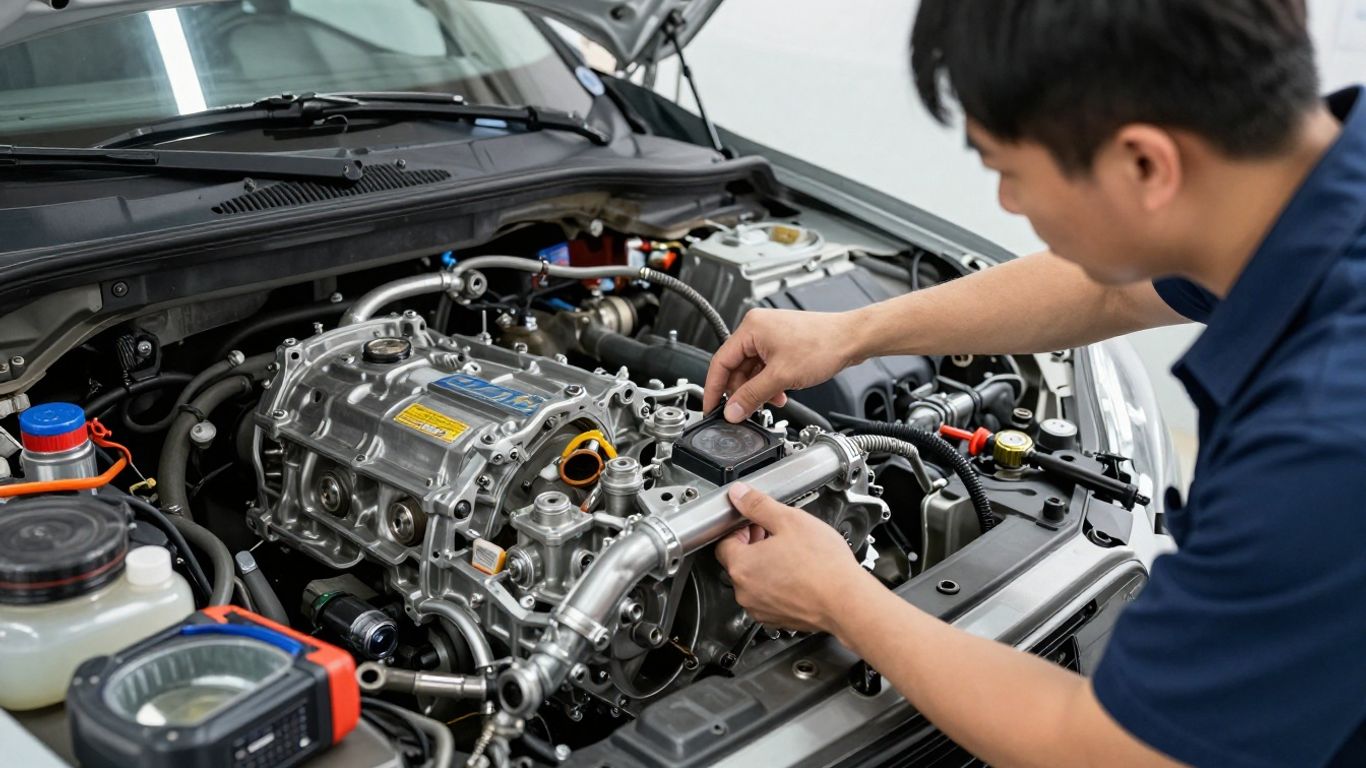
Diagnosis should progress from simple observations to targeted testing. A technician needs to reproduce the complaint, check basic fluid and electrical conditions, and compare scan data with what the vehicle is doing on the road. This avoids committing to an expensive repair based on one familiar symptom.
Road-testing the vehicle under different conditions
A controlled road test can compare light throttle, moderate acceleration, steady cruising, hills, and changes in driving mode. The technician may watch engine speed, commanded gear, converter slip, transmission temperature, and the moment the lockup clutch is requested.
The goal is to reproduce the symptom safely and consistently. A vibration that occurs only when warm and lightly loaded tells a different story from a flare that appears during every gear change.
Checking transmission fluid condition and level
Fluid level must be checked using the correct procedure, which may involve a specified temperature range and a level surface. Looking at color alone is not enough, but darkened fluid, a burnt odor, foam, or visible particles can support the wider diagnosis.
The inspection should also look for leaks around the pan, cooler lines, seals, and converter area. A service may improve a mild problem caused by fluid condition, but it cannot restore a mechanically damaged lockup clutch.
Using scan tools to read transmission fault codes
A capable scan tool can retrieve stored and pending codes, view live data, and show whether the control system is requesting or achieving lockup. Freeze-frame information may reveal the speed, temperature, and load present when the fault was recorded.
The scan result becomes more useful when matched to the driver’s description. For example, a converter clutch performance code recorded during the same light-throttle shudder is more meaningful than an old, unrelated voltage code.
A short video can help explain the basic operating principles before an inspection:
After viewing general material, use the vehicle’s own scan data and service information to make the decision. Generic test values should never override the specifications for the particular transmission.
Distinguishing torque converter failure from gearbox problems
A converter issue may cause shudder or controlled slip while the rest of the transmission still changes gears normally. A gearbox problem may produce missing gears, repeated harsh shifts, delayed engagement, or debris throughout the unit. These patterns can overlap, which is why a complete symptom history matters.
The technician should also rule out engine misfire, driveline vibration, mounts, and final-drive problems. A parts-swapping approach can make an already costly repair more expensive.
When pressure testing or transmission removal is necessary
Pressure testing is useful when scan data and road behavior suggest a hydraulic issue. It can help identify a weak pump, leaking circuit, restricted passage, or valve body problem. If the evidence points to internal converter damage, removal may be required because the converter is housed between the engine and transmission.
Before authorizing removal, ask what findings support it, what other components will be inspected, and whether contaminated fluid requires additional cleaning or repair. That conversation should produce a written scope rather than a vague promise to “see what happens.”
Land Rover torque converter repair options and costs
Repair pricing varies widely because the same symptom can lead to a fluid service, a converter replacement, or a complete transmission rebuild. Labor access, parts availability, transmission design, and the amount of contamination all affect the estimate. A sensible quote separates diagnosis from repair and lists related work clearly.
Transmission fluid service and adaptation resets
If the converter is mechanically sound and the problem is linked to fluid condition, level, or learned values, a service may be an appropriate first step. The work may include draining or exchanging fluid, replacing an available filter or pan assembly, correcting a leak, and carrying out any required adaptation procedure.
An adaptation reset is not a cure for worn friction material. It should follow the manufacturer’s procedure and be accompanied by a suitable relearn drive, not used as a way to disguise a mechanical failure.
Torque converter replacement versus rebuilding
A replacement converter can be a practical option when the internal clutch, bearing, or seal has failed but the transmission itself is clean and healthy. A reputable rebuilder may be able to restore the original unit, depending on its design and the availability of suitable components.
The estimate should state whether the converter is new, remanufactured, or rebuilt, and what warranty applies. It should also explain how the shop will prevent old debris from damaging the replacement.
When a complete transmission rebuild is more practical
A full rebuild becomes more reasonable when clutch packs are worn, hydraulic passages are contaminated, bearings are damaged, or the transmission has suffered prolonged overheating. In that situation, replacing the converter alone may provide only temporary relief.
The decision should be based on inspection findings, not simply on mileage or the presence of a shudder. A transmission with clean fluid, normal shift quality, and a confirmed converter fault may not need the same treatment as a unit containing extensive friction material.
Parts, labor, and related repair expenses
The converter is only one part of the bill. Access labor, fluid, seals, filters, pan hardware, cooler flushing, diagnostic time, and possible software procedures can all appear on the estimate. If the transmission must be removed, labor often becomes the largest single cost.
Ask whether the quote includes tax, fluid quantity, disposal, programming, road testing, and a warranty. Also ask what happens if additional damage is found after removal.
Factors that affect the final repair estimate
Because prices differ by vehicle and location, a universal figure would be misleading. These are the main variables a shop should account for when preparing a written estimate:
| Cost factor | Why it changes the estimate | Typical question to ask |
|---|---|---|
| Access and removal | Some layouts require substantial labor | Is removal included in the quote? |
| Converter condition | Replacement and rebuilding have different prices | Is the unit new, rebuilt, or remanufactured? |
| Internal contamination | Debris may require cooler and valve-body work | How will the system be cleaned? |
| Transmission damage | Worn clutches or bearings expand the repair | What inspection findings would change the scope? |
This breakdown helps compare estimates on equal terms. The cheapest initial figure may not be the lowest final cost if it excludes fluid, cleaning, diagnosis, or related damage.
How to prevent repeat torque converter failure
Prevention is mostly about controlling heat, maintaining correct fluid properties, and responding early to small changes in behavior. It also means using the vehicle within its intended limits and avoiding repairs that address only the most obvious symptom. Service records make those decisions easier over the vehicle’s life.
Following the correct transmission service schedule
Follow the service guidance for the specific vehicle and transmission rather than relying on a generic interval. A service history should record the date, mileage, fluid specification, filter or pan replacement, leak checks, and any adaptation procedure performed.
If the vehicle works hard, tows regularly, or spends much of its time off-road, ask whether its use changes the recommended maintenance approach. The correct schedule is part of the diagnosis of future problems because it shows what has already been done.
Using the specified fluid and replacement parts
Fluid is a functional part of the transmission, not a universal consumable. Use the specified product and the correct quantity, along with suitable seals, filters, and service components. Mixing fluids or guessing the level can create a new drivability problem after an otherwise careful repair.
Keep receipts and packaging details where possible. They give the next technician useful evidence if a symptom appears after servicing.
Managing towing, off-road driving, and heavy loads
Heavy loads increase converter slip and transmission heat, especially during slow climbs or repeated maneuvering. Use the approved towing equipment and limits, avoid unnecessary throttle while the vehicle is stalled against a brake, and allow the drivetrain to cool after demanding work.
A few practical habits reduce avoidable stress:
- Watch for changes in shift quality after towing or steep climbs.
- Stop and investigate if a warning light, burnt odor, or fluid leak appears.
- Avoid repeated hard testing of a transmission that is already slipping.
- Keep recovery, trailer, and load weights within the vehicle’s approved limits.
These measures do not prevent every failure, but they reduce the chance that a small converter problem becomes widespread transmission damage. They also give a specialist a clearer account of when the symptoms began.
Addressing cooling system and transmission temperature issues
Transmission cooling should be checked whenever there has been slipping, towing stress, or repeated overheating. Cooler lines, heat exchangers, airflow, engine coolant condition, and temperature readings all deserve attention. Repairing the converter without fixing the source of excess heat leaves the new component exposed.
If the vehicle has displayed high-temperature warnings, ask for the cause to be documented rather than simply clearing the warning. Temperature history can influence both the repair scope and the prevention plan.
Choosing a qualified Land Rover transmission specialist
Choose a shop that can identify the exact transmission, access suitable scan data, explain its testing, and provide a written warranty. A specialist should be willing to distinguish a confirmed converter fault from a possibility and should explain what will happen if internal contamination is found.
When researching advice online, keep context in mind. Automotive case studies can be useful, while unrelated searches such as a cheap car buying guide, DVLA check code, stress management guide, pródromo de parto, or prop firm scam guide belong to entirely different decisions and should not be mixed into a transmission diagnosis. The practical lesson is simple: verify the source, vehicle details, and test method before spending money.
Conclusion
Land Rover torque converter failure can begin with a mild shudder, a rev flare, or a change that seems too small to justify concern. Careful road testing, fluid and scan-tool checks, and a clear distinction between converter and gearbox faults give owners a better chance of choosing the right repair. Acting early also limits heat and contamination, which can turn a contained problem into a much larger transmission job.
Frequently Asked Questions
What is the most common sign of torque converter failure?
A repeated shudder during light acceleration or steady cruising is a common sign, but it can also come from engine, driveline, or transmission-control problems. Confirmation requires testing rather than relying on the sensation alone.
Can a vehicle still be driven with a failing torque converter?
It may continue to move for some time, but driving with slipping, overheating, or harsh engagement can increase internal damage. Arrange diagnosis promptly and avoid towing or heavy loads until the cause is known.
Does a transmission fluid change fix a bad torque converter?
A fluid service can help when degraded fluid, an incorrect level, or a leak is contributing to the symptom. It cannot repair a mechanically worn lockup clutch, damaged bearing, or failed internal component.
Is torque converter replacement cheaper than a transmission rebuild?
It is often less extensive, but the final comparison depends on labor, converter condition, contamination, and damage elsewhere in the transmission. A written inspection-based estimate is the best basis for deciding.
What causes torque converter shudder?
Possible causes include lockup clutch wear, unsuitable or contaminated fluid, valve body or solenoid faults, incorrect control signals, and driveline or engine problems that imitate a converter fault.
How can transmission overheating be prevented?
Use the correct fluid, maintain the cooling system, follow the service schedule, stay within approved towing limits, and investigate leaks or temperature warnings early. Heavy use may require a service plan suited to those conditions.
How long does a torque converter repair take?
A fluid service may be completed relatively quickly, while converter replacement or rebuilding requires transmission removal and more labor. The vehicle’s layout, parts availability, and any additional damage determine the actual turnaround time.