

Key Takeaways
A transmission fluid flush can be useful maintenance, but it is not the right answer for every shifting problem. The correct fluid, procedure, and diagnosis matter as much as the fluid exchange itself.
- A flush replaces more old fluid than a simple drain and refill, but the two services are not interchangeable in every situation.
- Service timing depends on the vehicle, transmission, driving conditions, mileage, and maintenance history.
- Correct fluid specification and fluid-level temperature are essential to proper service.
- Leaks, fault codes, or mechanical damage should be diagnosed before routine fluid work.
- A professional inspection can prevent an avoidable repair and provide useful records for future ownership.
What a Land Rover transmission fluid flush involves
A Land Rover transmission fluid flush is a maintenance procedure intended to remove used transmission fluid and replace it with fluid that meets the vehicle’s required specification. The phrase “flush” can describe several service methods, so the exact work should be clarified before approval. A careful service considers the transmission design, fluid condition, filter arrangement, and any existing faults.
Flush versus drain and refill
A drain and refill removes only the fluid that comes out of the pan, drain plug, or accessible housing. Some old fluid remains in the torque converter, cooler, and passages. A fluid exchange machine may replace a larger share of the old fluid, although the result depends on the equipment and procedure. Neither method repairs worn clutches, damaged valve-body components, or an active leak.
The service order also matters. If the transmission is already slipping or contaminated with debris, a technician should investigate before choosing a method. Routine maintenance is different from trying to correct an internal failure.
How transmission fluid protects internal components
Transmission fluid lubricates moving parts, carries heat away from internal components, and provides the hydraulic pressure needed for clutch and gear changes. It also helps keep friction materials and seals operating within their intended conditions. As fluid ages, heat, oxidation, contamination, and mechanical wear can reduce its usefulness.
That does not mean dark fluid automatically proves a transmission is failing. Fluid condition has to be considered alongside shift quality, mileage, service history, leaks, and diagnostic findings. A sample inspection can be more informative than color alone.
Which Land Rover systems may require service
The automatic transmission is the primary system involved in this service, but the vehicle may also have separate driveline fluids for transfer cases, differentials, or other assemblies. Those fluids are not automatically interchangeable with transmission fluid. The owner’s manual and repair information should identify which units are due for attention.
It is also worth separating transmission maintenance from unrelated technical decisions. For example, a vehicle owner comparing options elsewhere may need a detailed cataract surgery lens implant guide, but that subject has no bearing on selecting automotive fluid. Keeping the systems and specifications separate prevents costly assumptions.
Why the correct service procedure matters
Modern transmissions can have precise fill requirements, narrow temperature windows, and specific inspection steps. A technician may need to monitor temperature while setting the level, use a scan tool, and follow a defined sequence rather than simply adding fluid until it reaches an opening. Procedure matters as much as fluid when tolerances are tight.
A written estimate should state whether the service includes a filter, gasket, pan inspection, diagnostic scan, and road test. That clarity makes it easier to compare two quotes that may otherwise sound identical.
When your Land Rover may need transmission fluid service
Service timing is not determined by one universal mileage number. The transmission type, factory schedule, previous maintenance, climate, traffic, towing, and driving style all influence the decision. If the history is incomplete, an inspection and fluid evaluation can establish a sensible starting point.

Recommended service intervals and driving conditions
Follow the maintenance schedule for the exact model and transmission whenever it is available. Severe use can justify closer attention, particularly when the vehicle spends substantial time in stop-and-go traffic, high heat, steep terrain, or repeated towing. A vehicle used lightly may still need service because fluid ages and seals can deteriorate over time.
Rather than treating an interval as a guarantee, use it as a planning reference. Confirm what the schedule calls for: a drain and refill, a pan service, a filter replacement, or another specified procedure.
Warning signs of degraded or low fluid
Symptoms can have several causes, but certain changes justify prompt evaluation. Watch for delayed engagement, slipping, harsh or unusually late shifts, shuddering, a burning odor, fluid spots, or a warning message. A whining or humming sound may also point to a fluid, bearing, pump, or driveline concern.
These signs should not be “fixed” by adding an unknown fluid. The level may be low because of a leak, and the transmission may need a scan and mechanical inspection before service is selected.
How mileage, age, and towing affect service needs
Higher mileage generally means more heat cycles, more wear particles, and a greater chance that seals or cooler lines have aged. Towing adds load and heat, while frequent short trips and congestion can keep the transmission working through repeated shifts. Age matters even when annual mileage is modest.
A practical review should include the vehicle’s current mileage, years in service, towing history, terrain, and any previous transmission work. This same habit of checking details against the right reference is useful in unrelated planning, such as reviewing knitting needle sizes before beginning a project; assumptions based on familiar labels can still be wrong.
When a transmission inspection should come first
Inspection should precede routine fluid service when there is slipping, severe shuddering, metal in the fluid, repeated fault codes, a major leak, or a sudden loss of drive. A flush cannot restore damaged friction material or correct a failed solenoid. Continuing to drive with a serious symptom can also increase the eventual repair scope.
A technician may check the fluid level, scan for codes, inspect the pan, examine cooler lines, and perform a road test. Those findings help determine whether maintenance is appropriate or whether diagnosis needs to take priority.
Choosing the right fluid and service method
Transmission fluid is a specification, not merely a color or viscosity. The correct product must match the transmission and the vehicle’s service information. The method should then be chosen around the transmission design, condition, and maintenance objective rather than around the most aggressive-sounding service name.
Finding the correct fluid specification
Use the owner’s manual, manufacturer service information, or a reliable parts catalog tied to the vehicle identification number. Confirm the required specification and the amount needed for the selected procedure. A fluid that fits another automatic transmission may still be unsuitable here.
The same caution applies to any related driveline housing. Transfer-case and differential fluids often have different requirements, so they should be identified separately on the estimate and work order.
Comparing a machine flush with a traditional service
A machine exchange can circulate new fluid while used fluid exits the system, potentially renewing more of the total capacity. A traditional service may involve draining the pan, inspecting it, replacing a filter or gasket, and refilling to specification. The latter provides an opportunity to look for debris inside the pan that may not be visible during a simple exchange.
There is no universal winner. For a maintained transmission with no concerning symptoms, either prescribed method may be reasonable. For an unknown or symptomatic transmission, inspection and manufacturer procedure should guide the choice.
Why fluid color alone is not a reliable diagnosis
New fluid often changes color as it is exposed to heat and normal use. Darkening may reflect age, but it does not by itself identify the cause of a shift problem or prove that a flush is needed. Odor, level, contamination, service history, and operating symptoms provide more useful context.
A sample containing glitter-like metal, clutch material, or water deserves more attention than color alone. If the fluid is foamy or badly contaminated, the technician should look for the source before simply exchanging it.
Risks of using incompatible fluid or additives
Incorrect fluid can alter friction characteristics, hydraulic behavior, seal compatibility, or shift quality. Unapproved additives can create another variable and may complicate diagnosis. If a product is not explicitly approved for the required specification, it should not be treated as an acceptable substitute.
Ask the shop to record the fluid brand, specification, quantity, and procedure. That record is more useful than a vague note saying “transmission serviced,” particularly if a later technician needs to evaluate a shift concern.
How a professional transmission fluid flush is performed
A professional service begins with diagnosis and preparation, not with connecting a machine. The technician identifies the transmission, checks for leaks and stored faults, and confirms the prescribed fluid and level-setting procedure. The work should leave a clear trail from inspection through final road test.
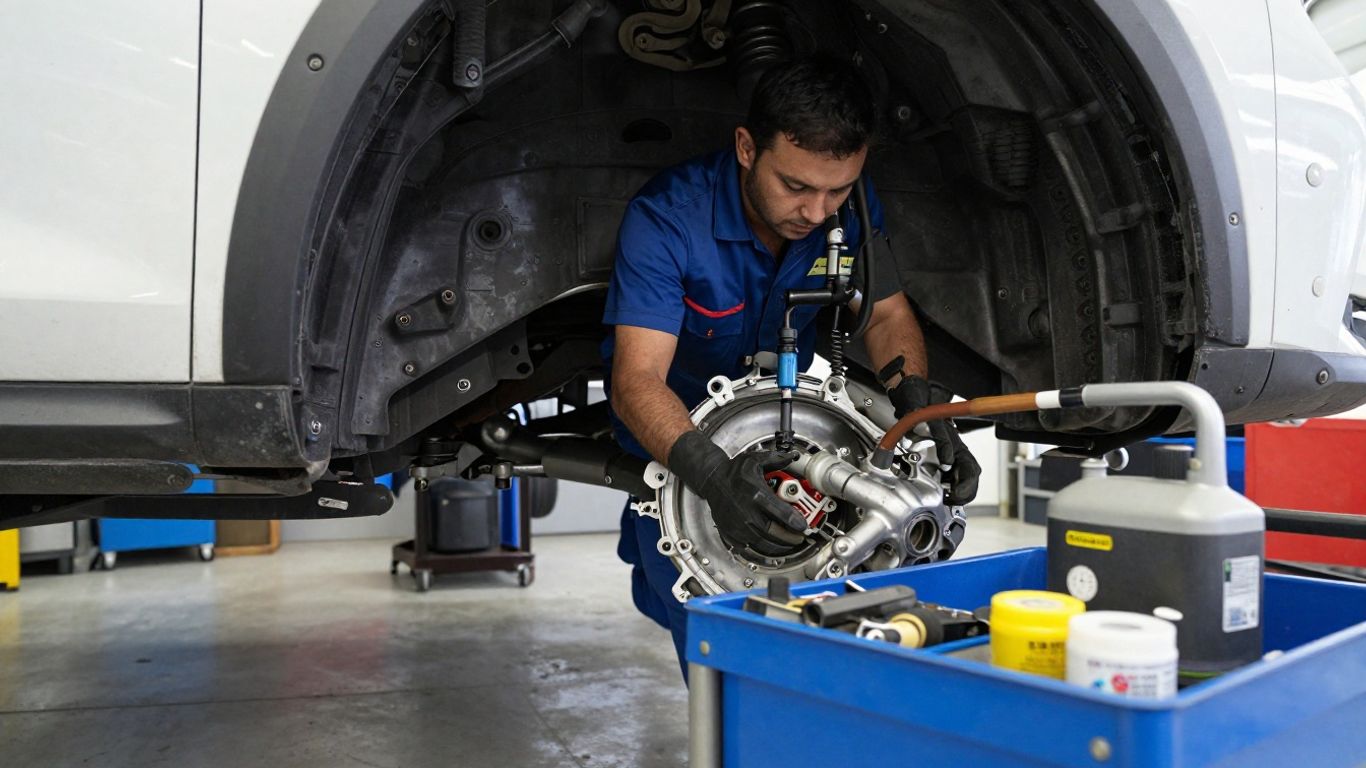
Inspecting for leaks and transmission faults
The technician may inspect the pan, drain plug, cooler lines, transmission case, axle-area interfaces, and nearby components for signs of leakage. A scan tool can identify stored or pending transmission faults, although codes must still be interpreted rather than treated as a complete diagnosis.
The initial inspection establishes whether fluid service can safely proceed. A leak that remains unrepaired may quickly undo a correct refill and can leave the transmission operating below its required level.
Draining or exchanging the old fluid
Depending on the service plan, the old fluid may be drained from the pan or exchanged through the cooler circuit using approved equipment. The technician should use the correct connections and avoid mixing fluids or introducing contamination. Fluid quantity is tracked rather than guessed.
The pan and drained fluid can reveal useful information. Excessive debris, a burnt smell, or an unexpected fluid condition may lead to further diagnosis before the service is completed.
Replacing the filter, pan gasket, or seals when required
Some transmissions use a serviceable filter and gasket, while others have different designs or procedures. If the pan is removed, its mating surfaces and fasteners should be handled carefully. A new seal or gasket is appropriate when the service information or inspection calls for it.
Replacing parts without inspecting the underlying condition is not a substitute for diagnosis. Conversely, skipping a required filter or sealing component can create a leak or leave contamination in the system.
Setting the fluid level at the correct temperature
Fluid expands as it warms, so level setting can depend on a specified temperature range. The technician may monitor transmission temperature with a scan tool while following the prescribed fill and check sequence. The vehicle must often be level, and the engine or selector position may need to be set in a particular way.
This is one of the steps least suited to guesswork. An underfilled transmission may lose hydraulic pressure, while an overfilled unit can aerate the fluid and behave abnormally.
Road-testing and checking for proper operation
After the service, the technician should verify engagement, shift timing, shift feel, and any remaining warning messages. A road test can expose symptoms that are not present while the vehicle is stationary. The shop should also perform a final leak check and confirm the level if the procedure requires it.
A brief change in shift feel may occur as fresh fluid circulates, but a harsh or slipping transmission is not a normal outcome to dismiss. Any concern should be documented and investigated while the service details are still known.
Land Rover transmission fluid flush cost factors
The price of a transmission fluid service varies widely because the work is not identical from one vehicle to another. A quote may cover only fluid exchange, or it may include diagnosis, pan removal, a filter, seals, temperature-controlled level setting, and a road test. Comparing the scope is more useful than comparing a single headline number.
Parts, labor, and fluid expenses
Fluid quantity and specification affect material cost, while labor rises when access is difficult or the pan must be removed. A filter, gasket, drain plug, seal, or fastener may add parts expense. Diagnostic time can also be separate from the maintenance labor.
Request an itemized estimate showing the fluid specification and quantity, labor, parts, shop supplies, taxes, and any diagnostic charge. That makes unexpected additions easier to question before work begins.
How model and transmission type affect pricing
Different models and transmissions can have different capacities, filters, pan designs, fill ports, and temperature procedures. Some require more disassembly or specialized equipment. Vehicle age and underbody condition can also affect access.
For that reason, a generic online price is only a rough reference. The most useful quote is tied to the vehicle identification number and states exactly what service is proposed.
Additional costs from leaks or damaged components
A leak may require a pan repair, cooler-line replacement, seal replacement, or another mechanical repair before the fluid service is worthwhile. If the fluid contains significant debris or the transmission has fault codes, diagnosis may lead to a larger repair. Those costs are separate from routine fluid replacement.
A responsible shop should explain the finding, show the affected area when practical, and obtain authorization before adding work. A low initial quote is not necessarily economical if it omits the reason fluid was lost.
Dealer service versus an independent Land Rover specialist
The choice of shop should be based on accurate service information, suitable equipment, diagnostic ability, and clear communication. A specialist may offer focused experience with the vehicle type, while a dealer may have direct access to manufacturer procedures and systems. Either can be appropriate when the work is documented and performed correctly.
When comparing providers, ask who will perform the work, what fluid will be used, how the level will be set, and what happens if a leak or fault is found. This is a more meaningful comparison than choosing solely by shop category.
Deciding between DIY service and professional repair
A home mechanic may be able to perform some fluid services, but transmission work is less forgiving than an ordinary engine-oil change. Access, fluid temperature, vehicle leveling, spill control, and disposal all matter. The decision should reflect the exact procedure, not just confidence with basic tools.
Tools and equipment a home mechanic may need
Depending on the design, the job may require secure lifting equipment, a fluid transfer pump, temperature measurement or scan capability, a torque wrench, clean containers, and a way to dispose of used fluid. Some fill points are difficult to access without the correct adapter. Safe support is essential.
A home mechanic should also have the correct fluid before opening the system and enough capacity to catch the old fluid. Improvised equipment can make contamination and incorrect filling more likely.
Service manual requirements and fluid-level procedures
The service manual or reliable repair information should identify the fluid, fill location, vehicle position, temperature range, selector sequence, torque values, and inspection steps. These details can vary even among transmissions that appear similar. Read the full procedure before beginning.
This is a specification-driven task, much like checking a construction project guide for scope and sequencing rather than relying on a general impression. The comparison is about preparation: the automotive procedure still comes from the vehicle’s own service information.
Common mistakes that can cause transmission problems
Several errors are avoidable but costly:
- Using fluid that does not meet the required specification.
- Filling the transmission while it is outside the specified temperature range.
- Failing to repair a leak before or during the service.
- Over-tightening a pan or drain-plug fastener.
- Losing track of the quantity removed and added.
These mistakes can produce leaks, aeration, incorrect hydraulic pressure, or poor shift quality. A careful checklist and clean work area reduce the risk, but they do not replace the required procedure.
Situations that require a qualified technician
Professional help is the safer choice when the vehicle has slipping, severe engagement delay, metal contamination, unknown fluid, repeated warning messages, or a substantial leak. It is also sensible when the level cannot be checked without a scan tool or when the vehicle cannot be safely raised and kept level.
A qualified technician can distinguish routine maintenance from a developing mechanical problem. That distinction may prevent a flush from being used as a guess at a repair.
Aftercare and transmission performance checks
After service, the vehicle should be monitored rather than judged during the first few minutes alone. Keep the invoice and note how the vehicle behaved before and after the work. A clear baseline makes later changes easier to describe.
What to monitor after the service
Pay attention to delayed engagement, slipping, shuddering, harsh shifts, unusual noises, warning lights, and fresh fluid beneath the vehicle. Check whether the symptoms that prompted the visit have improved, remained unchanged, or become more noticeable. Do not ignore a new burning odor or visible leak.
Normal operation should be smooth and predictable for the vehicle. If anything feels materially different, contact the shop promptly and provide the service date and symptoms.
Normal versus concerning shifting changes
A transmission may feel somewhat different after fresh fluid, especially if the old fluid was badly aged, but a strong bang into gear, persistent flare between shifts, or loss of drive is concerning. New symptoms should not be explained away simply because the service was recently completed.
The technician may need to rescan the vehicle, verify the level at temperature, inspect for leaks, or compare operating data with the original findings. Further diagnosis is preferable to repeated fluid exchanges without an explanation.
When to recheck the fluid level or inspect for leaks
Follow the shop’s instructions for any return inspection. A recheck may be needed after the vehicle reaches operating temperature or after a short period of use, depending on the transmission and procedure. If fluid appears on the ground, arrange an inspection rather than assuming it is harmless residue.
Keep the vehicle on a safe, level surface when observing for fresh leaks, and never place yourself under an unsupported vehicle. A small leak can become a low-fluid condition quickly.
How maintenance records support long-term ownership
Record the date, mileage, fluid specification, quantity, method, filter or gasket replacement, diagnostic findings, and shop performing the work. Preserve the invoice with other maintenance documents. These details help future technicians avoid incompatible assumptions and help an owner plan the next inspection.
Records also make it easier to compare symptoms over time. Even a simple note about towing, warning lights, or shift quality can provide useful context when the vehicle returns for service.
Conclusion
A Land Rover transmission fluid flush is best treated as a specification-driven maintenance decision, not a cure-all for shifting complaints. Confirm the correct fluid, understand whether the proposed service is an exchange or drain and refill, and have leaks or faults diagnosed first. With the level set correctly and the results documented, routine service can become a useful part of responsible vehicle ownership.
Frequently Asked Questions
Is a transmission fluid flush always necessary?
No. The appropriate service depends on the transmission, maintenance schedule, fluid condition, and vehicle symptoms. A drain and refill or inspection may be more suitable in some cases.
How often should transmission fluid be changed?
Use the service schedule for the exact vehicle and consider severe conditions such as towing, heat, mountain driving, and heavy traffic. If the history is unknown, an inspection can help establish a plan.
Can new fluid fix slipping?
Usually not. Slipping can result from worn internal components, hydraulic problems, electronic faults, or low fluid caused by a leak. Diagnosis should come before assuming fluid replacement will solve it.
Is dark transmission fluid automatically bad?
No. Color changes with use and heat. Odor, contamination, fluid level, shift behavior, service history, and diagnostic findings provide a more reliable assessment.
What happens if the wrong fluid is used?
Incompatible fluid can affect friction behavior, hydraulic operation, seals, and shift quality. The vehicle should be evaluated promptly so the fluid and any resulting symptoms can be addressed correctly.
Can I perform the service at home?
Some experienced home mechanics can, provided they have safe lifting equipment, the correct fluid, service information, and the tools required for temperature-based level setting. A professional is preferable when symptoms or access problems are present.
What should I ask a repair shop before approving service?
Ask which method will be used, what specification and quantity of fluid are included, whether the filter and gasket are part of the quote, how the level will be set, and how leaks or fault codes will be handled.