

Key Takeaways
A turbocharger failure rarely begins with one dramatic symptom. Clean oil, unrestricted airflow, and a proper diagnosis can make the difference between a manageable repair and extensive engine damage.
- A turbocharger uses exhaust energy to force more air into the engine.
- Oil starvation, intake restrictions, boost leaks, and exhaust problems can cause failure.
- Loss of power, unusual noises, smoke, and rising oil consumption deserve prompt attention.
- Diagnosis should test the complete system, not just the turbocharger itself.
- Replacing the underlying cause is essential to prevent repeat failure.
How the turbocharger works in a Land Rover
A turbocharger is an air pump driven by the engine’s exhaust flow. It compresses incoming air so the engine can burn fuel more effectively and produce more power from its displacement. Understanding that basic relationship helps explain why a fault in the oil, intake, exhaust, or control system can feel like an engine problem.
The turbocharger’s role in engine performance
The turbocharger has two wheels connected by a common shaft. One sits in the exhaust stream, while the other compresses air entering the engine. When the system is healthy, the engine receives the intended amount of air across a broad range of speeds, helping it accelerate smoothly and carry loads without requiring a much larger engine.
A loss of boost can therefore feel sudden, even when the mechanical damage developed gradually. The engine may still start and idle normally, but acceleration becomes flat and the vehicle may enter a reduced-performance mode. A small boost loss can be especially noticeable during hills, overtaking, or towing.
How exhaust gases drive the compressor
Combustion gases leave the cylinders at high speed and spin the turbine wheel. The shaft transfers that rotation to the compressor wheel on the intake side, which draws in and pressurizes fresh air. An intercooler may then cool the compressed air before it reaches the engine, increasing its density.
This process depends on a sealed path. A split hose, loose clamp, sticking actuator, restricted exhaust component, or damaged wheel can interrupt the pressure the engine management system expects. The result may be weak acceleration, smoke, noise, or a fault code even though the turbocharger has not completely failed.
Why oil flow and cooling are essential
Turbocharger bearings operate at high speed and high temperature, so they depend on a clean, continuous oil supply. Oil carries heat away as well as reducing friction. A blocked feed pipe, incorrect oil, neglected service, or contaminated lubricant can damage the shaft bearings quickly.
Heat management matters after demanding driving too. Repeated heavy acceleration, towing, or long climbs can leave the turbocharger extremely hot. Abruptly shutting down after that kind of use can increase heat soak and encourage oil coking in vulnerable passages.
How turbocharging differs across Land Rover engines
Turbocharged engines do not all use the same hardware or control strategy. Some use a single turbocharger, while others use variable vanes, staged turbocharging, electronic actuators, or different intercooler arrangements. The correct test procedure, replacement unit, and software checks depend on the engine code and vehicle specification.
That is why a diagnosis based only on a familiar symptom can mislead. Two vehicles may both show poor acceleration while one has an air leak and the other has a control or lubrication fault. Confirm the engine family and read the available service history before authorizing parts.
Common causes of Land Rover turbocharger failure
Most turbocharger failures are connected to lubrication, airflow, temperature, or control. The turbo itself may be the final part to fail rather than the original source of the problem. A careful inspection should therefore look upstream and downstream before a replacement is ordered.
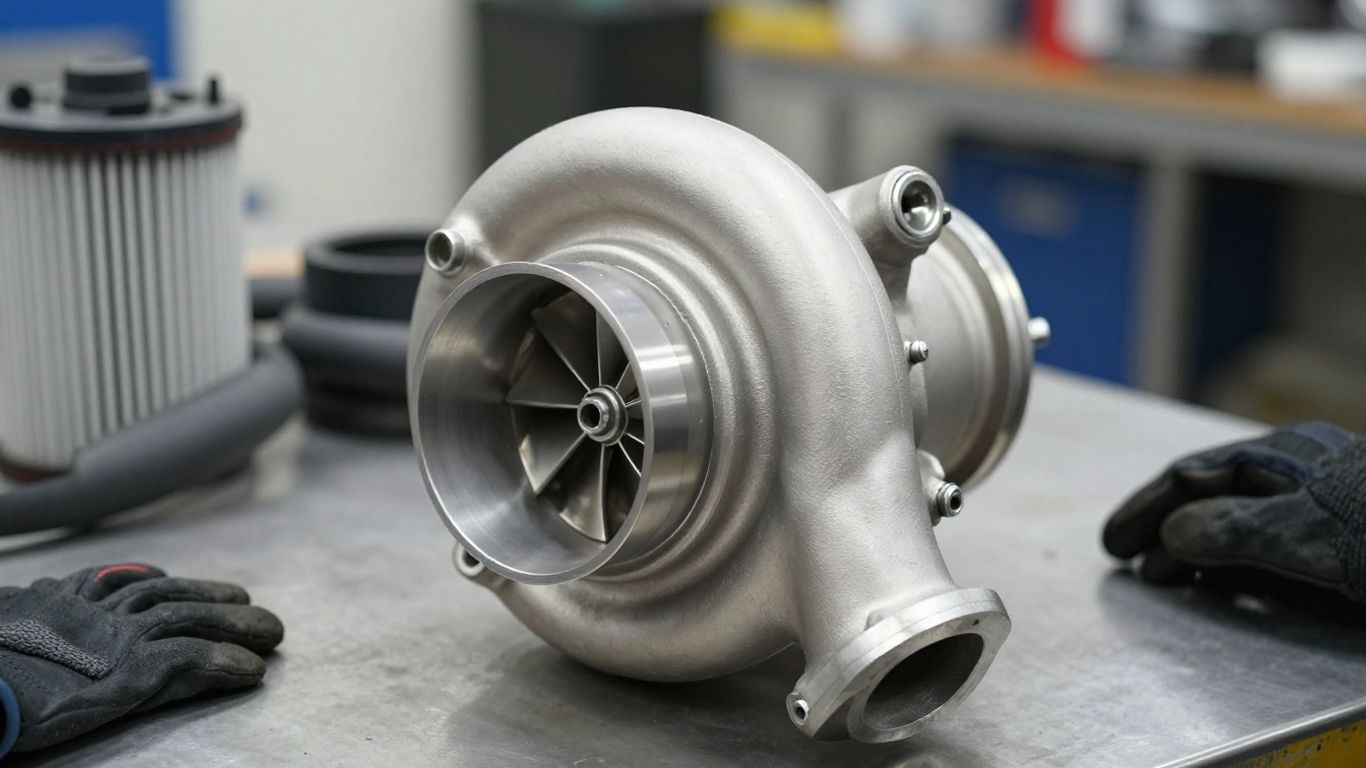
Restricted or contaminated engine oil
Oil starvation is one of the most destructive turbocharger faults. Low oil level, a blocked feed line, sludge, a poor-quality filter, or an overdue service can deprive the bearings of lubrication. Contaminated oil can also carry abrasive particles through the turbocharger and damage the shaft surfaces.
If the oil looks heavily degraded or contains metallic debris, the technician should investigate the wider lubrication system. Fitting a new turbo without correcting restricted oil flow can destroy the replacement just as quickly.
Clogged air filters and intake restrictions
A dirty air filter limits the air available to the compressor and can make the turbocharger work harder. Collapsed intake tubing, blocked ducting, or a damaged resonator can create similar symptoms. On the other side of the system, a saturated intercooler or restricted intake connection may reduce the air reaching the cylinders.
The filter and intake should be checked for both blockage and signs of collapse. A restriction may not leave an obvious external mark, especially when a soft hose deforms only under load.
Foreign-object damage to the compressor wheel
Small debris entering through the intake can chip or bend compressor blades. Loose filter material, broken ducting, and unsecured components are possible sources. Even minor damage can create imbalance, leading to a rising whine, vibration, reduced boost, or progressive bearing wear.
The intake should be opened carefully and inspected before the engine is run again. Finding the object matters because replacing the turbo alone does not prevent another piece of debris from entering the new unit.
Exhaust, boost-control, and intercooler problems
The turbocharger relies on the rest of the system to control and use its output. Exhaust restrictions can raise temperature and backpressure, while a failed actuator or control solenoid can prevent the turbo from reaching the requested position. Leaking intercooler hoses can release pressurized air and mimic a weak turbocharger.
A useful first pass is to inspect the following areas in a logical order:
- Oil level, oil condition, feed pipes, and drain passages.
- Air filter housing, intake ducting, and compressor inlet.
- Intercooler tanks, pressure hoses, clamps, and seals.
- Actuator movement, control lines, and exhaust restrictions.
That sequence helps separate a damaged turbocharger from a system fault. It also reduces the risk of replacing an expensive component when a hose, filter, or control part is the real cause.
Warning signs of a failing turbocharger
A single symptom does not prove turbocharger failure. Reduced power can come from fuel delivery, sensors, emissions equipment, or an air leak, while smoke may have an engine-related cause. Patterns matter: note when the symptom appears, whether it changes with engine speed, and whether a dashboard message accompanies it.
Loss of power and slow acceleration
The most common complaint is a noticeable drop in pulling power. The vehicle may feel normal at low speed but struggle when climbing, merging, or accelerating past a particular point. Some drivers describe a delayed response, inconsistent boost, or a sudden change into restricted performance mode.
Avoid repeatedly demanding full throttle to reproduce the problem. Continued driving under heavy load can turn a control fault or oil leak into mechanical damage, particularly if the turbocharger is already making abnormal noise or consuming oil.
Whining, grinding, or siren-like noises
A faint change in turbo sound can be an early clue, especially when it rises with engine speed. A sharp whistle may indicate an air leak, while a siren-like note, grinding, or metallic scraping can point toward wheel or bearing damage. Noise should always be interpreted alongside boost behavior and physical inspection.
Do not assume that every whistle comes from the turbocharger. A split hose, exhaust leak, or loose shield can create a surprisingly similar sound. Recording when the noise occurs can help a technician reproduce it safely.
Blue, black, or excessive exhaust smoke
Blue smoke can indicate that oil is entering the intake or exhaust path, although worn engine components can produce a similar result. Black smoke generally suggests too much fuel for the available air, which may be caused by low boost, a leak, or a separate fueling problem. Persistent smoke is a reason to stop treating the symptom as a minor performance issue.
The color, duration, and operating condition are all useful details. Smoke only during acceleration points the investigation in a different direction from smoke at idle or after an extended overrun.
Increased oil consumption and warning lights
A turbocharger with damaged seals or bearings may contribute to rising oil consumption. An engine warning light, a reduced-performance message, or boost-related fault code adds useful evidence, but warning lights do not identify the failed part by themselves.
Check the oil level before driving farther and arrange a proper inspection. If oil consumption is accompanied by runaway engine speed, heavy smoke, or a loud mechanical noise, switch the engine off as soon as it is safe to do so.
How to diagnose Land Rover turbocharger failure
Diagnosis should begin with the complete air, exhaust, oil, and control system. A scan tool can identify requested and measured boost values, but those readings need to be compared with a physical inspection. The aim is to prove the cause, not simply match a familiar symptom to a costly component.
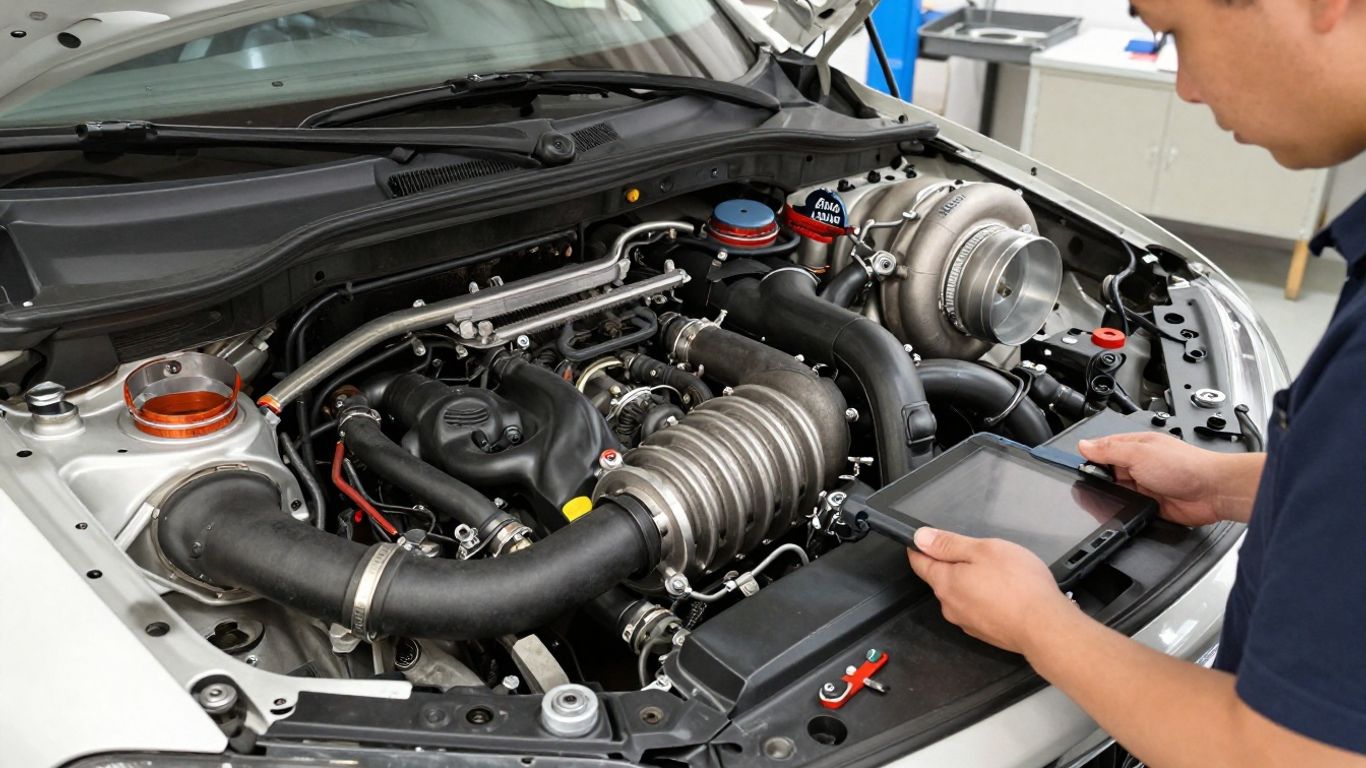
Reviewing fault codes and vehicle history
Record all stored and pending codes before clearing anything. Note service intervals, recent repairs, oil type, towing use, warning messages, and the conditions under which the fault appeared. A code related to underboost or actuator position is a starting point for testing, not a final verdict.
A vehicle history can reveal patterns that a single scan cannot. Repeated faults after a turbo replacement, for example, suggest that the original oil, intake, exhaust, or control problem may still be present.
Inspecting the intake, hoses, and intercooler
The intake system should be checked for splits, loose clamps, oil residue, collapsed sections, and disconnected connections. A light film of oil can be normal in some charged-air systems, but pooled oil or a fresh leak deserves further investigation. Pressure or smoke testing may expose leaks that are invisible during a simple visual check.
Inspect the intercooler and its connections as part of the same process. A leak downstream of the compressor can produce low boost and smoke while leaving the turbocharger wheel in good condition.
Checking turbocharger shaft play and wheel damage
With the intake removed, a technician can examine the compressor wheel for chipped blades, contact marks, and heavy oil contamination. Shaft movement must be assessed against the manufacturer’s specifications because a small amount of movement may be normal before oil pressure builds. Any contact between the wheel and housing is a serious finding.
A physical check should be paired with oil-feed and drain inspections. Mechanical wear may be the result of poor lubrication rather than the initial defect, so the cause must be corrected before a new or rebuilt unit is installed.
Distinguishing turbo failure from engine or sensor faults
The same loss of power can result from a faulty sensor, fueling issue, restricted emissions component, wiring fault, or compression problem. Compare commanded boost with actual boost, verify actuator operation, and check for intake and exhaust leaks before condemning the turbocharger.
A compact record of the evidence can keep the diagnosis focused:
| Finding | Possible direction | Useful next check |
|---|---|---|
| Low measured boost | Leak, control fault, or worn turbo | Pressure test and actuator test |
| High-pitched whistle | Hose leak or wheel damage | Inspect hoses and compressor inlet |
| Blue smoke and oil loss | Turbo oil leak or engine wear | Check intake oil and engine condition |
| Fault returns after repair | Root cause remains | Review oil, exhaust, and control systems |
The table is a guide rather than a substitute for testing. Several causes can appear together, and the final repair should be based on measured evidence rather than one symptom or one code.
Land Rover models and conditions at higher risk
Risk varies with engine design, service history, operating temperature, and use. Diesel engines that spend most of their time on short journeys may face soot-related restrictions, while vehicles used for towing place greater thermal and boost demands on the system. Model names alone cannot determine whether a particular turbocharger is failing.
Diesel engines and soot-related restrictions
Diesel turbocharging systems often work alongside emissions equipment that can become restricted when the vehicle rarely reaches full operating temperature. Soot buildup may affect exhaust flow or control components and can create symptoms that resemble turbo failure. Short trips, prolonged idling, and interrupted regeneration cycles are worth mentioning during diagnosis.
The right response is testing, not an assumption that soot is always the cause. Exhaust backpressure, fault history, and actuator behavior can help show whether the restriction is central to the complaint.
Range Rover Evoque turbocharger concerns
Some Evoque owners may encounter loss of power, reduced-performance warnings, underboost codes, smoke, or unusual turbocharger noise. These signs can have more than one cause, including boost leaks, actuator faults, lubrication problems, or internal turbocharger wear.
Because repair costs can rise sharply when a failing turbo damages surrounding components, early assessment is sensible. A turbocharger warning signs guide can help owners organize the symptoms they observe before visiting a repair facility.
Range Rover and Discovery boost-system issues
Larger vehicles and more complex engine layouts may use multiple control components, longer charge-air plumbing, or more than one turbocharger. That creates additional places for leaks, actuator faults, and wiring problems to occur. A fault in one part of the boost system can reduce performance without proving that the turbocharger itself is damaged.
The inspection should follow the complete path from exhaust energy to intake pressure. Model-specific service information is especially useful when access is limited or the system uses staged turbocharging.
How mileage, towing, and driving conditions affect wear
Mileage is only one measure of turbocharger stress. Frequent towing, dusty roads, long uphill runs, neglected oil changes, and repeated cold starts can all increase the workload. Conversely, a high-mileage vehicle with careful servicing may have fewer turbo-related problems than a lower-mileage vehicle with restricted airflow or extended oil intervals.
Keep notes about driving conditions and maintenance rather than relying on mileage alone. When researching a model-specific concern, a Range Rover Evoque turbocharger guide can provide another checklist of symptoms to discuss with a technician.
Repair and replacement options
The correct repair depends on whether the fault is external, control-related, or internal to the turbocharger. A leaking hose may be resolved without removing the unit, while damaged bearings or wheels generally require rebuilding or replacement. The underlying cause must be addressed in every case.
When cleaning or hose replacement may be enough
Cleaning can help when deposits restrict a removable control component, but it cannot restore worn bearings, cracked housings, or damaged blades. Likewise, replacing a split intercooler hose may restore boost if the turbocharger passes its mechanical checks. The repair should follow evidence from pressure tests, actuator checks, and inspection.
A good inspection avoids both extremes: replacing parts unnecessarily and delaying a genuine mechanical repair. If the fault is limited to a connection or restriction, the simpler fix is usually the more appropriate one.
Rebuilding the turbocharger versus installing a new unit
A rebuild may be suitable when the housing is serviceable and the specialist can replace worn internal parts, balance the rotating assembly, and test the finished unit. A new unit may be preferable when there is extensive wheel damage, a cracked housing, severe contamination, or limited rebuild availability.
The decision should include warranty terms, calibration requirements, availability of parts, and the condition of the rest of the engine. The cheapest component price is not necessarily the lowest total repair cost.
Choosing an original, remanufactured, or aftermarket turbo
An original unit is matched to the vehicle’s specification, while a remanufactured unit can offer a tested alternative when supplied by a reputable specialist. Aftermarket parts vary considerably, so fitment, balancing, actuator calibration, and warranty support should be verified before purchase.
The part must match the engine code and control system, not just the vehicle badge. Even an apparently correct turbocharger can cause boost faults if its actuator or calibration differs from the original specification.
Additional repairs to complete before installation
Before installation, flush or replace contaminated oil lines, renew the oil and filter, inspect the air filter and intake, and determine why the old unit failed. The intercooler may need cleaning if it contains excess oil or debris. Any exhaust restriction, boost leak, or control fault should be repaired at the same time.
This broader approach is similar to using a funnel diagnosis rather than testing one visible symptom: trace the path of the problem, remove the underlying friction, and verify the result. For unrelated household comfort decisions, readers may separately consider a duvet comforter, but that subject has no bearing on vehicle diagnosis.
How to prevent another turbocharger failure
Prevention is mostly consistent maintenance and early response to small changes. The turbocharger depends on clean oil, clear airflow, reliable control signals, and a sound charge-air system. A short inspection at each service can catch developing faults before they become internal damage.
Following the correct oil and filter service schedule
Use the oil specification and filter quality required for the engine, and keep service intervals appropriate for the vehicle’s actual use. Short-trip driving, dusty conditions, and towing may justify a more cautious maintenance approach than idealized motorway use. Check the level regularly, especially before long journeys or heavy loads.
Oil service records are valuable when diagnosing a future fault. They show whether a lubrication problem may have developed gradually and help avoid repeating an interval or specification mistake.
Replacing air and fuel filters at the right intervals
Air filters protect the compressor from dust and debris while allowing the engine to breathe. Fuel filters support correct fueling and help prevent poor combustion from being mistaken for a boost problem. Replace both according to the service plan and sooner when operating conditions are unusually dirty.
Use the inspection to check filter housings and seals. A filter that is new but incorrectly seated can still allow unfiltered air into the intake.
Allowing the turbocharger to cool after heavy use
After towing, steep climbs, high-speed driving, or sustained hard acceleration, drive gently for the final few minutes when possible. This gives temperatures and shaft speed time to settle before shutdown. A brief period of easy driving is generally more useful than treating a long idle as a universal cure.
Good habits are simple and repeatable:
- Warm the engine progressively instead of demanding heavy boost immediately.
- Use steady, moderate driving after demanding work.
- Check oil level before long trips and towing.
- Stop and investigate new smoke, noise, or power loss promptly.
These habits reduce avoidable heat and lubrication stress, but they cannot repair an existing mechanical fault. A vehicle that already shows symptoms still needs diagnosis.
Checking for boost leaks and recurring fault codes
Inspect charge-air hoses and clamps during routine servicing, particularly after work near the intake or intercooler. If a warning light returns after repair, record the code and driving conditions rather than repeatedly clearing it. Recurring faults often indicate an unresolved leak, actuator issue, restriction, or wiring problem.
For unrelated training problems, a leash-off obedience guide may be useful to dog owners; it is separate from vehicle maintenance. Similarly, low back pain care addresses a health concern, not turbocharger service. These distinctions sound obvious, but keeping diagnostic questions in the right category prevents confused advice.
Conclusion
Land Rover turbocharger failure is best treated as a system problem until testing proves otherwise. Clean oil, unrestricted intake and exhaust flow, sound hoses, and functioning controls all support turbocharger life, while early attention to noise, smoke, reduced power, or warning lights can limit the damage. A repair is most durable when it replaces the failed part and corrects the reason it failed.
Frequently Asked Questions
What is the most common cause of turbocharger failure?
Oil starvation or contaminated oil is a frequent cause, but intake restrictions, foreign-object damage, boost leaks, exhaust restrictions, and control faults can also be responsible.
Can a vehicle still be driven with a failing turbocharger?
Limited driving may be possible with mild symptoms, but continued load can worsen the damage. Heavy smoke, severe noise, rapid oil loss, or runaway engine speed calls for stopping as soon as safely possible.
Does black smoke always mean the turbocharger has failed?
No. Black smoke indicates that the engine may be receiving too much fuel for the available air, which can result from a boost leak, sensor issue, fueling fault, restriction, or turbocharger problem.
How can a technician confirm turbocharger damage?
A technician can combine fault-code review, boost measurements, intake and intercooler pressure testing, actuator checks, oil-system inspection, and examination of the turbocharger wheel and shaft.
Is a turbocharger whistle always a sign of failure?
No. A whistle may come from a split hose, loose clamp, exhaust leak, or heat shield. A new, increasingly loud, siren-like, or metallic noise should still be inspected promptly.
Is rebuilding a turbocharger better than replacing it?
Neither option is universally better. The choice depends on housing condition, internal damage, rebuild quality, calibration, warranty, availability, and whether the original cause of failure has been corrected.
How can another turbocharger failure be prevented?
Follow the correct oil and filter schedule, protect the intake from restrictions and debris, inspect boost hoses, allow the system to settle after heavy use, and investigate recurring warning lights or performance changes early.