

Key Takeaways
Uneven tyre wear is a clue, not a diagnosis. Reading the pattern carefully, then checking alignment, pressure, suspension, and drivetrain factors, can prevent a fresh set of tyres from wearing out in the same way.
- Inner-edge wear often points towards camber or toe problems.
- Shoulder wear can come from incorrect pressure, alignment, or cornering forces.
- Cupping and patchy wear deserve a suspension and wheel inspection.
- Four-wheel-drive vehicles need closely matched tyres and rolling circumferences.
- Repair the underlying fault before fitting replacement tyres.
Recognize the main uneven tyre wear patterns
The tread pattern usually provides the first useful direction when investigating Land Rover uneven tyre wear causes. Look across the whole width of each tyre rather than judging only the visible outer shoulder. A careful comparison between tyres can reveal whether the problem is isolated to one corner or affecting an axle.
Inner-edge wear and excessive negative camber
Inner-edge wear appears as noticeably lower tread on the side closest to the vehicle. Excessive negative camber can place more of the vehicle’s load on that edge, while incorrect toe can scrub the tread as the wheel rolls forward. Run a hand lightly across the tread, taking care around damaged rubber, because a feathered surface may be easier to feel than see.
A useful reference on inner tyre wear patterns explains why the inside edge can deteriorate before the rest of the tread looks alarming. If cords are visible, the tyre should not remain in service while the cause is investigated.
Outer-edge wear and underinflation
Wear on one or both outer shoulders may be associated with underinflation, positive camber, excessive toe, or repeated hard cornering. Pressure should be checked cold with a reliable gauge, because a reading taken immediately after driving is affected by heat. If only one tyre has this pattern, inspect its wheel position and suspension rather than assuming all four tyres need the same adjustment.
The outer-edge wear guide also discusses how steering and suspension faults can contribute to this pattern. A slow puncture or leaking valve can make the problem return even after pressure is corrected.
Center tread wear and overinflation
When the centre of the tread is worn more quickly than both shoulders, excessive inflation is one possible cause. The centre can carry a greater share of the road contact when pressure is too high, particularly on a lightly loaded vehicle. Confirm the recommended cold pressure from the vehicle information, not from the maximum pressure moulded into the tyre sidewall.
Pressure is only one explanation. A comparison of service records, gauge accuracy, load, and tread measurements helps separate a long-running inflation issue from ordinary wear or a tyre defect.
Cupping, scalloping, and patchy wear
Cupping consists of repeated dips or raised patches around the tread, often accompanied by a humming or droning sound. It may arise when a wheel is not being controlled smoothly, but imbalance, looseness, and damaged tyres can produce similar sensations. Patchy wear after a severe impact should be treated cautiously because internal tyre damage is not always visible.
A tyre shop can measure runout, balance the wheel, and inspect the suspension while the wheel is removed. The earlier the pattern is identified, the more likely it is that the remaining tread can be assessed before a second set is damaged.
Check wheel alignment and suspension geometry
Alignment describes the relationship between the wheels and the vehicle body, not simply whether the steering wheel sits straight. Camber, toe, and caster each influence how the tyre meets the road, and a small error can become more costly over many kilometres. Alignment should be checked on suitable equipment after obvious loose or bent parts have been addressed.
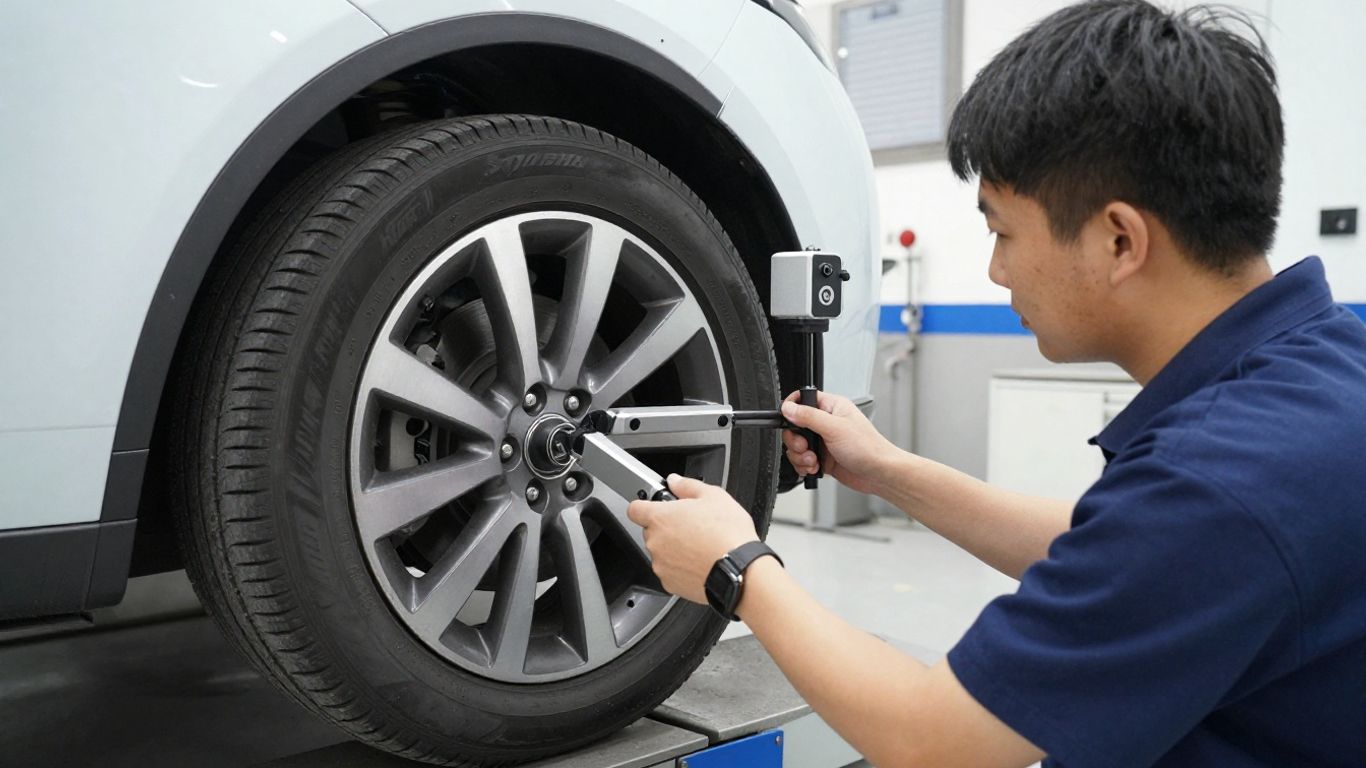
How toe settings create rapid tread wear
Toe describes whether the leading edges of the tyres point slightly towards or away from each other. If the setting is wrong, the tyres can scrub across the road instead of rolling cleanly, creating feathering and fast tread loss. Toe-related wear may be present on both tyres on an axle, although one side can look worse.
Ask for the readings before and after adjustment, especially if the wear is severe. A satisfactory-looking steering wheel does not prove that each wheel is within specification.
Camber changes from worn or damaged components
Camber is the inward or outward tilt of the wheel when viewed from the front. Some vehicles use a designed camber angle, but worn bushings, bent arms, damaged mounts, or a shifted subframe can change the actual position. The result may be a smooth inner- or outer-edge wear band rather than obvious feathering.
Because camber is affected by hardware as well as adjustment, an alignment technician should inspect the relevant joints when a reading is outside range. Adjusting around a worn component rarely provides a lasting repair.
Caster, steering pull, and uneven handling
Caster helps the steering return towards centre and contributes to directional stability. Unequal caster can make the vehicle pull or feel different from one direction to the other, while a pull can also come from tyre conicity, pressure differences, or a dragging brake. Handling symptoms therefore need to be considered alongside tread evidence.
Take note of when the pull occurs and whether it changes with road surface. A short road test after inspection can help confirm whether the correction has improved both steering feel and tyre loading.
When alignment readings indicate a deeper problem
An alignment printout is useful, but numbers alone do not explain why a setting changed. If a wheel cannot be brought into specification, or if the reading shifts during adjustment, the technician should look for looseness, impact damage, ride-height differences, or an incorrect component. Repeating an alignment without finding the cause can waste both time and tread.
The most reliable sequence is to inspect, repair, measure, and then align. That order protects the new settings from being immediately altered by a worn joint or bent wheel.
Assess tire pressure, load, and driving conditions
Pressure and operating conditions can change the way a tyre wears even when alignment is correct. A heavily loaded vehicle, a trailer, long motorway journeys, and rough tracks place different demands on the tread and sidewall. Compare the vehicle’s recommended pressures for the actual load and use, rather than relying on a single number in every situation.
The effect of incorrect tire pressure
Underinflation increases sidewall flex and can heat the shoulders, while overinflation can reduce the centre contact area. Either condition can affect braking, steering response, and tread life. Check all four tyres, including the spare where applicable, and inspect for a slow loss that suggests a puncture, valve issue, or wheel sealing problem.
Pressure checks are most useful when recorded over time. A tyre that repeatedly loses pressure needs a physical inspection rather than increasingly frequent top-ups.
Load ratings, towing, and heavy cargo
Tyres must be suitable for the vehicle’s load and intended use. Heavy cargo or towing changes axle loads and can alter ride height, steering response, and the way the tread is pressed against the road. Follow the vehicle and tyre maker’s load guidance, and do not treat a higher sidewall load rating as permission to exceed the vehicle’s limits.
If wear appeared after a change in towing or carrying habits, record when it began. That timing can help distinguish a load-related pattern from a mechanical fault that was already developing.
Highway driving, off-road use, and rough roads
Long, fast journeys can build heat, while gravel, mud, ruts, and rocks can cause impacts that change alignment or damage a wheel. Off-road use may also leave tread packed with material, making a visual inspection less reliable until the tyre is clean. After a rough trip, check pressure, sidewalls, wheels, and steering feel before returning to normal speeds.
A vehicle that spends much of its time on uneven surfaces may need more frequent inspections than the standard service interval. That is preventative maintenance, not evidence that the tyres are inherently unsuitable.
How driving style affects tread wear
Hard cornering, aggressive braking, and repeated kerb strikes increase forces at the tread and suspension. They may not create a single distinctive wear pattern, but they can accelerate an existing alignment or pressure problem. Smooth inputs and sensible speed over damaged surfaces reduce avoidable stress.
The driver’s observations still matter. Note unusual noises, a change in steering effort, or a vibration as soon as it appears, since these clues can connect a wear pattern with a particular event.
Investigate suspension, steering, and wheel problems
Tyres are often the visible casualty of a fault elsewhere. Rubber bushings, ball joints, tie rods, dampers, bearings, and wheels all affect whether the tread stays evenly loaded. A proper inspection should include movement checks and a look for leaks, cracks, deformation, or signs of contact.
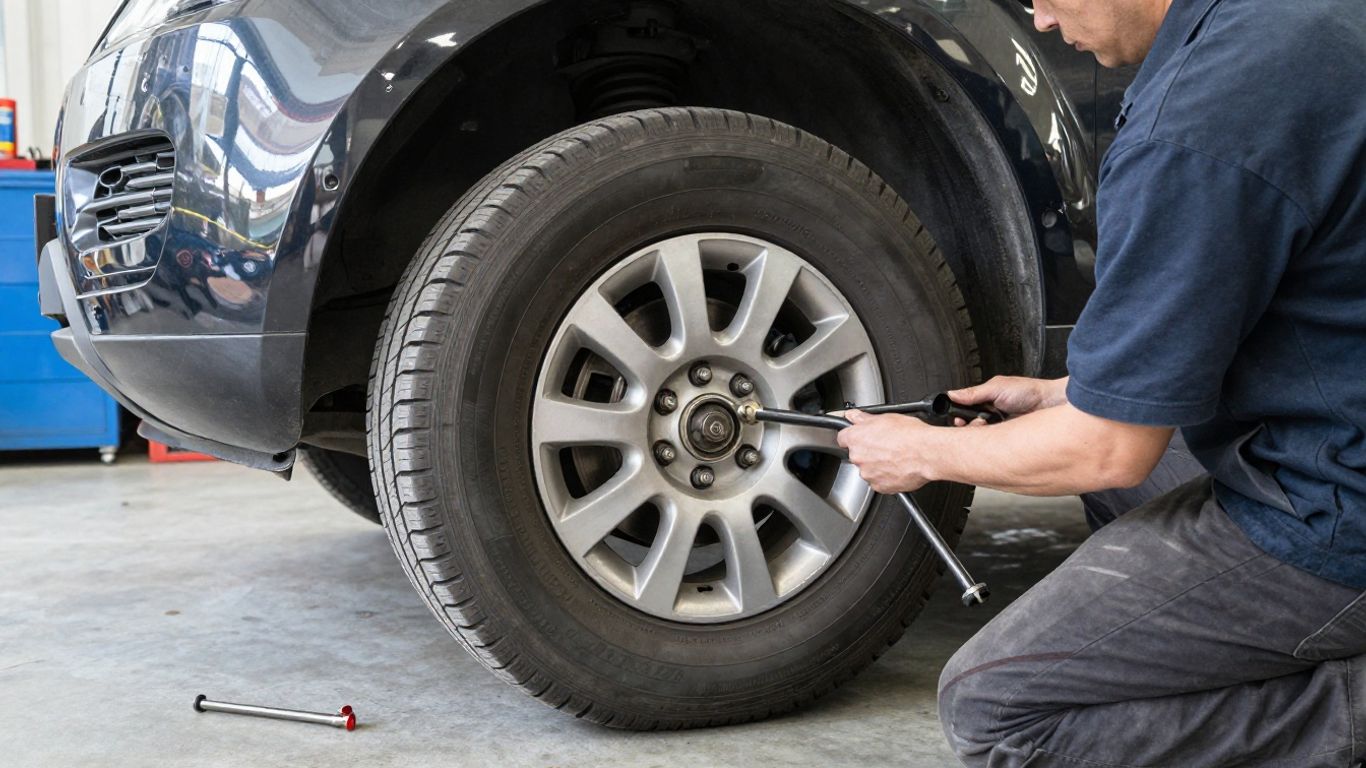
Worn control arm bushings and ball joints
Control arm bushings help locate the wheel while allowing controlled movement, and ball joints permit steering and suspension travel. If either develops excessive play, the wheel angle can change under braking, acceleration, or cornering. That movement can create irregular wear even if the vehicle appears aligned while stationary.
A technician may use a lift, pry bar, or approved measurement method to check the parts. Replacement should address the failed component and any related hardware rather than simply masking the symptom with new tyres.
Damaged tie rods and steering components
Tie rods transfer steering movement to the wheel hub, so looseness can affect toe and create a vague or wandering feel. Bent steering parts after a pothole or impact can produce a similar change without obvious play. Do not ignore a clunk, delayed steering response, or steering wheel that no longer returns normally.
Because steering components are safety-critical, repairs and tightening should follow the correct procedure. An alignment check after the repair confirms that the wheels are again positioned as intended.
Weak shock absorbers and air suspension issues
Dampers help control wheel movement after bumps. If they are weak, the tyre may lose consistent contact over uneven surfaces, contributing to cupping or scalloped wear. On vehicles with air suspension, an incorrect ride height or a system fault can also change suspension geometry and load distribution.
Measure ride height on level ground and use the vehicle’s specified inspection method. A ride-height correction without resolving a leak, sensor problem, or worn component may only postpone the same wear pattern.
Bent wheels, wheel bearings, and tire balance
A bent wheel can create runout, vibration, and uneven contact, while a worn bearing may allow the hub to move under load. Poor balance commonly produces vibration rather than a single wear pattern, but continued vibration can worsen irregular tread damage. Inspect the wheel after pothole strikes and check that the tyre bead is seated correctly.
Video demonstrations can make tread patterns easier to recognise, but they cannot replace a physical inspection. If vibration increases with speed or a wheel feels loose, have the vehicle checked before driving it any distance.
Consider Land Rover drivetrain and tire-matching factors
A four-wheel-drive system can make tyre matching more consequential than it is on a simple two-wheel-drive layout. Differences in tread depth, size, construction, or effective rolling circumference may make the tyres rotate at different rates. Always follow the vehicle maker’s requirements and obtain specialist advice when replacing fewer than four tyres.
Why full-time four-wheel drive requires matched tires
With full-time four-wheel drive, the driveline may be affected when tyres of different effective circumferences are forced to rotate at different speeds. A small difference can result from unequal wear, not just a different labelled size. Matching tyres by specification, construction, and remaining tread helps reduce unnecessary driveline strain.
Do not assume that fitting the same nominal size guarantees a match. Brand, model, load rating, inflation, and actual tread depth can all matter.
Differences between front and rear tire wear
Front tyres often experience more steering and braking demand, while rear tyres may show different wear because of driven-axle forces, alignment, load, or suspension design. A front-to-rear difference is not automatically a fault, but a sharp change deserves measurement. Compare tread at several points and record the position of each tyre.
Rotation may be appropriate only when the tyre design, wear condition, and vehicle instructions allow it. Directional or staggered arrangements can limit the available pattern.
Tread-depth variation and rolling circumference
Measure tread depth in the inner, centre, and outer channels, then compare the results across the vehicle. The important issue is not only how much tread remains, but whether one tyre has lost substantially more rubber than its companions. Excessive variation can affect handling and four-wheel-drive operation.
The table below offers a practical way to organise the initial findings before discussing replacement with a tyre professional.
| Finding | Possible direction for inspection | Useful next step |
|---|---|---|
| Inner-edge wear | Camber, toe, or suspension play | Measure alignment and inspect joints |
| Repeated shoulder wear | Pressure, load, or cornering forces | Check cold pressure and usage history |
| Cupped tread | Dampers, balance, bearings, or runout | Inspect wheel control and rotating parts |
| Unequal tread depth | Position, rotation, or drivetrain matching | Measure all tyres and compare specifications |
This is a starting point rather than a diagnosis. The same visible pattern can have more than one cause, so measurements and a physical inspection should guide the repair.
Model-specific considerations for Range Rover and Discovery
Range Rover and Discovery vehicles can differ in wheel size, suspension arrangement, drivetrain configuration, and approved tyre requirements. Use the exact specification for the vehicle’s model, year, and wheel package rather than copying a pressure or size from another version. A Range Rover tyre wear guide can provide additional context on patterns and inspection decisions.
If the vehicle has adjustable ride height or has recently had suspension work, include its normal driving height in the inspection. Geometry that looks acceptable at one height may not explain what happens at another.
Diagnose the cause before replacing tires
Replacing visibly worn tyres is sometimes necessary, but it does not prove the problem has been solved. Start by documenting the wear, pressure, mileage, wheel position, and any recent impact or repair. This record gives the technician a clearer path and makes it easier to confirm whether the fix worked.
Inspecting tread depth across each tire
Use a tread-depth gauge at the inner, centre, and outer portions of each tyre, taking several readings around the circumference. Look for feathering, dips, exposed cords, bulges, cuts, and tread blocks that are wearing at different heights. Measurements are more useful than a single visual impression.
Marking each reading by wheel position helps reveal whether the problem follows the tyre or stays with the corner. Stop using a tyre with serious structural damage and seek professional advice.
Checking alignment and suspension components
Ask for a full inspection before requesting an alignment alone. The technician should check steering and suspension joints, wheel condition, ride height, and any visible damage, then compare alignment readings with the vehicle’s specification. The final printout should show whether adjustments were possible and whether any value remains outside range.
This process is especially useful when new tyres are being considered. It gives the replacement a sound starting point instead of transferring an unresolved fault to fresh tread.
Reviewing tire pressure and maintenance records
Service records can reveal a pattern of missed pressure checks, repeated punctures, towing, heavy loads, or previous alignment work. Compare those events with the mileage and the point at which the wear was first noticed. A pressure gauge that reads differently from a workshop gauge should also be tested or replaced.
Keep the records with the tyre invoice and alignment printout. Over time, they create a simple history of pressure, rotation, repairs, and tread measurements.
Identifying damage after potholes or off-road impacts
A strong impact can bend a wheel, disturb alignment, damage a tyre internally, or loosen a suspension component. Inspect the sidewall and wheel for marks, but remember that hidden damage may not be visible. A new vibration, pull, or pressure loss after an impact is enough reason to arrange an inspection.
Avoid assuming that balancing alone has corrected the problem. Balance can address a rotating mass issue, while a bent wheel or altered geometry may require a different repair.
Fix uneven wear and prevent it from returning
The lasting repair depends on the cause found during diagnosis. That may mean correcting pressure, replacing a worn component, repairing a wheel, setting alignment, or replacing tyres that are no longer safe. Once repaired, prevention comes from repeating a few simple checks consistently rather than waiting for the next obvious wear pattern.
Choosing the right replacement tires
Select tyres that match the vehicle’s approved size, load rating, speed rating, construction, and intended use. For four-wheel-drive vehicles, consider matching the full set when tread-depth differences are significant. New tyres should not be used to conceal a remaining alignment or suspension problem.
Ask the fitter to check the wheel and valve, set cold pressure, and record tread depth. Those details make future comparisons much easier.
Rotating tires at the recommended intervals
Rotation can help even out normal differences between steering and driven axles, but it is not suitable for every tread pattern or wheel arrangement. Follow the vehicle and tyre instructions, observe directional arrows, and avoid rotating a tyre with an unsafe or highly irregular wear pattern into another position.
Rotation should be paired with an inspection. Moving a damaged tyre can make the original cause harder to trace and may spread an existing problem across the vehicle.
Maintaining correct pressure with TPMS checks
Check pressure when the tyres are cold and compare the reading with the recommended value for the load. A tyre-pressure monitoring system is useful for warning of loss, but it does not replace a gauge check or identify uneven tread wear. Treat a warning as a prompt to inspect the tyre, not as a setting confirmation.
Check pressures after major temperature changes, long storage, puncture repairs, or changes in load. Consistent readings are one of the simplest ways to protect the shoulders and centre tread.
Scheduling alignment inspections and suspension repairs
Arrange an alignment after a significant pothole or kerb strike, suspension repair, abnormal wear, or a change in steering behaviour. Have worn parts repaired before the final alignment, and ask for the readings to be documented. Regular visual checks between services can catch a developing issue while there is still usable tread.
A quiet, straight-driving vehicle can still have hidden inner-edge wear, so inspect the full tread width periodically. That small habit is often what prevents a costly surprise.
Conclusion
Uneven tyre wear is best treated as evidence from the vehicle, not as a problem solved by tyres alone. Read the tread, verify pressure and load, inspect the wheels and suspension, confirm alignment, and account for four-wheel-drive tyre matching before choosing replacements. A measured repair followed by regular checks gives the new tyres a far better chance of wearing evenly.
Frequently Asked Questions
What is the most common cause of uneven tyre wear?
Alignment errors, incorrect pressure, worn suspension parts, wheel damage, and driving conditions are common causes. The wear pattern helps narrow the possibilities, but an inspection is needed to identify the actual fault.
Is inner-edge tyre wear always caused by negative camber?
No. Excessive negative camber is one possibility, but incorrect toe, worn bushings, damaged arms, ride-height changes, and other geometry problems can also wear the inner edge.
Can low tyre pressure damage the shoulders?
Yes. Low pressure can increase sidewall flex and load the shoulders more heavily. Check for a puncture or valve leak if pressure falls repeatedly instead of simply inflating the tyre more often.
Should I replace one tyre or all four?
The correct choice depends on tread-depth differences, tyre specifications, vehicle requirements, and the condition of the remaining tyres. Four-wheel-drive systems may require closer matching, so follow the vehicle maker’s guidance.
How often should tyre pressure be checked?
Check it when the tyres are cold, commonly at least monthly and before long journeys or heavy loading. Check sooner after a puncture, impact, temperature change, or warning from the monitoring system.
Can wheel alignment fix cupping?
Alignment may correct one contributor, but cupping can also involve dampers, wheel balance, bearings, runout, or loose components. The rotating assembly and suspension should be inspected before the repair is selected.
Is uneven tyre wear dangerous?
It can reduce grip, increase noise, affect handling, and expose structural damage when severe. Have pronounced edge wear, exposed cords, bulges, vibration, or sudden pressure loss assessed promptly.