

Key Takeaways
A sound wheel alignment supports predictable handling, even tire wear, and a calmer drive. This guide explains what to look for, what a workshop checks, and how to protect the result.
- Alignment sets wheel angles so the vehicle tracks as intended.
- Camber, caster, and toe influence handling in different ways.
- Pulling, an off-center wheel, and uneven tread wear deserve attention.
- A proper inspection comes before any alignment adjustment.
- Factory specifications and careful maintenance help preserve tire life.
What wheel alignment means for a Land Rover
A wheel alignment adjusts the relationship between the wheels, steering, and suspension. The aim is for the vehicle to travel straight, respond consistently, and place an even load across the tires. This Land Rover wheel alignment guide is useful whether you are investigating a new symptom or planning routine service. Alignment is also separate from balancing, so the right diagnosis matters.
The three alignment angles that affect handling
Camber describes the inward or outward tilt of a wheel when viewed from the front. Caster is the steering-axis angle seen from the side and contributes to steering feel and the vehicle’s tendency to return toward center. Toe describes whether the fronts of the tires point slightly toward or away from each other, and small changes can affect tire scrub.
These angles interact rather than working in isolation. A technician compares the measured readings with the correct specifications, then considers the vehicle’s ride height, load, and suspension condition before deciding what to adjust.
How alignment differs from wheel balancing
Alignment corrects wheel angles relative to the vehicle and road. Balancing addresses uneven weight distribution in a wheel and tire assembly, usually by adding small weights. A vibration at a particular road speed may point toward balance, while pulling or one-sided tread wear more often suggests alignment or another steering and suspension concern.
The two services can be requested together, but one does not replace the other. A useful alignment and balancing overview can help separate these commonly confused jobs before booking service.
Why Land Rover suspension geometry matters
A heavier vehicle, long-travel suspension, and changing ride height can make geometry more noticeable in everyday driving. Suspension components must hold their intended positions for the measured readings to mean much. If a bush, joint, link, or mount is worn, an adjustment may not remain stable.
That is why accurate initial inspection matters more than simply chasing a green reading on a machine. The vehicle should be checked in the condition specified for the model, with appropriate tire pressure and a settled suspension.
When a four-wheel alignment is necessary
A four-wheel alignment is appropriate when the rear axle’s direction could influence the vehicle’s path, or when the vehicle has independent rear adjustments. It is especially sensible after a significant impact, suspension work, or tire wear that does not match from side to side.
The technician can compare the rear readings with the front and check whether the steering wheel is centered afterward. Looking only at the front may miss a rear-thrust issue that leaves the vehicle traveling slightly sideways relative to the steering wheel.
Signs your Land Rover needs an alignment
Alignment symptoms are often gradual, which makes them easy to dismiss. A vehicle may still feel drivable while quietly wearing a tire or requiring constant steering correction. Treat a new pattern as useful information, particularly after road impact or suspension work.
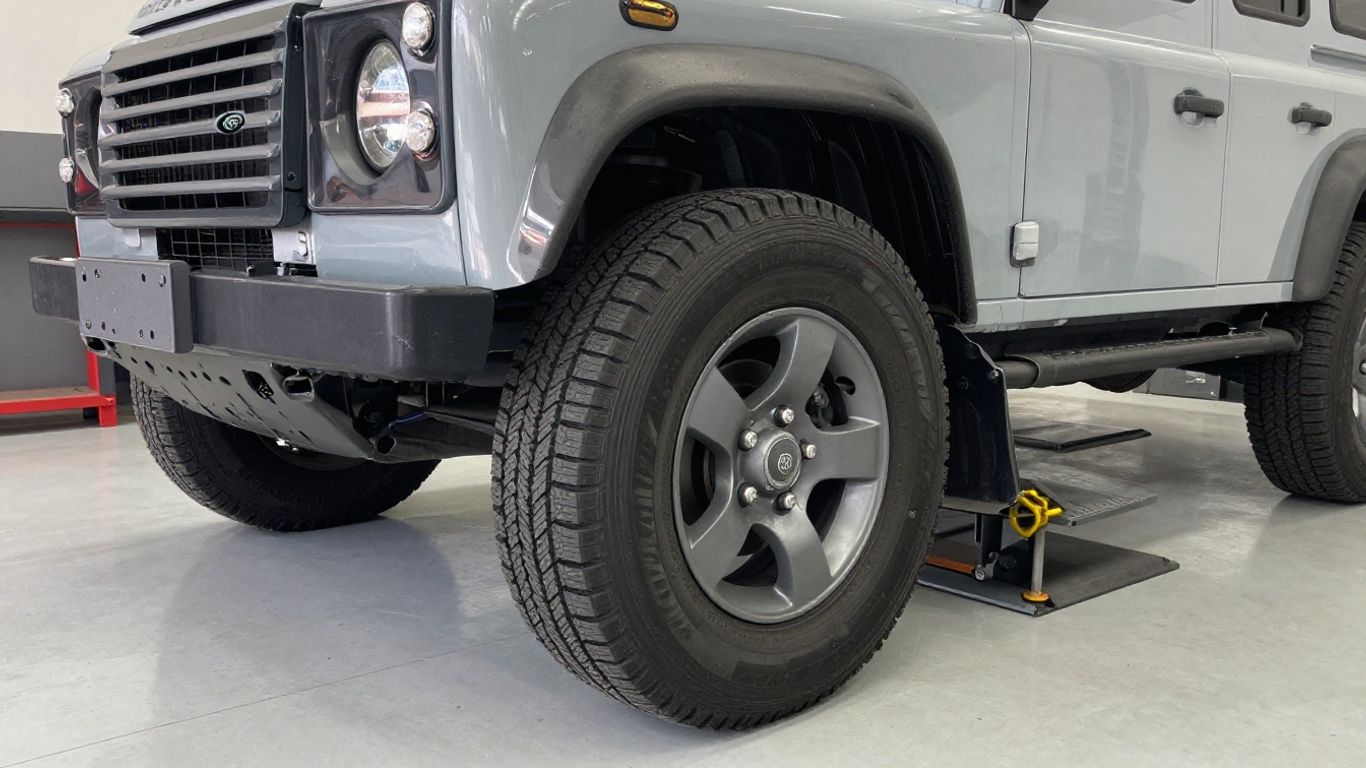
Uneven or accelerated tire wear
Inspect the tread across its full width, not only the outer shoulder. Feathering, a sharp difference between inner and outer edges, or one tire wearing faster than its partner can point to geometry, pressure, suspension, or tire-related trouble.
Measure tread and inspect it in good light. If wear is severe, an alignment alone cannot restore the rubber already lost; the underlying issue and the tire’s condition both need attention.
Steering wheel and vehicle pulling
A vehicle that drifts on a reasonably level road may have an alignment concern, but road crown, wind, tire pressure, and tire construction can also influence its path. Compare the behavior in both directions and avoid testing in traffic or at speed.
A persistent pull, especially when it appeared suddenly, deserves an inspection rather than repeated steering corrections. A technician can check whether the cause is geometric or connected with a brake, tire, or suspension component.
An off-center steering wheel
If the vehicle travels straight but the steering wheel sits noticeably rotated, the steering may not have been centered during a previous adjustment. It can also reflect a difference in toe or a change elsewhere in the steering system.
Do not simply remove and reposition the wheel to hide the symptom. The steering and alignment should be assessed together so the wheel is centered while the underlying readings are correct.
Vibrations, instability, and handling changes
Alignment problems more commonly create drift, scrub, or an unsettled directional feel than a simple speed-related vibration. Still, a new vibration should not be ignored because wheel balance, tire damage, bent components, and suspension wear can overlap with alignment symptoms.
Notice when the sensation occurs: under braking, while cornering, over bumps, or at a particular speed. That detail helps the workshop choose a sensible inspection path instead of assuming every handling change is an alignment issue.
Warning signs after hitting a pothole or curb
A hard impact can alter a wheel, tire, steering link, or suspension component even when there is no obvious external damage. A new pull, crooked steering wheel, air loss, or fresh tread wear after the event is a good reason to stop and inspect the vehicle.
Arrange a check promptly if the car feels unstable or a tire has been damaged. A Land Rover wheel alignment service may be part of the remedy, but the workshop should first establish whether any impact-related parts require repair.
What causes alignment problems
Misalignment is usually a result of an event, wear, or a change in the vehicle rather than a mysterious setting that shifts on its own. The visible symptom can appear long after the original cause. Understanding the likely sources makes a service estimate easier to assess.
Impacts from potholes, curbs, and rough roads
Potholes and curbs can bend or move components and may damage the tire or wheel at the same time. Rough roads also expose looseness that may not be apparent during a short, gentle drive. Even a low-speed impact is worth remembering if the steering behavior changes afterward.
Record when the symptom began and which side took the impact. That simple history can help a technician focus the inspection and compare the affected corner with the opposite side.
Worn suspension and steering components
Bushings, ball joints, tie rods, links, and mounts help maintain wheel position. When they wear, readings can change under load, and an alignment adjustment may not hold. A machine report cannot by itself confirm that every supporting component is serviceable.
A responsible workshop will explain any play or damage found before charging for adjustment. Replacing a worn part may need to come first, followed by a fresh alignment.
Lift kits, lowered suspension, and aftermarket modifications
Changing ride height alters suspension geometry and may change the range in which factory adjustments operate. Modified vehicles therefore need an assessment that accounts for the parts fitted and the intended use, rather than an assumption that standard settings apply unchanged.
Keep records of springs, spacers, arms, wheels, and tires. Those details give the technician context and help distinguish a deliberate modification from a newly developed fault.
Incorrect tire pressure or mismatched tires
Pressure differences can make a vehicle pull and can create uneven wear even when the alignment is correct. Tire size, construction, condition, and tread pattern can also affect how the vehicle feels. Check pressures cold and use the vehicle’s specified values rather than a guess.
If tires differ substantially across an axle, mention it before the inspection. A shop may need to address the tire issue before alignment readings can be interpreted fairly.
Normal wear on high-mileage Land Rover models
Mileage gradually affects the parts that locate the wheels, especially where roads are rough or the vehicle carries heavy loads. Wear is not proof that alignment is needed, but it raises the value of a careful inspection when symptoms appear.
Look for a combination of clues: looseness, noise, uneven wear, changed steering feel, and readings outside specification. One clue alone rarely identifies the complete cause.
How a professional Land Rover alignment works
A professional alignment is a measurement and adjustment process, not merely a quick change to the steering wheel position. The vehicle is prepared, inspected, measured, adjusted where possible, and checked again. A clear explanation of this sequence helps you understand what the quoted service includes.
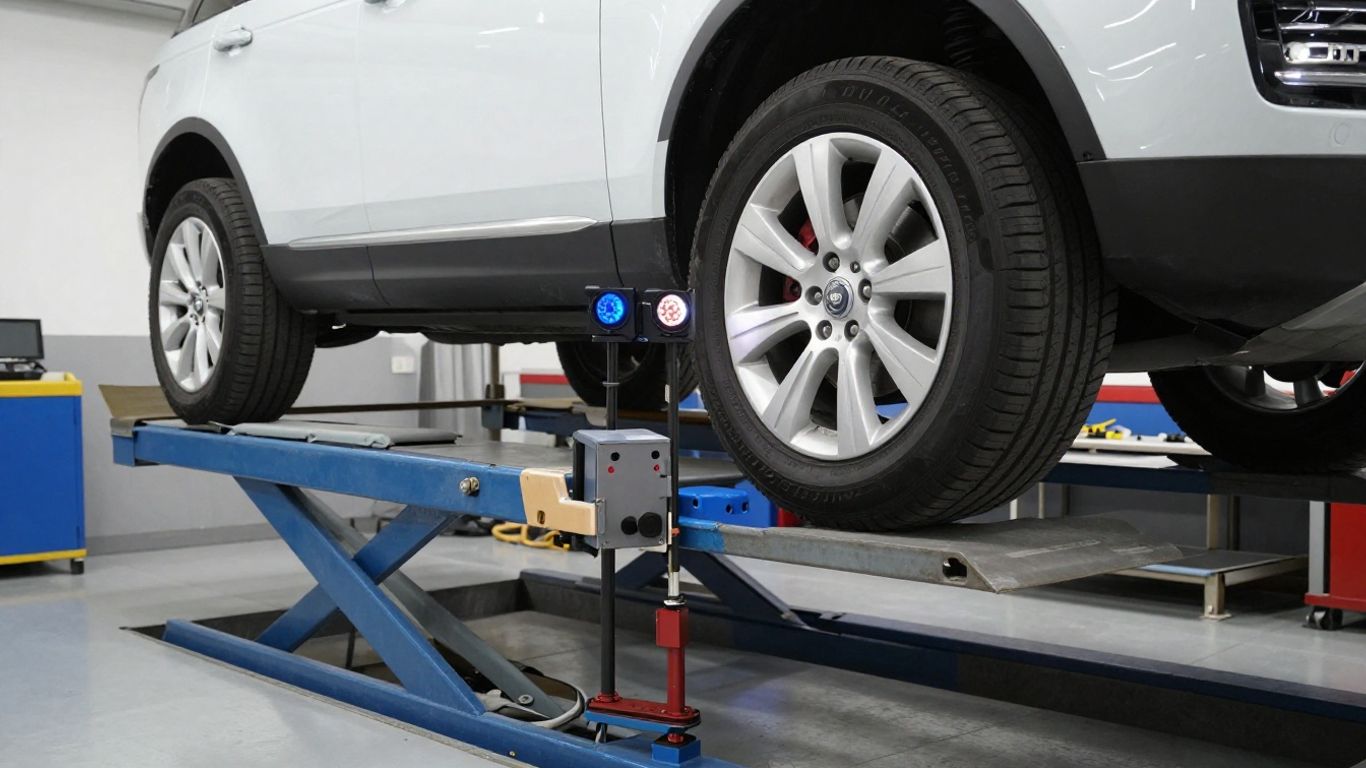
Inspecting tires, steering, and suspension first
The technician begins with tire pressure, tread, wheel condition, steering components, and suspension parts. The vehicle may also need to be settled at the correct ride height and loaded or unloaded according to the relevant procedure.
This first stage protects the accuracy of everything that follows. If a joint has play or a tire is damaged, the technician should explain that limitation rather than treating a questionable reading as a final answer.
Measuring camber, caster, and toe
Alignment equipment measures the wheel angles and compares them with target ranges. Camber, caster, and toe each tell a different part of the story, while thrust angle and steering-wheel position help show how the axles relate to one another.
The numbers should be considered as a set. A single reading outside range may be a symptom of a worn or bent part, not an invitation to force an adjustment without further checks.
Using model-specific alignment specifications
Different models, suspension designs, wheel packages, and ride-height settings can call for different targets. The technician should identify the exact vehicle and use the appropriate current reference rather than relying on a generic setting.
Ask whether the report shows before-and-after readings and the target range. That makes it easier to see what changed and whether an adjustment was actually possible.
Adjusting the front and rear suspension
Where the design permits adjustment, the technician makes controlled changes and checks both sides for a balanced result. Front and rear settings should be considered together, because the rear direction can influence the steering position needed to travel straight.
The sequence varies by vehicle and condition. If the hardware reaches its adjustment limit, that is useful diagnostic information and may indicate a worn, bent, or modified component.
Completing a road test and final check
After adjustment, the technician should recheck the readings, center the steering wheel, tighten hardware correctly, and assess the vehicle on a suitable road. The final check confirms that the measured improvement matches the driver’s actual experience.
A road test is not a substitute for the report, but it can reveal a remaining pull, noise, or vibration. Keep both the report and the invoice so future tire or suspension work has a useful reference.
Land Rover alignment specifications and model considerations
There is no single alignment number that applies to every vehicle wearing the same badge. Model year, suspension type, ride height, wheel size, tire choice, and modifications can all matter. Use the specification for the actual vehicle rather than copying figures from an unrelated setup.
Alignment factors for the Defender
The Defender may be used across very different surfaces, from paved roads to trails, so impact history and suspension condition deserve particular attention. If the vehicle has changed ride height or wheel and tire fitment, those details should be documented before measurement.
A Defender alignment procedure should follow the correct preparation and equipment requirements for the exact model. The owner’s report and any modification records are useful context when readings do not settle as expected.
Alignment considerations for the Discovery
A Discovery can carry passengers, cargo, and equipment that change its load. The workshop should establish the appropriate service condition and inspect the rear as well as the front, especially when the steering wheel is off center or the vehicle seems to track unevenly.
Do not interpret a tire-wear pattern in isolation. Pressure, load, road use, and worn links can all influence the result, so the inspection should connect the symptom with the measured geometry.
Range Rover and Range Rover Sport setup differences
Range Rover and Range Rover Sport versions can differ in suspension configuration, wheel packages, and ride-height behavior. The correct specification must therefore follow the vehicle identification and fitted equipment, not simply the model family name.
If the vehicle uses adjustable ride height, tell the workshop about recent changes or warnings. Alignment readings taken in the wrong condition may not describe how the vehicle normally sits on the road.
How wheel size and tire changes affect alignment
Larger wheels, different offsets, altered tire profiles, and changes in construction can affect clearance, steering feel, and the way tread loads the road. They do not automatically mean the alignment is wrong, but they make a careful check more valuable.
Keep the tire size and wheel details with the service history. A technician can then assess whether the fitment is appropriate and interpret any handling change in context.
Why factory specifications should guide adjustments
Factory targets provide a defensible starting point for a standard vehicle. They help the technician distinguish a normal reading from one that needs investigation and provide a consistent basis for before-and-after reporting.
They are not a replacement for inspection. If the vehicle is modified or a component is damaged, the report should explain the limitation instead of implying that a number alone has restored the vehicle.
Land Rover wheel alignment costs and service decisions
The price of an alignment depends on the vehicle, the condition of the hardware, the number of axles being measured, and the labor required. A low headline price may cover measurement only, while a higher quote may include adjustment, a report, or additional inspection. Ask what is included before comparing offers.
Typical alignment pricing and what it includes
A basic service commonly includes mounting the equipment, measuring the angles, making permitted adjustments, and providing final readings. Some workshops include a short inspection or road test, while others charge separately for diagnosis or repairs.
Request a written estimate that separates alignment labor from parts and additional work. This avoids confusion if the technician finds a worn component once the inspection begins.
When additional suspension repairs are required
An alignment cannot reliably correct looseness, a bent arm, a damaged tire, or a wheel that is no longer true. The technician should show or clearly describe the issue and explain why it affects the alignment before recommending parts.
It is reasonable to ask whether the vehicle can be measured before repair, whether a recheck is included afterward, and what safety concern requires immediate attention. Those questions keep the decision practical rather than speculative.
Choosing a Land Rover specialist or dealership
Choose a workshop that can identify the exact vehicle, inspect its suspension, use suitable equipment, and provide a readable before-and-after report. Specialist knowledge can be helpful, while a dealership may be appropriate when the vehicle needs model-specific diagnosis or related warranty work.
The most useful choice is the one that can explain its process clearly and stand behind the measurements. A polished waiting room matters less than careful preparation and competent inspection.
Questions to ask before approving the service
A few direct questions can clarify the scope of work before the vehicle goes on the rack:
- Will you inspect tires, steering, and suspension before adjusting anything?
- Which alignment specifications and vehicle condition will you use?
- Does the price include both measurement and adjustment?
- Will I receive the before-and-after readings?
The answers should make clear whether the quote is for a simple check, a complete adjustment, or a wider diagnosis. If repairs are proposed, ask how they relate to the symptom and whether alignment follows afterward.
How to evaluate an alignment report
A useful report identifies the vehicle and shows measured readings, target ranges, and final results for the relevant wheels. Look for a steering wheel or toe explanation if the vehicle arrived pulling or off center, and ask about any value still outside range.
Do not judge the job only by how many numbers turned green. The report should make sense alongside the inspection findings, tire condition, and road-test result.
How to maintain proper alignment
Alignment is easier to preserve when tire care and suspension awareness become part of normal ownership. It does not require constant adjustment, but it does reward early attention to small changes. A short check after a major road impact can prevent a small issue from becoming a tire or component bill.
Checking tire pressure and tread regularly
Check pressure when the tires are cold and compare it with the vehicle’s recommended values. At the same time, scan for cuts, bulges, embedded objects, and uneven wear across each tread. Record unusual changes instead of waiting for the next scheduled service.
Correct pressure will not repair misalignment, but it removes one common source of pulling and irregular wear. It also gives the technician more reliable information if an alignment inspection becomes necessary.
Rotating tires at the recommended intervals
Follow the rotation pattern and interval appropriate to the tire and vehicle. Some tire designs, directional patterns, staggered sizes, or driveline requirements can limit how rotation is performed, so do not assume every set can move in the same way.
Regular rotation can make wear easier to monitor. If one tire continues to deteriorate despite correct pressure and rotation, investigate rather than simply replacing it.
Inspecting suspension components between services
Pay attention to knocks, new play, steering changes, and fluid or damage clues around the wheels. A visual check at service time is useful, but symptoms during driving should be reported even if the last inspection was recent.
Early inspection may identify a worn locating component before it damages a tire or changes the vehicle’s behavior. It also gives the workshop a clearer history when readings are inconsistent.
Driving carefully over potholes and curbs
Slow down where it is safe, avoid clipping curbs, and do not treat rough-road impacts as harmless if the vehicle feels different afterward. Check the tire and wheel after a hard strike, particularly if there is air loss or a visible bulge.
The goal is not to avoid every imperfect road. It is to recognize the moments that could have changed the vehicle and arrange a check before the wear pattern becomes obvious.
Scheduling an alignment after suspension or tire work
Book an alignment check after work that changes wheel position, ride height, steering components, or suspension links. New tires are also a good opportunity to confirm that the previous set did not hide a developing problem.
Keep the final report with the vehicle records. It provides a baseline for future symptoms and helps the next technician understand what was adjusted and when.
Conclusion
Good alignment is a small mechanical detail with a noticeable effect on tire wear, steering confidence, and everyday comfort. Watch for changes, inspect before adjusting, use the correct specifications, and keep a clear service record so your Land Rover remains predictable on the road.
Frequently Asked Questions
What does a wheel alignment adjust?
It adjusts eligible wheel and suspension angles so the wheels relate correctly to the vehicle and road. The process commonly considers camber, caster, toe, and the direction of the rear axle.
How often should a vehicle have an alignment?
There is no universal interval for every vehicle. Have one checked after a strong impact, suspension work, unusual tire wear, a persistent pull, or a steering wheel that no longer sits straight.
Is wheel balancing the same as alignment?
No. Balancing corrects uneven weight distribution in the wheel and tire assembly, while alignment addresses wheel angles and their relationship to the vehicle.
Can incorrect tire pressure feel like bad alignment?
Yes. Unequal or incorrect pressure can cause pulling and uneven wear. Check pressure first, but arrange an inspection if the symptom remains or began after an impact.
Can an alignment fix a vibration?
Sometimes a handling issue is described as vibration, but many vibrations relate to balance, tire damage, wheel condition, or suspension parts. The symptom’s speed and circumstances help guide diagnosis.
Should tires be replaced before an alignment?
Not always. A technician should inspect the tires and measure the vehicle first. Severely worn or damaged tires may need replacement, while usable tires can remain for the alignment process.
Why is the steering wheel still crooked after an alignment?
The wheel may not have been centered during adjustment, or another issue may remain. Ask for the final report and request a recheck of steering position, toe, tire condition, and suspension components.